
Clematis 'Floris V'
Also known as: Information to be completed
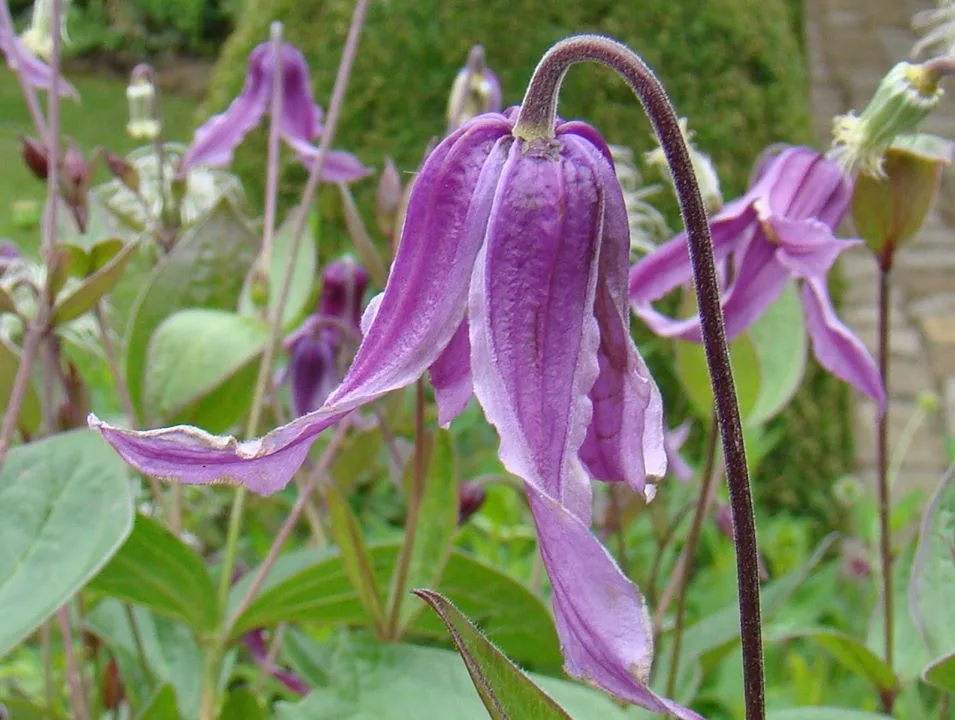
A low-growing, clump-forming perennial with dark green leaves. Pink, bell-shaped flowers appear from July through to September. Ideal for growing as a scrambler amongst hardy perennials or as ground cover. This variety does not climb
Scientific classification
- Species
- Clematis 'Floris V' (Clematis 'Floris V')
- Genus
- Clematis
- Family
- Ranunculaceae
- Skin irritant. Wear gloves and other protective equipment when handling
- Toxicity
- Herbaceous Perennial
- Plant type
- 0.1-0.5 metres
- Height
- 0.1-0.5 metres
- Spread
- Deciduous
- Foliage
- Clump forming
- Habit
- Spring · Summer · Autumn
- Season of interest
- Full sun · Partial shade
- Sunlight
- Information to be completed
- Ideal temperature









Clematis 'Floris V' pictures
Distribution of Clematis 'Floris V'
Distribution map
Information to be completed
Information to be completed
Culture
Information to be completed
Toxicity
Skin irritant. Wear gloves and other protective equipment when handling
Quick identification of Clematis 'Floris V'
Information to be completed
Clematis 'Floris V' care guide
- Deep regular watering, keeping roots cool and never chronically dry
- Watering
- Full sun · Partial shade
- Sunlight
- Information to be completed
- Ideal temperature

Watering
Deep regular watering, keeping roots cool and never chronically dry
Fertilizing
 Fertilizing
Balanced clematis feed monthly in spring, higher potash before bloom
Pruning
 Pruning
In late winter or early spring as buds start growing, cut old stems to the lowest healthy bud pair, about 15–30 cm above the soil. Herbaceous types may be cut near ground level in early spring or late autumn.
Propagation
 Propagation
Propagate by seed. Will germinate easily at room temperature; sow at a shallow depth in spring, summer or early autumn
Growing
 Growing
Plant herbaceous clematis in moisture-retentive, well-drained soil in full sun, Ideal for ground cover or as an individual plant in a rock garden. See clematis cultivation
People also ask
Information to be completed
Common pests and diseases
Diseases
May be susceptible to honey fungus (rarely), clematis wilt and clematis slime flux
Pests
May be susceptible to aphids
Explore the plant health library →




