
purple coneflower 'Sir Lancelot'
Also known as: Information to be completed
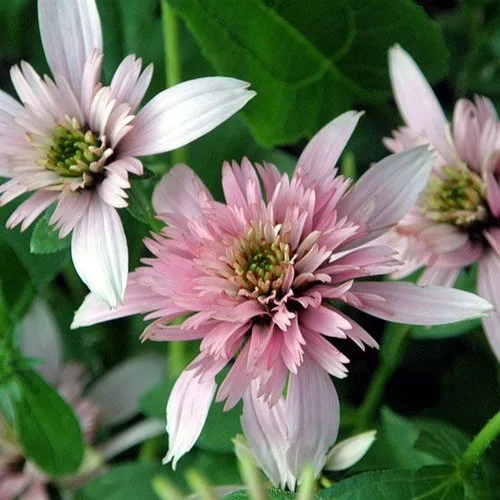
Clump-forming, upright, perennial coneflower about 70cm tall, producing double rosy-pink blooms with a prominent central pompom surrounded by short ray petals, from midsummer to autumn
Scientific classification
- Species
- purple coneflower 'Sir Lancelot' (Echinacea purpurea 'Sir Lancelot')
- Genus
- Echinacea
- Family
- Asteraceae
- Order
- Asterales
- Class
- Magnoliopsida
- Phylum
- Magnoliophyta
- Information to be completed
- Toxicity
- Herbaceous Perennial
- Plant type
- 0.5-1 metres
- Height
- 0.5-1 metres
- Spread
- Deciduous
- Foliage
- Clump forming
- Habit
- Spring · Summer · Autumn
- Season of interest
- Full sun
- Sunlight
- Information to be completed
- Ideal temperature









purple coneflower 'Sir Lancelot' pictures
Distribution of purple coneflower 'Sir Lancelot'
Distribution map
- Native
- Introduced
- Cultivated
Source:WCVP v16 · Royal Botanic Gardens, Kew · CC BY 3.0 · Boundaries:WGSRPD / TDWG
purple coneflower 'Sir Lancelot' care guide
- Moderate regular watering, avoid prolonged drought and stagnant waterlogging
- Watering
- Full sun
- Sunlight

Watering
Moderate regular watering, avoid prolonged drought and stagnant waterlogging
Fertilizing
 Fertilizing
Balanced perennial feed every four weeks spring through summer growth
Pruning
 Pruning
Deadhead to extend flowering
Propagation
 Propagation
Propagate by division in Spring or Autumn or by root cuttings from late Autumn to early Winter
Growing
 Growing
Grow in fertile, humus rich, well drained soil in full sun. Take care when propagating by divison or root cuttings as they resent a lot of disturbance
Common pests and diseases
Diseases
Generally disease-free
Pests
Generally pest-free
Explore the plant health library →




