
Skimmia japonica 'Temptation'
Also known as: Information to be completed
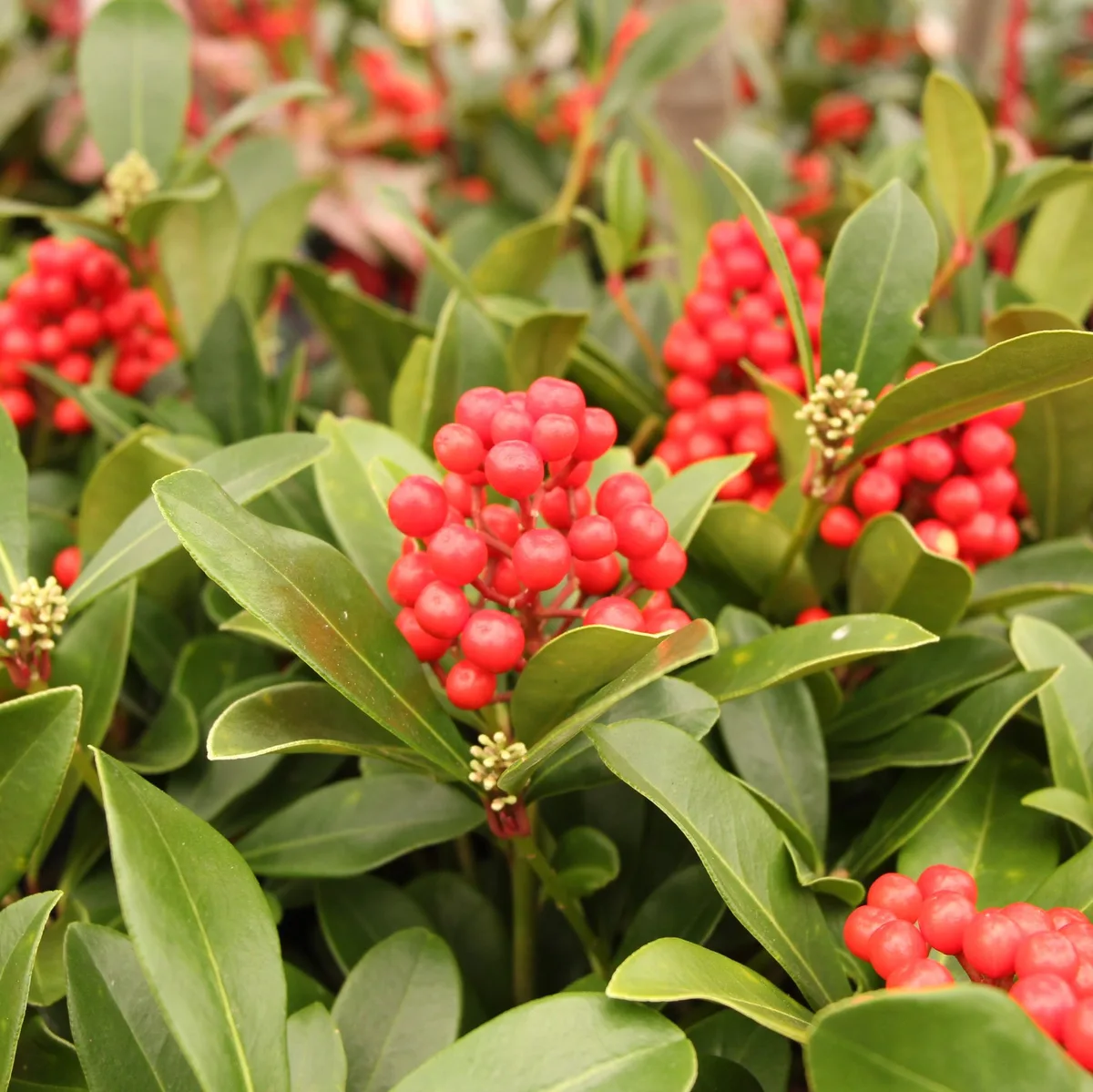
A compact, vigorous evergreen shrub to 70cm high, with elliptic, glossy green leaves that are aromatic when crushed. Clusters of very small white flowers open from deep red buds in spring, and go on to produce masses of shiny, vivid red berries. This cultivar is self-fertile, so does not need a companion plant to produce berries
Scientific classification
- Species
- Skimmia japonica 'Temptation' (Skimmia japonica 'Temptation')
- Genus
- Skimmia
- Family
- Rutaceae
- Order
- Sapindales
- Class
- Magnoliopsida
- Phylum
- Magnoliophyta
- Fruit are ornamental, not to be eaten. Wear gloves and other protective equipment when handling]
- Toxicity
- Shrubs
- Plant type
- 0.5-1 metres
- Height
- 0.5-1 metres
- Spread
- Evergreen
- Foliage
- Bushy
- Habit
- Spring · Summer · Autumn · Winter
- Season of interest
- Full shade · Partial shade
- Sunlight
- Information to be completed
- Ideal temperature









Skimmia japonica 'Temptation' pictures
Distribution of Skimmia japonica 'Temptation'
Distribution map
- Native
- Introduced
- Cultivated
Source:WCVP v16 · Royal Botanic Gardens, Kew · CC BY 3.0 · Boundaries:WGSRPD / TDWG
Toxicity
Fruit are ornamental, not to be eaten. Wear gloves and other protective equipment when handling]
Skimmia japonica 'Temptation' care guide
- Deep watering during dry spells, allowing slight surface drying between soakings
- Watering
- Full shade · Partial shade
- Sunlight

Watering
Deep watering during dry spells, allowing slight surface drying between soakings
Fertilizing
 Fertilizing
Balanced shrub or tree feed once each early spring
Pruning
 Pruning
If needed, Usually little pruning is needed. Lightly shape if necessary, removing dead, damaged or diseased shoots. Prune after flowering.
Propagation
 Propagation
Propagate by semi-ripe cuttings in late summer. As this plant is protected by Plant Breeders' Rights, any propagation should be for personal rather than commercial use
Growing
 Growing
Grow in moderately fertile, moist but well drained soil, in light to full shade; prefers acidic to neutral soils but will tolerate alkaline soils where there is plenty of humus. Plants may become chlorotic on poor, dry soil or in too much sun
Common pests and diseases
Diseases
May be susceptible to Phytophthora and honey fungus
Pests
May be susceptible to scale insects, and to vine weevil when grown in containers
Explore the plant health library →




