
daffodil 'Best Friend'
Also known as: Information to be completed
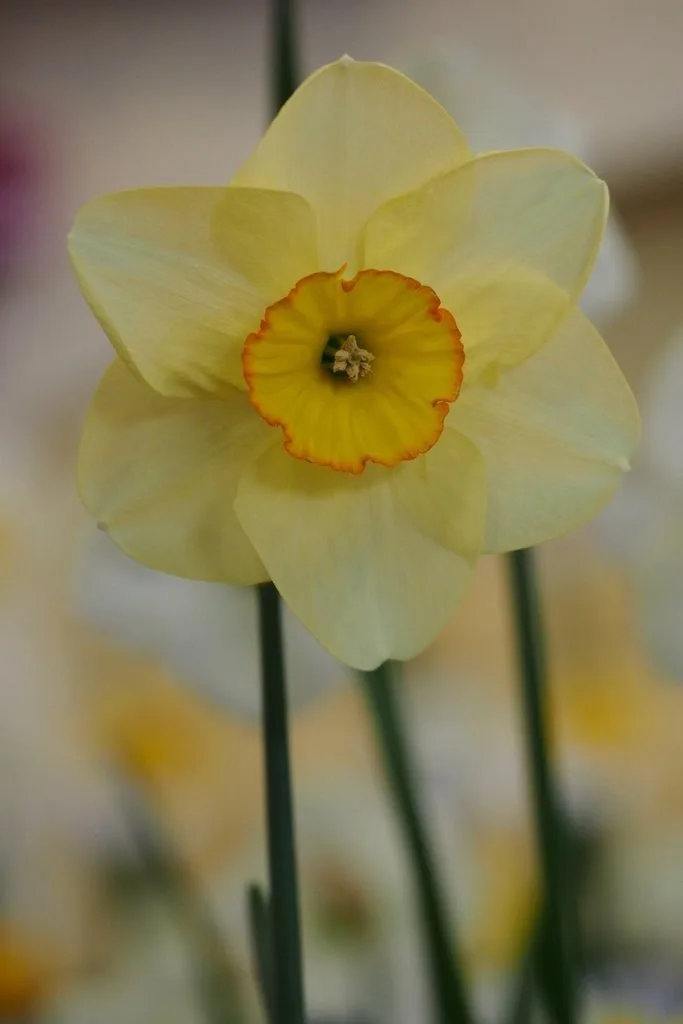
A small-cupped daffodil, 32-67cm high, with grey-green leaves, and downward-facing flowers, about 10cm across, composed of light yellow perianth segments and bowl-shaped, darker yellow coronas with orange rims, in mid-spring
Scientific classification
- Species
- daffodil 'Best Friend' (Narcissus 'Best Friend')
- Genus
- Narcissus
- Family
- Amaryllidaceae
- Order
- Asparagales
- Class
- Liliopsida
- Phylum
- Magnoliophyta
- Harmful if eaten, skin irritant. Wear gloves and other protective equipment when handling]
- Toxicity
- Bulbs
- Plant type
- 0.1-0.5 metres
- Height
- 0.1-0.5 metres
- Spread
- Deciduous
- Foliage
- Clump forming
- Habit
- Spring
- Season of interest
- Full sun · Partial shade
- Sunlight
- Information to be completed
- Ideal temperature









daffodil 'Best Friend' pictures
Toxicity
Harmful if eaten, skin irritant. Wear gloves and other protective equipment when handling]
daffodil 'Best Friend' care guide
- Moist soil during foliage growth, reduce water after blooms fade
- Watering
- Full sun · Partial shade
- Sunlight

Watering
Moist soil during foliage growth, reduce water after blooms fade
Fertilizing
 Fertilizing
Light bulb feed fortnightly before buds open, stop after flowering ends
Pruning
 Pruning
Deadhead as the flowers fade, but allow the leaves to die down naturally
Propagation
 Propagation
Propagate by division: separate and replant offsets as the leaves fade in early summer, or in early autumn before new roots are produced
Growing
 Growing
Plant bulbs in autumn, in moist but well-drained soil, 16cm apart, and at one-and-a-half times their own depth, slightly deeper in light soils and in grass, in full sun or light dappled shade; for more advice, see daffodil cultivation
Common pests and diseases
Diseases
May be susceptible to narcissus basal rot, narcissus leaf scorch, narcissus smoulder, tulip grey bulb rot, other fungal diseases, narcissus yellow stripe virus, and other virus diseases
Pests
May be susceptible to slugs, snails, large narcissus bulb fly, narcissus eelworm, and pollen beetles
Explore the plant health library →




