
begonia 'Ikon Blush White'
Also known as: Information to be completed
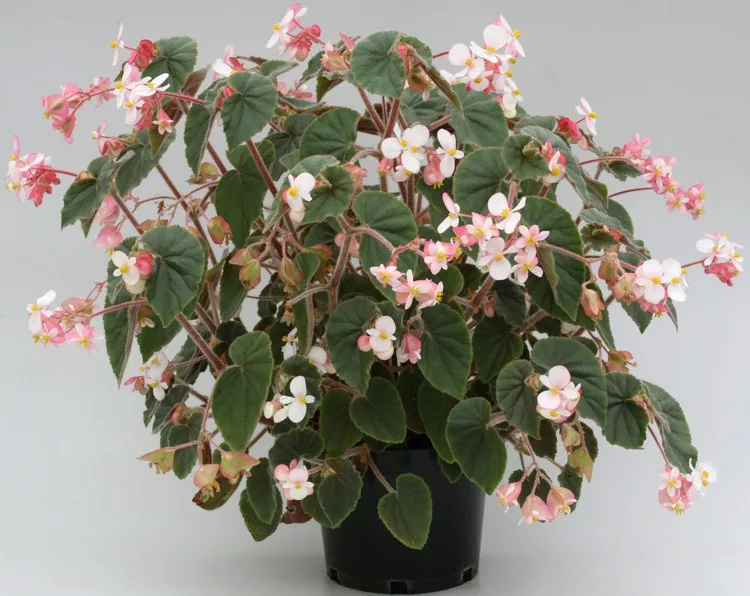
A tender perennial with larger leaves and a rather more upright habit than some of the trailing cultivars, so may suit containers better than baskets. Pale blush-pink flowers with vivid red margins are held amongst hairy green foliage. Red seed heads follow flowering; to 35cm
Scientific classification
- Species
- begonia 'Ikon Blush White' (Begonia 'Ikon Blush White')
- Genus
- Begonia
- Family
- Begoniaceae
- Order
- Cucurbitales
- Class
- Magnoliopsida
- Phylum
- Magnoliophyta
- Ornamental bulbs - not to be eaten. Wear gloves and other protective equipment when handling
- Toxicity
- Annual Biennial · Bedding
- Plant type
- 0.1-0.5 metres
- Height
- 0.1-0.5 metres
- Spread
- Deciduous
- Foliage
- Trailing
- Habit
- Spring · Summer
- Season of interest
- Partial shade
- Sunlight
- Information to be completed
- Ideal temperature









begonia 'Ikon Blush White' pictures
Toxicity
Ornamental bulbs - not to be eaten. Wear gloves and other protective equipment when handling
begonia 'Ikon Blush White' care guide
- Moderate regular watering, allowing brief slight drying between soakings
- Watering
- Partial shade
- Sunlight

Watering
Moderate regular watering, allowing brief slight drying between soakings
Fertilizing
 Fertilizing
Balanced perennial feed every four weeks from spring through summer
Pruning
 Pruning
Remove old stems and foliage as plant dies back for the winter
Propagation
 Propagation
Propagate by seed at 21°C (70F) in spring. Root basal or stem-tip softwood cuttings in spring and leaf cuttings in late spring or early summer using a propagating case
Growing
 Growing
Under glass requires a light, well-drained, neutral to acid, loamless or loam-based soil (JI No2), in bright light with shade from direct sun. Provide moderate water when in growth and dry off tubers in winter, storing at 5-7°C. See Begonias: outdoors for further advice.
Common pests and diseases
Diseases
May be susceptible to grey moulds, powdery mildews, stem rot and rhizome rot
Pests
May be susceptible to caterpillars, mealy bugs, mites, glasshouse thrips, vine weevil and aphids
Explore the plant health library →




