
Macedonian harebell
Also known as: Information to be completed
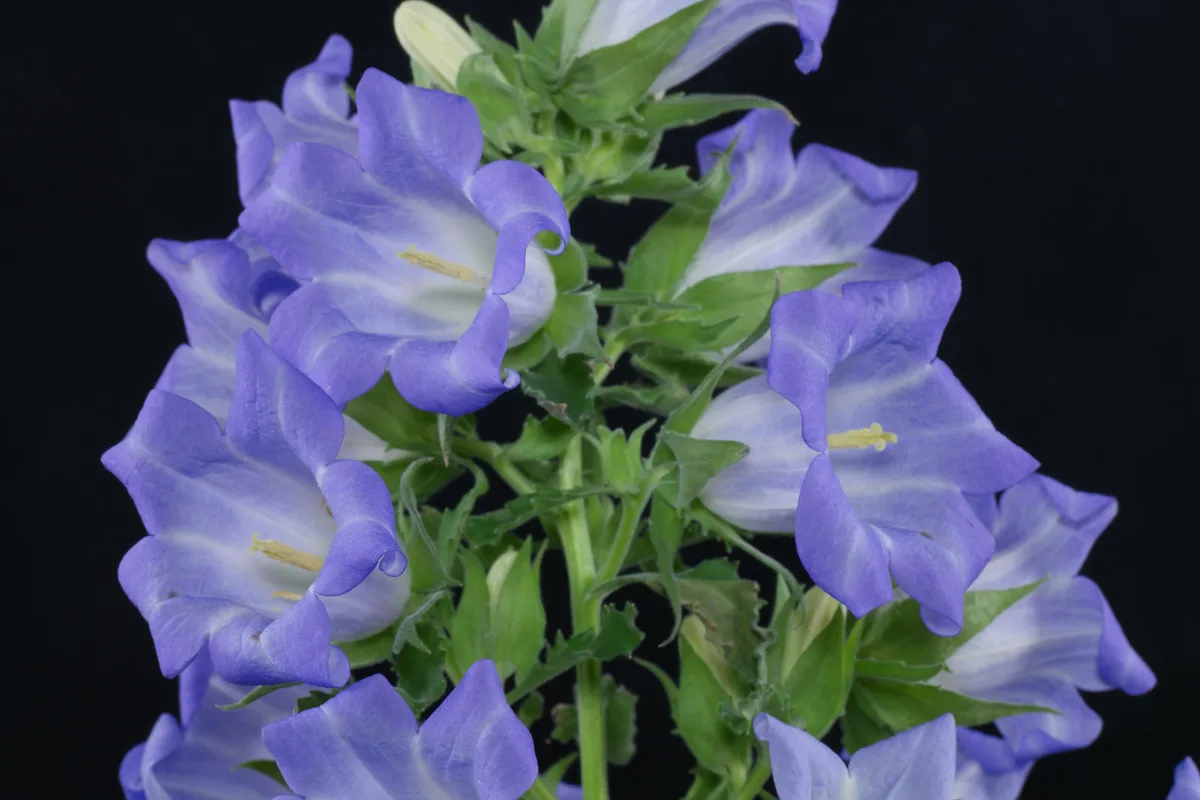
A biennial or short-lived perennial producing an evergreen rosette of silvery-grey leaves. After one or two years an upright flower-spike to about 30cm develops, with shorter, horizontal branches at ground level, all bearing large, bell-shaped flowers in very pale lilac-blue or white
Scientific classification
- Species
- Macedonian harebell (Campanula formanekiana)
- Genus
- Campanula
- Family
- Campanulaceae
- Order
- Asterales
- Class
- Magnoliopsida
- Phylum
- Magnoliophyta
- Information to be completed
- Toxicity
- Alpine Rockery · Annual Biennial
- Plant type
- 0.1-0.5 metres
- Height
- 0.1-0.5 metres
- Spread
- Evergreen
- Foliage
- Clump forming
- Habit
- Spring · Summer · Autumn · Winter
- Season of interest
- Full sun · Partial shade
- Sunlight
- Information to be completed
- Ideal temperature









Macedonian harebell pictures
Distribution of Macedonian harebell
Distribution map
- Native
- Introduced
- Cultivated
Source:WCVP v16 · Royal Botanic Gardens, Kew · CC BY 3.0 · Boundaries:WGSRPD / TDWG
Macedonian harebell care guide
- Moderate regular watering, allowing brief slight drying between soakings
- Watering
- Full sun · Partial shade
- Sunlight

Watering
Moderate regular watering, allowing brief slight drying between soakings
Fertilizing
 Fertilizing
Balanced perennial feed every four weeks from spring through summer
Pruning
 Pruning
Deadhead to prolong flowering
Propagation
 Propagation
Propagate by seed sown in summer as soon as ripe - seed needs light to germinate - or take basal stem cuttings, and insert into gritty compost in late spring
Growing
 Growing
Grow in gritty, well-drained soil in a trough or in a deep pot in an alpine house. Protect from winter wet
Common pests and diseases
Diseases
May be subject to powdery mildews
Pests
May be attacked by slugs, snails, aphids and glasshouse red spider mite
Explore the plant health library →




