
pacific chrysanthemum
Also known as: Information to be completed
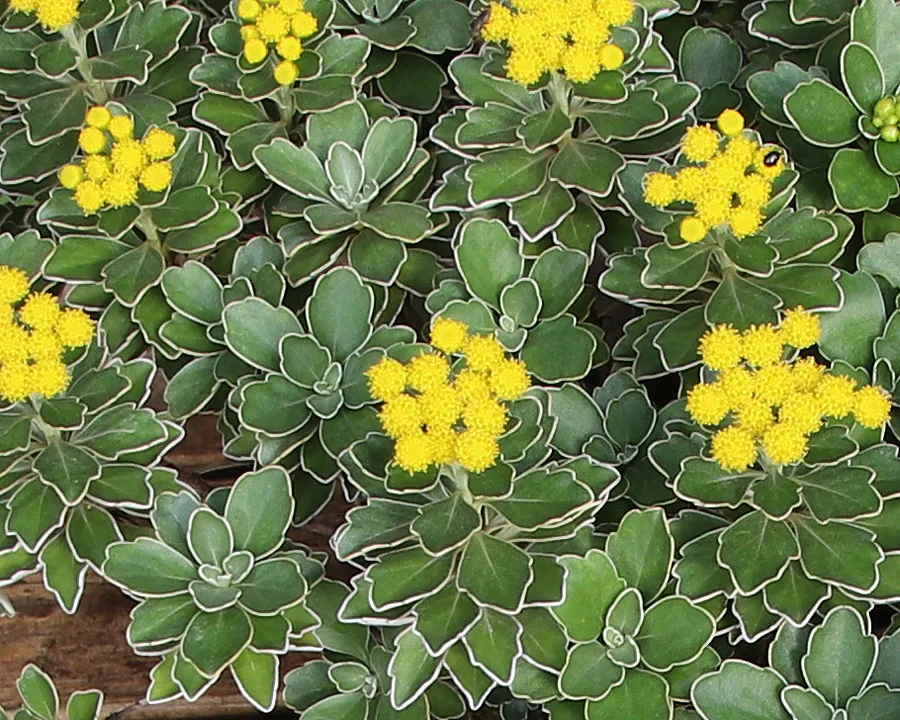
A semi-evergreen, bushy, mound-forming, low-growing herbaceous perennial with silver-grey and green fragrant foliage. Button-shaped yellow flowers appear in late summer
Scientific classification
- Species
- pacific chrysanthemum (Chrysanthemum pacificum)
- Genus
- Chrysanthemum
- Family
- Asteraceae
- Order
- Asterales
- Class
- Magnoliopsida
- Phylum
- Tracheophyta
- Skin allergen. Wear gloves and other protective equipment when handling
- Toxicity
- Herbaceous Perennial
- Plant type
- 0.1-0.5 metres
- Height
- 0.1-0.5 metres
- Spread
- Semi evergreen
- Foliage
- Clump forming · Bushy
- Habit
- Spring · Summer · Autumn · Winter
- Season of interest
- Full sun
- Sunlight
- Information to be completed
- Ideal temperature









pacific chrysanthemum pictures
Distribution of pacific chrysanthemum
Distribution map
- Native
- Introduced
- Cultivated
Source:WCVP v16 · Royal Botanic Gardens, Kew · CC BY 3.0 · Boundaries:WGSRPD / TDWG
Toxicity
Skin allergen. Wear gloves and other protective equipment when handling
pacific chrysanthemum care guide
- Moderate regular watering, allowing brief slight drying between soakings
- Watering
- Full sun
- Sunlight

Watering
Moderate regular watering, allowing brief slight drying between soakings
Fertilizing
 Fertilizing
Balanced perennial feed every four weeks from spring through summer
Pruning
 Pruning
Pinch out growing tips and cut down to 10cm after flowering
Propagation
 Propagation
Propagate by division or rooting softwood cuttings in loam-less potting compost at 16 °C in spring
Growing
 Growing
Does best in a well-drained, moderately-fertile soil in full sun. Pinch out the growing tip when the plants are 15-20cm tall to encourage free-flowering, bushy plants. See chrysanthemum cultivation for further information
Common pests and diseases
Diseases
May be susceptible to glasshouse grey mould, powdery mildews and chrysanthemum white rust
Pests
May be susceptible to aphids, chrysanthemum leaf miner, leaf and bud eelworms, earwigs, capsid bug and glasshouse red spider mite
Explore the plant health library →




