
bleeding heart 'Aurora'
Also known as: Information to be completed
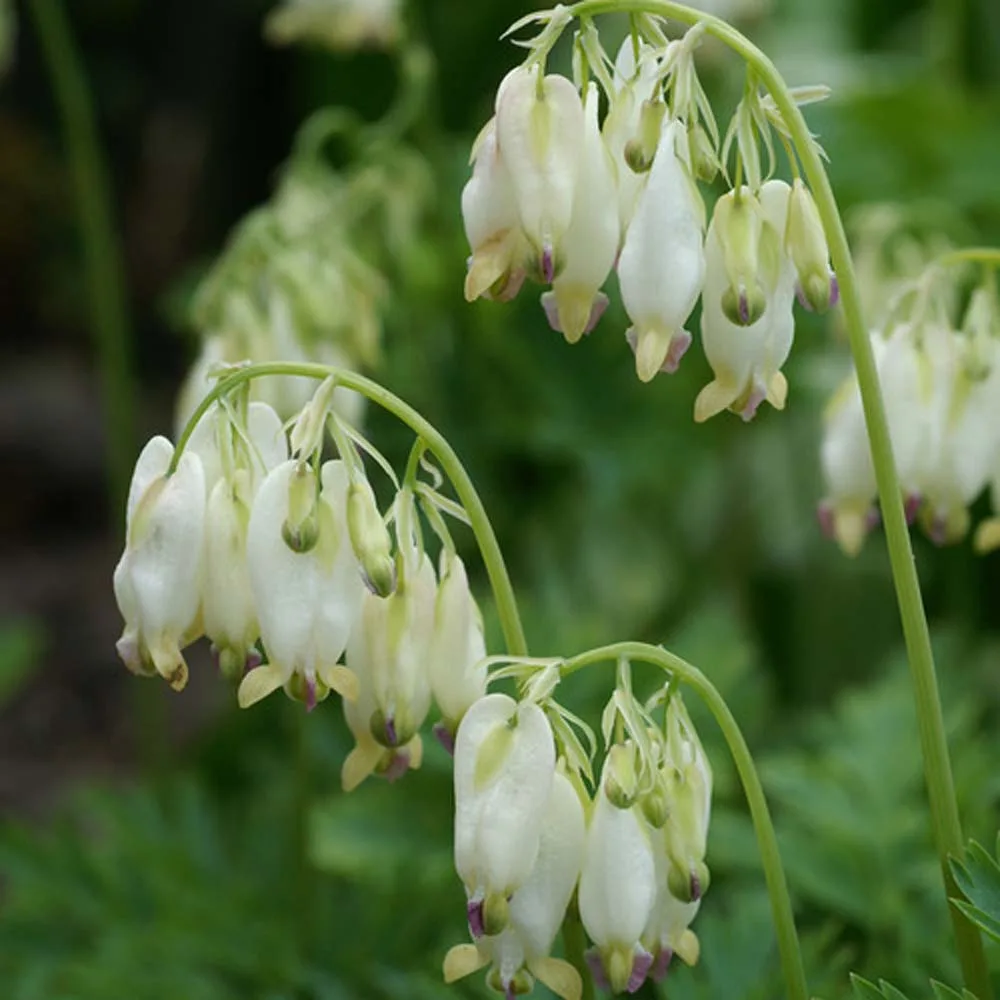
A spreading, rhizomatous perennial with arching stems of creamy white, heart-shaped flowers, from late spring to late summer, above blue-green, fern-like foliage. Height 45cm
Scientific classification
- Species
- bleeding heart 'Aurora' (Dicentra 'Aurora')
- Genus
- Dicentra
- Family
- Papaveraceae
- All parts cause stomach ache if ingested, the foliage may aggravate skin allergies. Wear gloves and other protective equipment when handling
- Toxicity
- Herbaceous Perennial
- Plant type
- 0.1-0.5 metres
- Height
- 0.1-0.5 metres
- Spread
- Deciduous
- Foliage
- Bushy
- Habit
- Spring · Summer
- Season of interest
- Full sun · Partial shade
- Sunlight
- Information to be completed
- Ideal temperature









bleeding heart 'Aurora' pictures
Distribution of bleeding heart 'Aurora'
Distribution map
Information to be completed
Information to be completed
Culture
Information to be completed
Toxicity
All parts cause stomach ache if ingested, the foliage may aggravate skin allergies. Wear gloves and other protective equipment when handling
Quick identification of bleeding heart 'Aurora'
Information to be completed
bleeding heart 'Aurora' care guide
- Keep rich woodland soil evenly moist, never baking dry in summer
- Watering
- Full sun · Partial shade
- Sunlight
- Information to be completed
- Ideal temperature

Watering
Keep rich woodland soil evenly moist, never baking dry in summer
Fertilizing
 Fertilizing
Light balanced feed monthly during spring and early summer growth
Pruning
 Pruning
No pruning required
Propagation
 Propagation
Propagate by division in early spring or after the leaves have died down
Growing
 Growing
Grows best in moist, fertile, humus-rich soil, preferably neutral or slightly alkaline, in partial shade; will tolerate sun or sandier soils provided that the soil is not prone to drying out
People also ask
Information to be completed
Common pests and diseases
Diseases
Generally disease free
Pests
Young foliage may be attacked by slugs and snails
Explore the plant health library →




