
Tradescantia spathacea Sitara Gold ('Hansoti02')
Also known as: Information to be completed
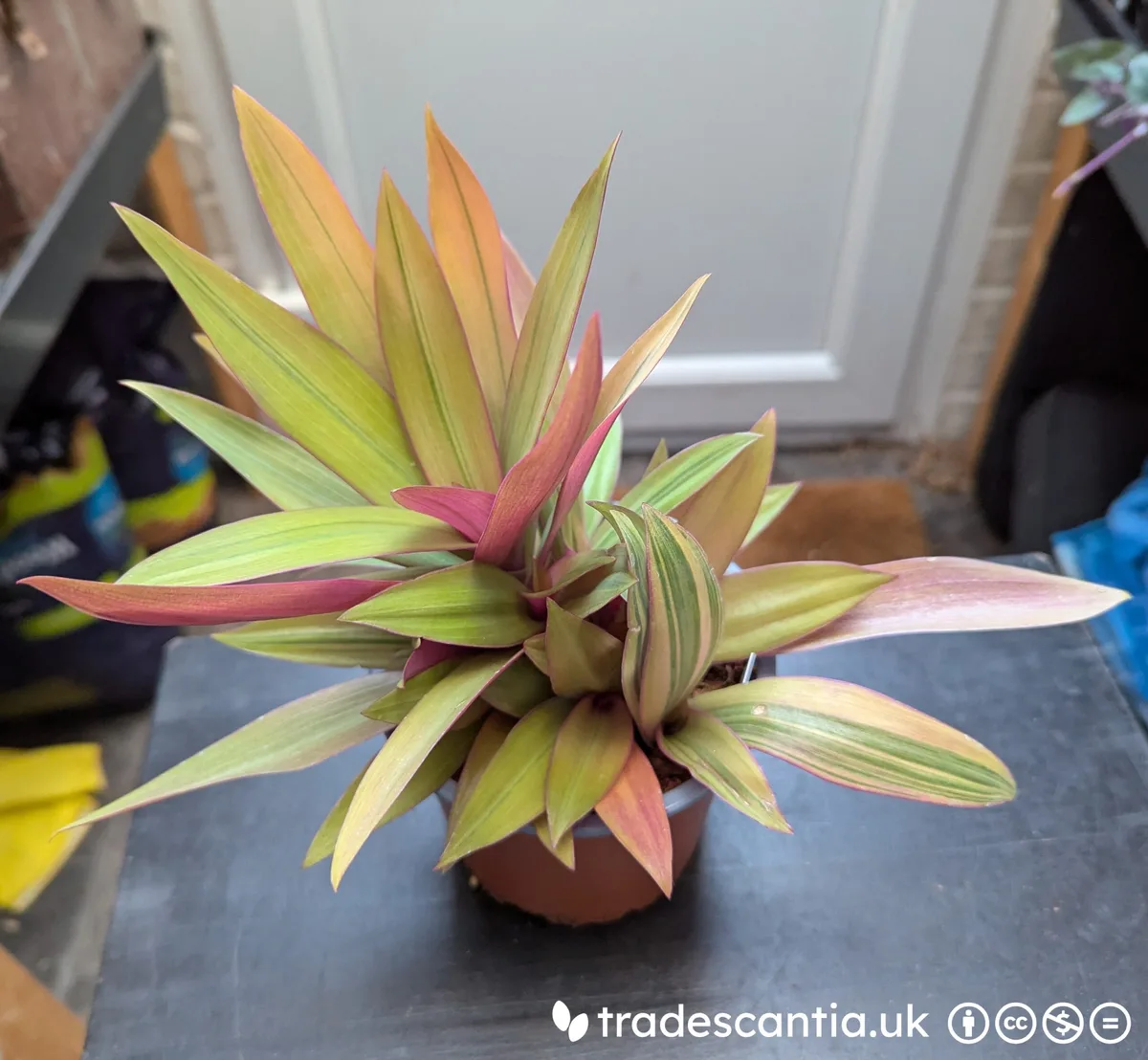
A clump-forming, perennial with rosettes of semi-erect linear to lace shaped, fleshy, buttery-yellow leaves with green stripe variegation and burgundy-purple underside. Small white flowers with persistent purple bracts are produced throughout the year
Scientific classification
- Species
- Tradescantia spathacea Sitara Gold ('Hansoti02') (Tradescantia spathacea Sitara Gold ('Hansoti02'))
- Genus
- Tradescantia
- Family
- Commelinaceae
- Order
- Commelinales
- Class
- Liliopsida
- Phylum
- Magnoliophyta
- Skin allergen. Wear gloves and other protective equipment when handling
- Toxicity
- Conservatory Greenhouse · Houseplants
- Plant type
- 0.1-0.5 metres
- Height
- 0.1-0.5 metres
- Spread
- Evergreen
- Foliage
- Clump forming
- Habit
- Spring · Summer · Autumn · Winter
- Season of interest
- Partial shade
- Sunlight
- Information to be completed
- Ideal temperature









Tradescantia spathacea Sitara Gold ('Hansoti02') pictures
Toxicity
Skin allergen. Wear gloves and other protective equipment when handling
Tradescantia spathacea Sitara Gold ('Hansoti02') care guide
- Moderate regular watering, allowing brief slight drying between soakings
- Watering
- Partial shade
- Sunlight

Watering
Moderate regular watering, allowing brief slight drying between soakings
Fertilizing
 Fertilizing
Balanced perennial feed every four weeks from spring through summer
Pruning
 Pruning
Remove faded flowered stems
Propagation
 Propagation
Propagate by taking stem tip cuttings or by division
Growing
 Growing
Undemanding easy to grow houseplant or for summer outdoor displays planted in fertile, free draining soil. Direct sunshine may scorch the leaves. Indoors grow in bright filtered light, planted using houseplant, multipurpose or John Innes 2 loam based compost. When in active growth water moderately and liquid feed monthly. Reduce watering in winter. See houseplant cultivation for further advice
Common pests and diseases
Diseases
Generally disease-free
Pests
May be susceptible to red spider mite, mealybugs, aphids, vine weevil and thrips
Explore the plant health library →




