
elephant's ear plant 'Stingray'
Also known as: Information to be completed
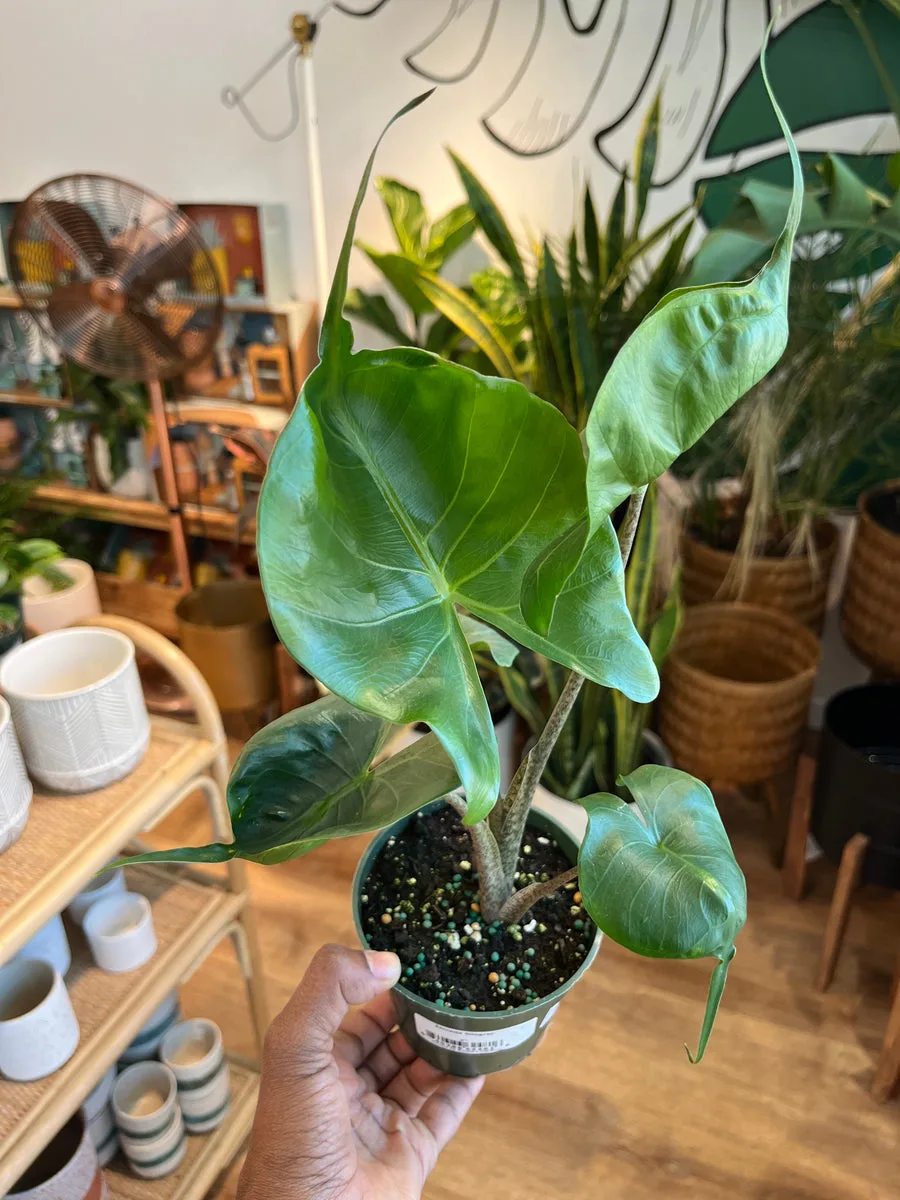
A tropical evergreen perennial grown for its glossy, arrow-head shaped, dark green leaves which taper to a very elongated point. The leaves can be 60cm long and are carried on upright, red-mottled stalks. Flowers are seldom seen
Scientific classification
- Species
- elephant's ear plant 'Stingray' (Alocasia 'Stingray')
- Genus
- Alocasia
- Family
- Araceae
- Order
- Alismatales
- Class
- Liliopsida
- Phylum
- Magnoliophyta
- TOXIC if eaten, skin/eye irritant. Wear gloves and other protective equipment when handling]
- Toxicity
- Houseplants
- Plant type
- 1-1.5 metres
- Height
- 1-1.5 metres
- Spread
- Evergreen
- Foliage
- Clump forming
- Habit
- Spring · Summer · Autumn · Winter
- Season of interest
- Full sun · Partial shade
- Sunlight
- Information to be completed
- Ideal temperature









elephant's ear plant 'Stingray' pictures
Toxicity
TOXIC if eaten, skin/eye irritant. Wear gloves and other protective equipment when handling]
elephant's ear plant 'Stingray' care guide
- Moderate regular watering, allowing brief slight drying between soakings
- Watering
- Full sun · Partial shade
- Sunlight

Watering
Moderate regular watering, allowing brief slight drying between soakings
Fertilizing
 Fertilizing
Balanced perennial feed every four weeks from spring through summer
Pruning
 Pruning
No pruning required
Propagation
 Propagation
Propagate by division of basal offsets
Growing
 Growing
Under glass grow in a mix of equal parts composted bark, loam, and sand, in filtered light. Direct sun may cause the leaves to burn. In the growing season, provide high humidity, water freely and apply a balanced liquid fertiliser every 2-3 weeks; water moderately in winter
Common pests and diseases
Diseases
Generally disease-free
Pests
May be susceptible to mealybugs and glasshouse red spider mite
Explore the plant health library →




