
clematis 'Sieboldiana'
Also known as: passion flower clematis
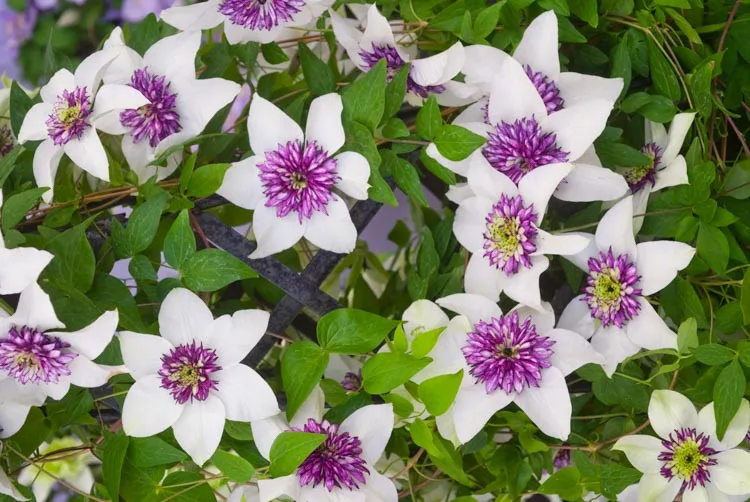
A deciduous climber, 1.2-2.4m tall, with mid-green foliage. Creamy-white flowers, 7-10cm in diameter, with a large central violet-purple boss, are borne form mid-summer to early autumn
Scientific classification
- Species
- clematis 'Sieboldiana' (Clematis florida 'Sieboldiana')
- Genus
- Clematis
- Family
- Ranunculaceae
- Skin irritant. Wear gloves and other protective equipment when handling
- Toxicity
- Climber Wall Shrub
- Plant type
- 1.5-2.5 metres
- Height
- 1-1.5 metres
- Spread
- Deciduous
- Foliage
- Climbing
- Habit
- Spring · Summer · Autumn
- Season of interest
- Full sun
- Sunlight
- Information to be completed
- Ideal temperature









clematis 'Sieboldiana' pictures
Distribution of clematis 'Sieboldiana'
Distribution map
- Native
- Introduced
- Cultivated
Source:WCVP v16 · Royal Botanic Gardens, Kew · CC BY 3.0 · Boundaries:WGSRPD / TDWG
Culture
Information to be completed
Toxicity
Skin irritant. Wear gloves and other protective equipment when handling
Quick identification of clematis 'Sieboldiana'
Information to be completed
clematis 'Sieboldiana' care guide
- Deep regular watering, keeping roots cool and never chronically dry
- Watering
- Full sun
- Sunlight
- Information to be completed
- Ideal temperature

Watering
Deep regular watering, keeping roots cool and never chronically dry
Fertilizing
 Fertilizing
Balanced clematis feed monthly in spring, higher potash before bloom
Pruning
 Pruning
Clematis pruning: group two
Propagation
 Propagation
Propagate by softwood or semi-ripe cuttings or layering
Growing
 Growing
Plant in a moisture-retentive, well-drained soil, in a warm, sheltered position. Plant with the crown 5-8cm deep to encourage new shoots to grow from below ground level. Can be grown in containers, at least 45cm deep and wide, in a soil-based potting compost; best outdoors in mild localities only, ideal for conservatory cultivation. See also clematis cultivation for further advice
People also ask
Information to be completed
Common pests and diseases
Diseases
May be susceptible to honey fungus (rarely), clematis wilt and clematis slime flux
Pests
May be susceptible to aphid, slug and snail damage on young shoots
Explore the plant health library →




