
clematis 'Prosperity'
Also known as: Information to be completed
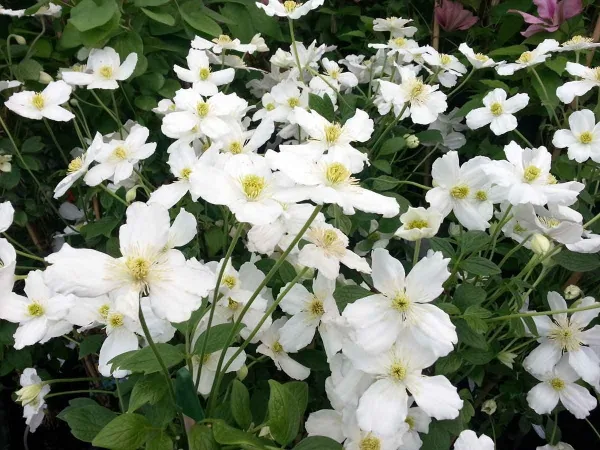
Robust, compact, deciduous climber or scrambler, a sport of C. 'Continuity', to 2m in height, with dark green leaves and small, single, lightly scented, satin-textured, white flowers to 8cm across, with wavy margins, held on long stalks, and creamy-white stamens, flowering in early summer to late summer
Scientific classification
- Species
- clematis 'Prosperity' (Clematis 'Prosperity')
- Genus
- Clematis
- Family
- Ranunculaceae
- Skin irritant. Wear gloves and other protective equipment when handling
- Toxicity
- Climber Wall Shrub
- Plant type
- 1.5-2.5 metres
- Height
- 1-1.5 metres
- Spread
- Deciduous
- Foliage
- Climbing
- Habit
- Spring · Summer · Autumn
- Season of interest
- Full sun
- Sunlight
- Information to be completed
- Ideal temperature









clematis 'Prosperity' pictures
Distribution of clematis 'Prosperity'
Distribution map
Information to be completed
Information to be completed
Culture
Information to be completed
Toxicity
Skin irritant. Wear gloves and other protective equipment when handling
Quick identification of clematis 'Prosperity'
Information to be completed
clematis 'Prosperity' care guide
- Moderate regular watering, avoid prolonged drought and stagnant waterlogging
- Watering
- Full sun
- Sunlight
- Information to be completed
- Ideal temperature

Watering
Moderate regular watering, avoid prolonged drought and stagnant waterlogging
Fertilizing
 Fertilizing
Balanced perennial feed every four weeks spring through summer growth
Pruning
 Pruning
 (clematis) group 1
Propagation
 Propagation
Propagate by softwood cuttings in spring, semi-ripe cuttings in early summer or layering
Growing
 Growing
Plant in well-drained soil, in a sunny, sheltered position, with the roots and base of the plant kept cool and shaded by other plants or a layer of pebbles at the base. Plant with the crown 5-8cm deep to encourage new shoots to grow from below ground level. Can be grown in containers at least 45cm deep and wide in a loam-based potting compost. Ideal for cold greenhouse or conservatory. See clematis cultivation
People also ask
Information to be completed
Common pests and diseases
Diseases
May be susceptible to honey fungus (rarely), clematis wilt and clematis slime flux
Pests
May be susceptible to aphids, snails and caterpillars; petals may be eaten by earwigs
Explore the plant health library →




