
copperleaf 'Mini Red'
Also known as: Information to be completed
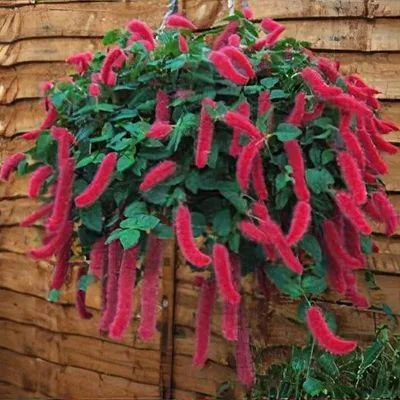
A frost-tender, compact, evergreen shrub to around 50cm tall and wide with weeping stems covered in dark green, toothed foliage. Tiny, red flowers hang in fluffy, long, catkin-like spikes and may appear throughout the year
Scientific classification
- Species
- copperleaf 'Mini Red' (Acalypha 'Mini Red')
- Genus
- Acalypha
- Family
- Euphorbiaceae
- Information to be completed
- Toxicity
- Shrubs
- Plant type
- 0.1-0.5 metres
- Height
- 0.1-0.5 metres
- Spread
- Evergreen
- Foliage
- Bushy
- Habit
- Spring · Summer · Autumn · Winter
- Season of interest
- Full sun · Partial shade
- Sunlight
- Information to be completed
- Ideal temperature









copperleaf 'Mini Red' pictures
Distribution of copperleaf 'Mini Red'
Distribution map
Information to be completed
Information to be completed
Culture
Information to be completed
Toxicity
Information to be completed
Quick identification of copperleaf 'Mini Red'
Information to be completed
copperleaf 'Mini Red' care guide
- Moderate regular watering, allowing brief slight drying between soakings
- Watering
- Full sun · Partial shade
- Sunlight
- Information to be completed
- Ideal temperature

Watering
Moderate regular watering, allowing brief slight drying between soakings
Fertilizing
 Fertilizing
Balanced perennial feed every four weeks from spring through summer
Pruning
 Pruning
Shorten flowered shoots to about 1.5–2.5 cm from the previous year's growth. If flowering is on last year's growth, prune after flowering; if on current-year growth, prune the following early to mid-spring.
Propagation
 Propagation
Propagate by softwood cuttings in early spring or semi-hardwood cuttings in late summer.
Growing
 Growing
Grow under glass or indoors in a loam-less potting compost in full or filtered light. When in growth water freely and apply a balanced liquid fertiliser monthly. Water sparingly in winter, keeping barely moist. Can be grown outdoors in fertile, humus-rich, moist but well-drained soil in sun or part shade but only in warmer climes
People also ask
Information to be completed
Common pests and diseases
Diseases
Generally disease free
Pests
May be attacked by glasshouse whitefly, glasshouse red spider mite, mealybugs and scale insects
Explore the plant health library →




