
crocus 'Vanguard'
Also known as: Information to be completed
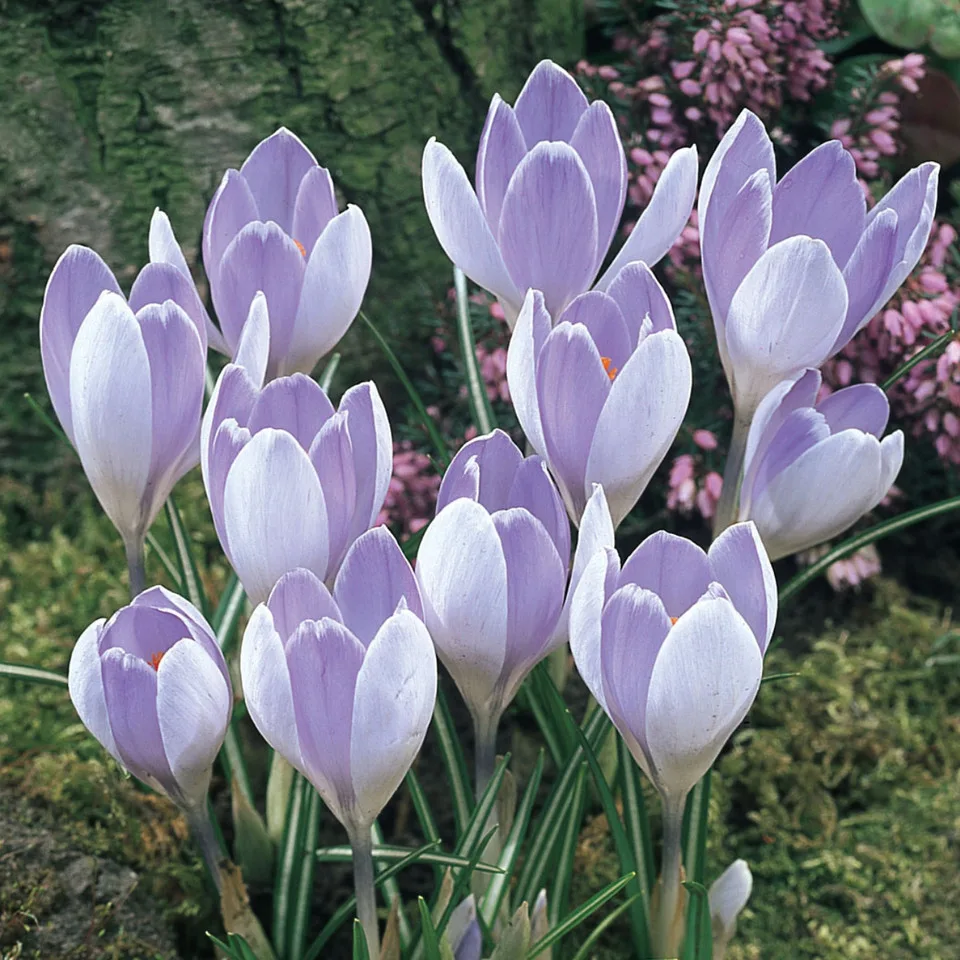
is usually the earliest of the large crocus cultivars to flower, in February. Sometimes described as a "bicolour", the outer petals have greyish backs, contrasting with the mauve inner parts. Closed buds look silvery grey; open flowers all lilac with orange styles. The early flowering and large size make it a valuable plant for early bumble bees
Scientific classification
- Species
- crocus 'Vanguard' (Crocus 'Vanguard')
- Genus
- Crocus
- Family
- Iridaceae
- Ornamental bulbs - not to be eaten. Wear gloves and other protective equipment when handling
- Toxicity
- Alpine Rockery · Bulbs
- Plant type
- Up to 10 cm
- Height
- 0-0.1 metre
- Spread
- Deciduous
- Foliage
- Tufted
- Habit
- Spring
- Season of interest
- Full sun
- Sunlight
- Information to be completed
- Ideal temperature









crocus 'Vanguard' pictures
Distribution of crocus 'Vanguard'
Distribution map
Information to be completed
Information to be completed
Culture
Information to be completed
Toxicity
Ornamental bulbs - not to be eaten. Wear gloves and other protective equipment when handling
Quick identification of crocus 'Vanguard'
Information to be completed
crocus 'Vanguard' care guide
- Water moderately during growth; keep soil moist, reduce during summer dormancy.
- Watering
- Full sun
- Sunlight
- Information to be completed
- Ideal temperature

Watering
Water moderately during growth; keep soil moist, reduce during summer dormancy.
Fertilizing
 Fertilizing
Apply a low-nitrogen bulb fertilizer in early spring as growth begins.
Pruning
 Pruning
No pruning required
Propagation
 Propagation
Remove cormlets when dormant
Growing
 Growing
Grow in a gritty, poor to moderately fertile soil
People also ask
Information to be completed
Common pests and diseases
Diseases
Generally disease-free, corms may rot in storage
Pests
May be susceptible to rodents and birds
Explore the plant health library →




