
begonia 'Hanging Basket Red'
Also known as: Information to be completed
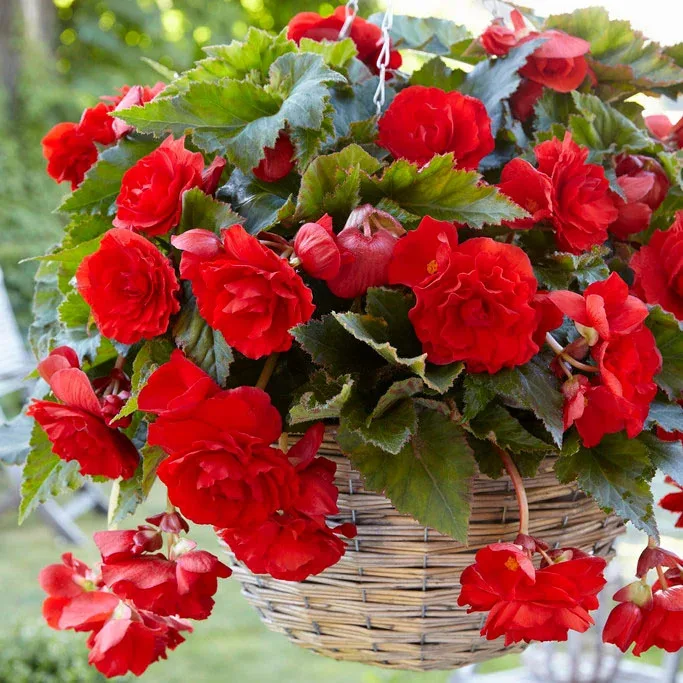
A tender, tuberous, trailing perennial with narrow, pointed bright green leaves with jagged edges. Large, fully-double, rich red flowers are produced from late spring until the first frosts.
Scientific classification
- Species
- begonia 'Hanging Basket Red' (Begonia 'Hanging Basket Red')
- Genus
- Begonia
- Family
- Begoniaceae
- Order
- Cucurbitales
- Class
- Magnoliopsida
- Phylum
- Magnoliophyta
- Ornamental bulbs - not to be eaten. Wear gloves and other protective equipment when handling
- Toxicity
- Bedding · Conservatory Greenhouse
- Plant type
- 0.1-0.5 metres
- Height
- 0.1-0.5 metres
- Spread
- Deciduous
- Foliage
- Trailing
- Habit
- Spring · Summer · Autumn
- Season of interest
- Full sun · Partial shade
- Sunlight
- Information to be completed
- Ideal temperature









begonia 'Hanging Basket Red' pictures
Toxicity
Ornamental bulbs - not to be eaten. Wear gloves and other protective equipment when handling
begonia 'Hanging Basket Red' care guide
- Keep compost evenly moist with bright shade and good humidity
- Watering
- Full sun · Partial shade
- Sunlight

Watering
Keep compost evenly moist with bright shade and good humidity
Fertilizing
 Fertilizing
Weak balanced begonia feed every two to three weeks in growth
Pruning
 Pruning
Remove old stems and foliage as the plant dies back for winter
Propagation
 Propagation
Propagate by basal or stem-tip softwood cuttings in spring
Growing
 Growing
Ideal for hanging baskets and tubs, and generally bought as cuttings. Start off indoors in spring in light, well-drained, neutral compost. May be grown permanently under glass in bright light shaded from direct sun. Otherwise move outdoors into a sunny or semi-shaded postion when all risk of frost is past. Dry off tubers in winter and store frost free. See begonias: outdoors for further advice
Common pests and diseases
Diseases
May be susceptible to grey moulds, powdery mildews, stem rot and rhizome rot
Pests
May be susceptible to caterpillars, mealybugs, thrips, glasshouse red spider mite, vine weevil and aphids
Explore the plant health library →




