
liquidambar-leaved Tonkin maple
Also known as: Information to be completed
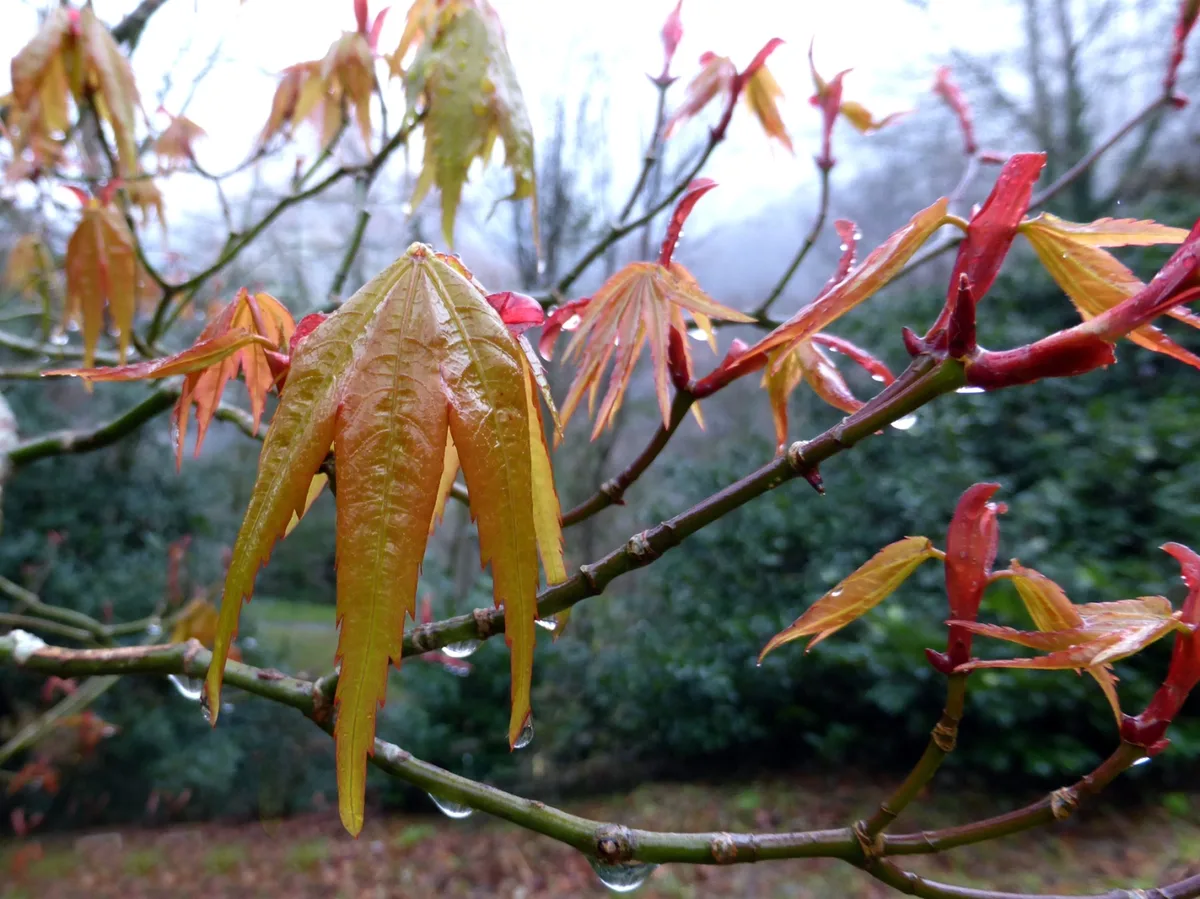
Extremely rare in cultivation, this deciduous tree is about 12m tall, with palmate, 3-5 evenly lobed leaves, 8-13cm across. These are sharply pointed, deep red to purple when young, the colour persisting on the undersides of the leaves, maturing to green with age, during summer, then orange-yellow to red in autumn. Spring flowers are yellow followed by yellowish autumn winged fruits
Scientific classification
- Species
- liquidambar-leaved Tonkin maple (Acer tonkinense subsp. liquidambarifolium)
- Genus
- Acer
- Family
- Sapindaceae
- Order
- Sapindales
- Class
- Magnoliopsida
- Phylum
- Magnoliophyta
- Information to be completed
- Toxicity
- Trees
- Plant type
- 8-12 metres
- Height
- 4-8 metres
- Spread
- Deciduous
- Foliage
- Bushy
- Habit
- Autumn · Spring · Summer
- Season of interest
- Full sun · Partial shade
- Sunlight
- Information to be completed
- Ideal temperature









liquidambar-leaved Tonkin maple pictures
Distribution of liquidambar-leaved Tonkin maple
Distribution map
- Native
- Introduced
- Cultivated
Source:WCVP v16 · Royal Botanic Gardens, Kew · CC BY 3.0 · Boundaries:WGSRPD / TDWG
liquidambar-leaved Tonkin maple care guide
- Keep soil evenly moist, sheltered from drying winds
- Watering
- Full sun · Partial shade
- Sunlight

Watering
Keep soil evenly moist, sheltered from drying winds
Fertilizing
 Fertilizing
Slow release tree feed in spring
Pruning
 Pruning
Little pruning is needed. Remove diseased, damaged, crowded or crossing shoots and unwanted growth. If needed, Prune only from late autumn to midwinter.
Propagation
 Propagation
Propagate by seed (trees and shrubs), layering in autumn, grafting in late winter or softwood cuttings in early summer
Growing
 Growing
Not suited to cold gardens and will need to be overwintered in a frost free place such as a conservatory or greenhouse but attention to watering is needed in dry spells during the growing season. In mild, frost-free areas, grow in moisture-retentive, well-drained soil with sun or partial shade. Leaf scorch can be caused by lack of soil moisture or excessive exposure. See tree cultivation and container cultivation
Common pests and diseases
Diseases
May be susceptible to Verticillium wilt, Acer leaf scorch and honey fungus
Pests
May be susceptible to Acer gall mite, aphids, caterpillars and horse chestnut scale
Explore the plant health library →




