
lettuce 'Red Batavian'
Also known as: Information to be completed
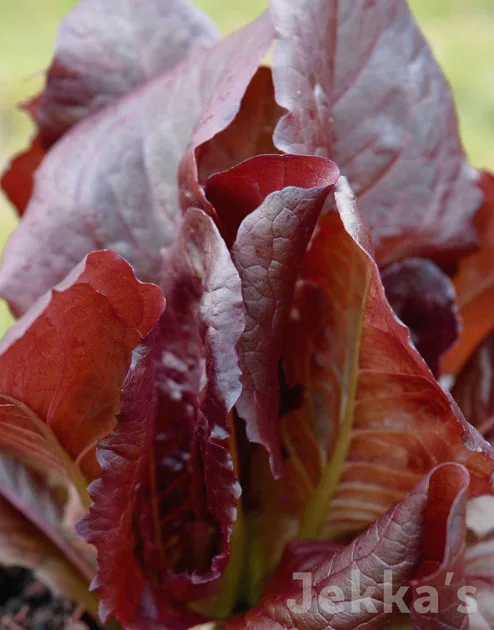
A crisphead variety that has thick, crisp, green leaves, tinged red at the ends. It is slow to bolt, can cope with the heat, and will germinate in warmer temperatures than other lettuces. Sow March to early August (undercover from February), harvest May to November.
Scientific classification
- Species
- lettuce 'Red Batavian' (Lactuca sativa 'Red Batavian')
- Genus
- Lactuca
- Family
- Asteraceae
- Order
- Asterales
- Class
- Magnoliopsida
- Phylum
- Magnoliophyta
- Information to be completed
- Toxicity
- Annual Biennial
- Plant type
- 0.1-0.5 metres
- Height
- 0.1-0.5 metres
- Spread
- Deciduous
- Foliage
- Clump forming
- Habit
- Spring · Summer · Autumn
- Season of interest
- Full sun · Partial shade
- Sunlight
- Information to be completed
- Ideal temperature









lettuce 'Red Batavian' pictures
Distribution of lettuce 'Red Batavian'
Distribution map
- Native
- Introduced
- Cultivated
Source:WCVP v16 · Royal Botanic Gardens, Kew · CC BY 3.0 · Boundaries:WGSRPD / TDWG
lettuce 'Red Batavian' care guide
- Keep soil consistently moist for tender leafy growth
- Watering
- Full sun · Partial shade
- Sunlight

Watering
Keep soil consistently moist for tender leafy growth
Fertilizing
 Fertilizing
Nitrogen-rich vegetable feed during active growth
Pruning
 Pruning
No pruning required
Propagation
 Propagation
Propagate by seed. See sowing vegetable seeds
Growing
 Growing
Grow in full sun in moisture-retentive soil. Soil should be reasonably fertile so you can improve soil by adding organic matter, such as well-rotted manure, in the autumn. Lettuces grow best on soil that is close to neutral so if you have very acidic or alkaline soil you may want to consider raised beds, containers or improving the pH of your soil. Water when the soil is dry, ideally early in the morning. Harvest from May until November. See lettuce cultivation for more information.
Common pests and diseases
Diseases
May be susceptible to grey moulds and lettuce downy mildew. Lettuce mosaic virus can affect overwintering crops.
Pests
May be susceptible to birds, slugs, snails and lettuce root aphid.
Explore the plant health library →




