
Himalayan may apple
Also known as: Himalayan mandrake
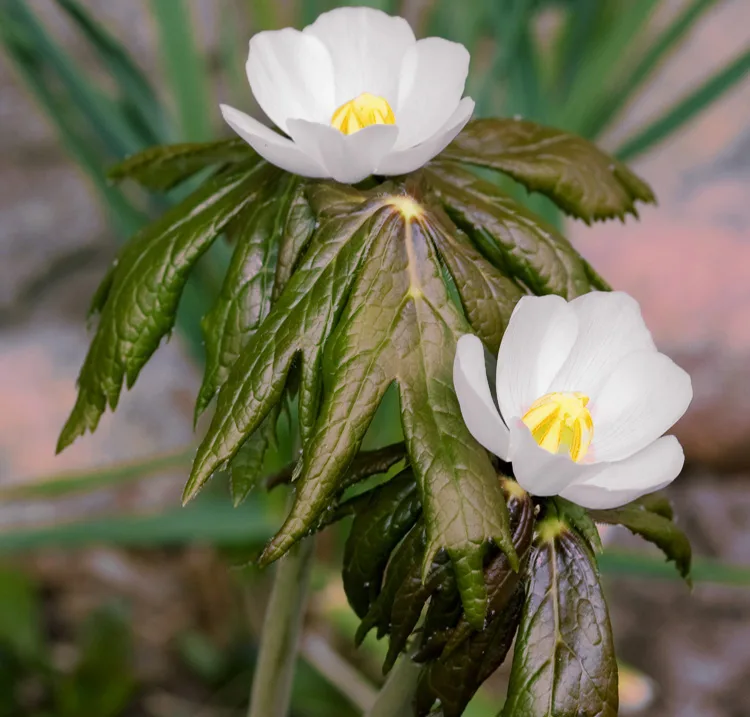
S. hexandrum has deeply 3-5 lobed leaves, green variably mottled with purple, which expand fully, up to 25cm across, after flowering in late spring and summer. Stems at flowering to 30cm in height. Flowers pinkish or white, with yellow stamens. Berries scarlet, egg-shaped, borne on short, drooping peduncles in late summer
Scientific classification
- Species
- Himalayan may apple (Sinopodophyllum hexandrum)
- Genus
- Sinopodophyllum
- Family
- Berberidaceae
- All parts of the plant are highly toxic if ingested. Wear gloves and wash hands after handling
- Toxicity
- Herbaceous Perennial
- Plant type
- 0.1-0.5 metres
- Height
- 0.5-1 metres
- Spread
- Deciduous
- Foliage
- Trailing
- Habit
- Summer · Spring
- Season of interest
- Full shade · Partial shade
- Sunlight
- Information to be completed
- Ideal temperature









Himalayan may apple pictures
Distribution of Himalayan may apple
Distribution map
Himalaya, Western China
Information to be completed
Culture
Information to be completed
Toxicity
All parts of the plant are highly toxic if ingested. Wear gloves and wash hands after handling
Quick identification of Himalayan may apple
Information to be completed
Himalayan may apple care guide
- Moderate regular watering, avoid prolonged drought and stagnant waterlogging
- Watering
- Full shade · Partial shade
- Sunlight
- Information to be completed
- Ideal temperature

Watering
Moderate regular watering, avoid prolonged drought and stagnant waterlogging
Fertilizing
 Fertilizing
Balanced perennial feed every four weeks spring through summer growth
Pruning
 Pruning
Cut back the old stems in autumn
Propagation
 Propagation
Propagate by seed sown in containers in an open frame or by division in spring or late summer
Growing
 Growing
Grow in a humus-rich, moist, fertile soil in full or partial shade
People also ask
Information to be completed
Common pests and diseases
Diseases
Generally disease free
Pests
May be susceptible to slug damage on young leaves in spring
Explore the plant health library →




