
Ipomoea batatas Suntory Black Tone ('Kyuikukan 1')
Also known as: Information to be completed
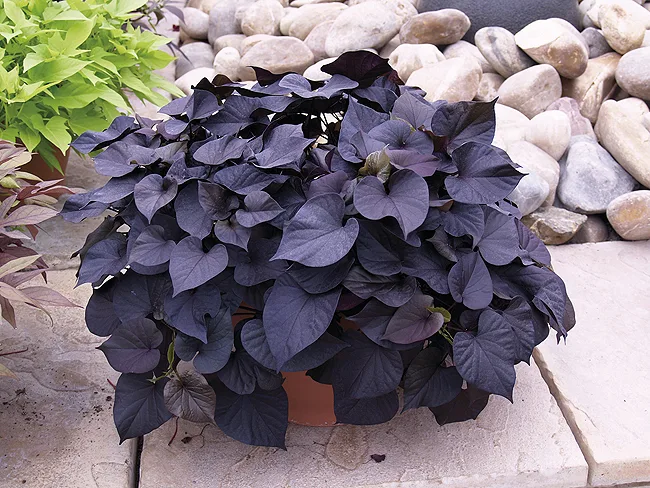
A compact, short-lived perennial often grown as an annual for its ornamental foliage. Trailing stems bear heart-shaped, dark olive green leaves that are strongly flushed with dark purple, appearing almost black
Scientific classification
- Species
- Ipomoea batatas Suntory Black Tone ('Kyuikukan 1') (Ipomoea batatas Suntory Black Tone ('Kyuikukan 1'))
- Genus
- Ipomoea
- Family
- Convolvulaceae
- Order
- Solanales
- Class
- Magnoliopsida
- Phylum
- Magnoliophyta
- Harmful if eaten. Wear gloves and other protective equipment when handling
- Toxicity
- Herbaceous Perennial · Annual Biennial
- Plant type
- 0.1-0.5 metres
- Height
- 0.1-0.5 metres
- Spread
- Deciduous
- Foliage
- Trailing
- Habit
- Spring · Summer · Autumn
- Season of interest
- Full sun
- Sunlight
- Information to be completed
- Ideal temperature









Ipomoea batatas Suntory Black Tone ('Kyuikukan 1') pictures
Toxicity
Harmful if eaten. Wear gloves and other protective equipment when handling
Ipomoea batatas Suntory Black Tone ('Kyuikukan 1') care guide
- Moderate regular watering, avoid prolonged drought or waterlogging
- Watering
- Full sun
- Sunlight

Watering
Moderate regular watering, avoid prolonged drought or waterlogging
Fertilizing
 Fertilizing
Balanced feed in spring and light repeat in growth season
Pruning
 Pruning
No pruning required
Propagation
 Propagation
Propagate by softwood cuttings in late spring or early summer. As this plant is protected by Plant Breeders' Rights, any propagation should be for personal rather than commercial use
Growing
 Growing
Thrives in well-drained, sandy loam in full sun, minimum temperature 7-10°C
Common pests and diseases
Diseases
May be susceptible to fusarium wilt, powdery mildews and virus diseases
Pests
May be susceptible to glasshoouse red spider mite and glasshouse whitefly
Explore the plant health library →




