
passion flower 'White Wedding'
Also known as: Information to be completed
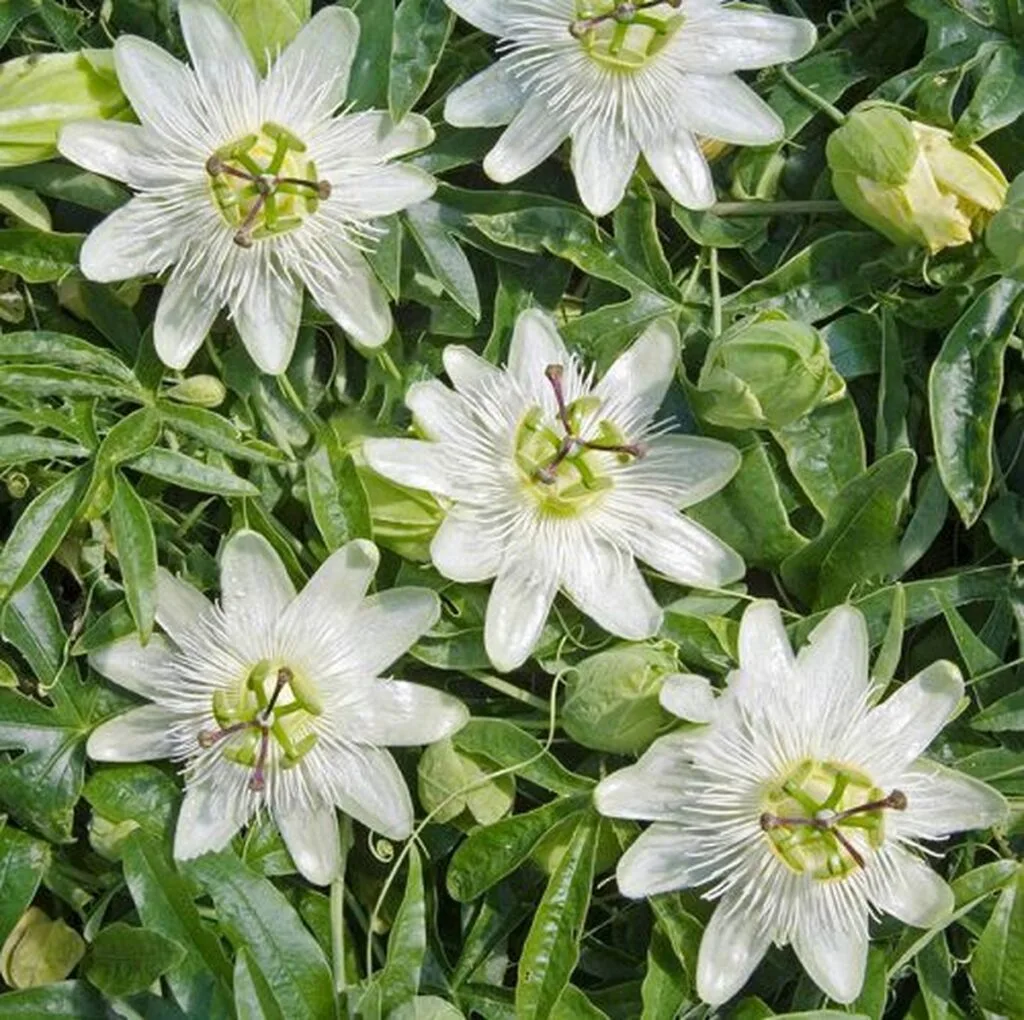
Vigorous, large, semi-evergreen to evergreen climber about 10m tall, with twining tendrils and mid-green, 5-7 deeply lobed leaves. Summer flowers to 10cm in width, are white, with white coronal filaments, and followed by orange ovoid fruits 4cm long. The pulp in the fruits only can be eaten when they are fully ripe and yellow-orange. Unripe fruit is toxic
Scientific classification
- Species
- passion flower 'White Wedding' (Passiflora 'White Wedding')
- Genus
- Passiflora
- Family
- Passifloraceae
- Fruit are ornamental - not to be eaten. Wear gloves and other protective equipment when handling
- Toxicity
- Climber Wall Shrub
- Plant type
- 8-12 metres
- Height
- 4-8 metres
- Spread
- Semi evergreen · Evergreen
- Foliage
- Climbing
- Habit
- Spring · Summer · Autumn · Winter
- Season of interest
- Full sun · Partial shade
- Sunlight
- Information to be completed
- Ideal temperature









passion flower 'White Wedding' pictures
Distribution of passion flower 'White Wedding'
Distribution map
Information to be completed
Information to be completed
Culture
Information to be completed
Toxicity
Fruit are ornamental - not to be eaten. Wear gloves and other protective equipment when handling
Quick identification of passion flower 'White Wedding'
Information to be completed
passion flower 'White Wedding' care guide
- Soak soil deeply when dry, cut watering volume in cold winter time
- Watering
- Full sun · Partial shade
- Sunlight
- Information to be completed
- Ideal temperature

Watering
Soak soil deeply when dry, cut watering volume in cold winter time
Fertilizing
 Fertilizing
Diluted flowering vine feed every four weeks spring through summer
Pruning
 Pruning
Routine pruning is unnecessary; shorten overlong shoots to fit the available space. For last-year flowering growth, prune after flowering; for current-year flowering growth, prune in late winter or spring. This guidance is for established plants.
Propagation
 Propagation
Propagate by seed, semi-hardwood cuttings or by layering in spring or autumn
Growing
 Growing
Fast-growing climber for sun or partial shade, thrives in moist but well-drained soil. In cold areas, grow in a container and overwinter indoors. Note that due to its vigorous nature in some gardens it has the potential to become a nuisance. See passion flower cultivation
People also ask
Information to be completed
Common pests and diseases
Diseases
May be susceptible to honey fungus (rarely) and a virus
Pests
May be susceptible to glasshouse red spider mite, glasshouse whitefly, mealybugs and scale insects under glass
Explore the plant health library →




