
bleeding heart 'Valentine'
Also known as: Information to be completed
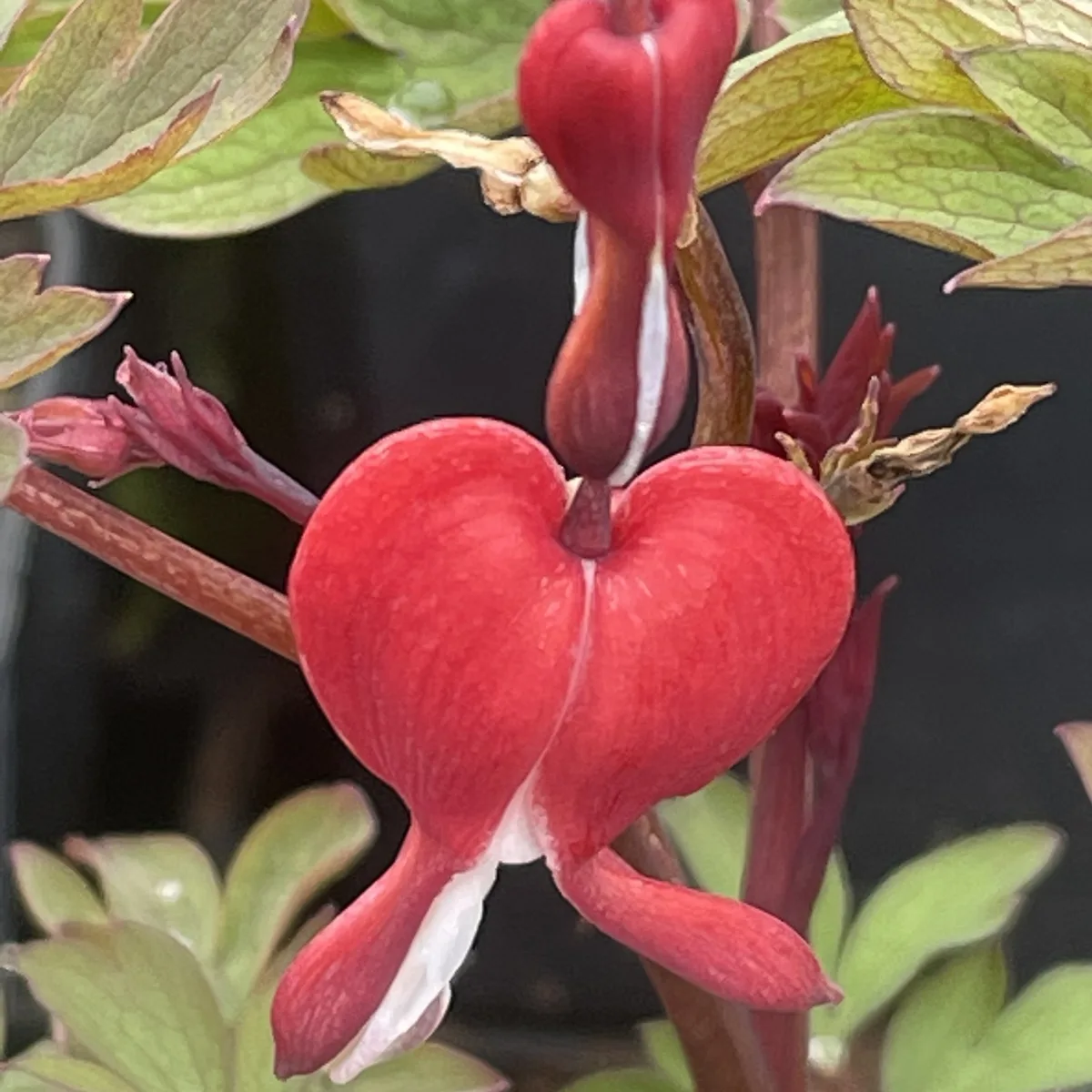
Bears red arching stems dripping with heart-shaped light red and white flowers. Deeply cut foliage emerges red but changes to green by early summer
Scientific classification
- Species
- bleeding heart 'Valentine' (Lamprocapnos spectabilis Valentine ('Hordival'))
- Genus
- Lamprocapnos
- Family
- Papaveraceae
- Order
- Ranunculales
- Class
- Magnoliopsida
- Phylum
- Magnoliophyta
- All parts cause stomach ache if ingested, the foliage may aggravate skin allergies. Wear gloves and other protective equipment when handling
- Toxicity
- Herbaceous Perennial
- Plant type
- 0.5-1 metres
- Height
- 0.5-1 metres
- Spread
- Deciduous
- Foliage
- Clump forming
- Habit
- Spring · Summer
- Season of interest
- Partial shade
- Sunlight
- Information to be completed
- Ideal temperature









bleeding heart 'Valentine' pictures
Toxicity
All parts cause stomach ache if ingested, the foliage may aggravate skin allergies. Wear gloves and other protective equipment when handling
bleeding heart 'Valentine' care guide
- Moderate regular watering, allowing brief slight drying between soakings
- Watering
- Partial shade
- Sunlight

Watering
Moderate regular watering, allowing brief slight drying between soakings
Fertilizing
 Fertilizing
Balanced perennial feed every four weeks from spring through summer
Pruning
 Pruning
No pruning required
Propagation
 Propagation
Propagate by division in early spring or after the leaves have died down. Propagate by root cuttings in winter
Growing
 Growing
Grow in moist, fertile, humus-rich soil, preferably neutral or slightly alkaline; site in partial shade although will tolerate sun if the soil is moist. Tidy up plants after flowering as foliage dies back
Common pests and diseases
Diseases
Generally disease free
Pests
Generally pest-free
Explore the plant health library →




