
heather 'Tanja'
Also known as: Information to be completed
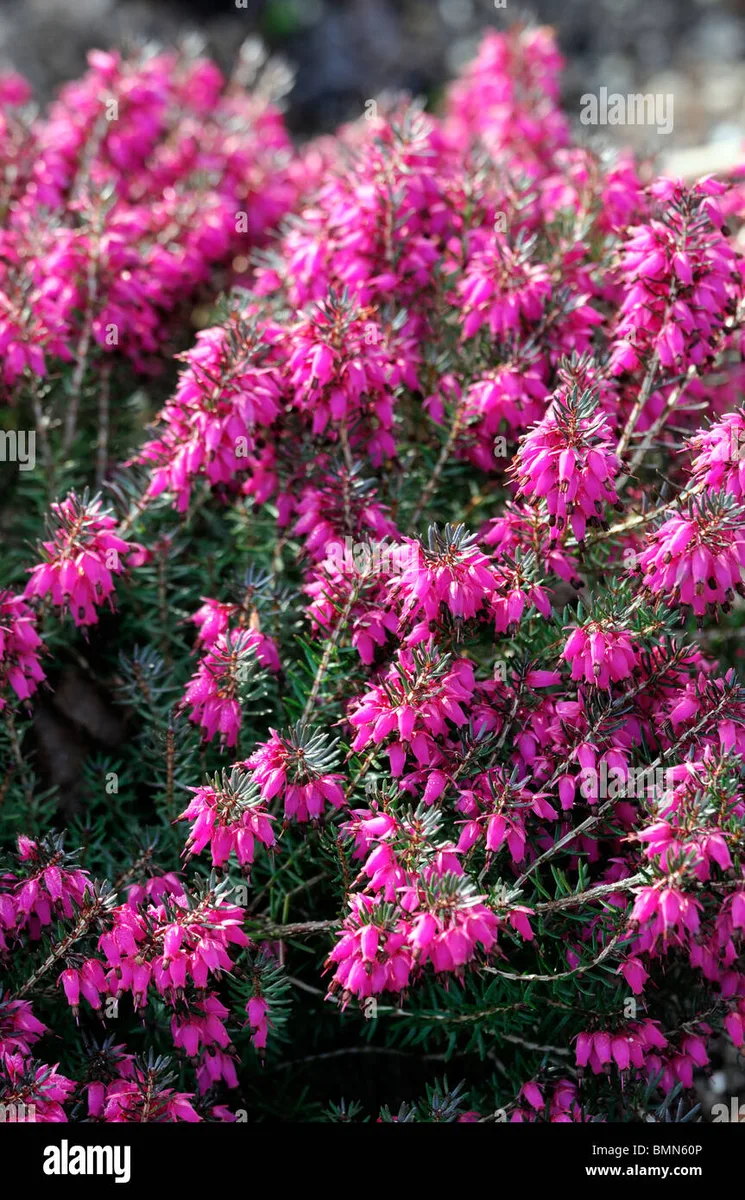
A dwarf shrub 10-15cm high, with dark green leaves and fragrant, dark magenta-pink flowers, with brown anthers, from early spring to mid-spring. Most Erica species and cultivars are excellent plants for all types of bees
Scientific classification
- Species
- heather 'Tanja' (Erica carnea 'Tanja')
- Genus
- Erica
- Family
- Ericaceae
- Order
- Ericales
- Class
- Magnoliopsida
- Phylum
- Magnoliophyta
- Information to be completed
- Toxicity
- Shrubs
- Plant type
- 0.1-0.5 metres
- Height
- 0.1-0.5 metres
- Spread
- Evergreen
- Foliage
- Bushy
- Habit
- Spring · Summer · Autumn · Winter
- Season of interest
- Full sun
- Sunlight
- Information to be completed
- Ideal temperature









heather 'Tanja' pictures
Distribution of heather 'Tanja'
Distribution map
- Native
- Introduced
- Cultivated
Source:WCVP v16 · Royal Botanic Gardens, Kew · CC BY 3.0 · Boundaries:WGSRPD / TDWG
heather 'Tanja' care guide
- Keep acidic soil evenly moist with sharp drainage
- Watering
- Full sun
- Sunlight

Watering
Keep acidic soil evenly moist with sharp drainage
Fertilizing
 Fertilizing
Light ericaceous feed in spring and early summer
Pruning
 Pruning
Little pruning is needed. Remove diseased, damaged, crowded or crossing shoots and unwanted growth. Timing depends on the plant: generally late winter or early spring; plants prone to bleeding and deciduous magnolias need different timing, and deciduous azaleas and lilacs are pruned after flowering.
Propagation
 Propagation
Propagate by semi-ripe cuttings from mid-summer to late summer, or by mound-layering in spring
Growing
 Growing
Grow in full sun, in well-drained, preferably acidic, sandy or organic soil; will grow in poor soils, and will tolerate neutral and mildly alkaline soils, and will tolerate some shade; for more advice, see heather cultivation
Common pests and diseases
Diseases
May be susceptible to fungal diseases, including honey fungus (rarely), and Phytophthora root rot, in wet conditions
Pests
Generally pest-free
Explore the plant health library →




