
sage 'Madeline'
Also known as: Information to be completed
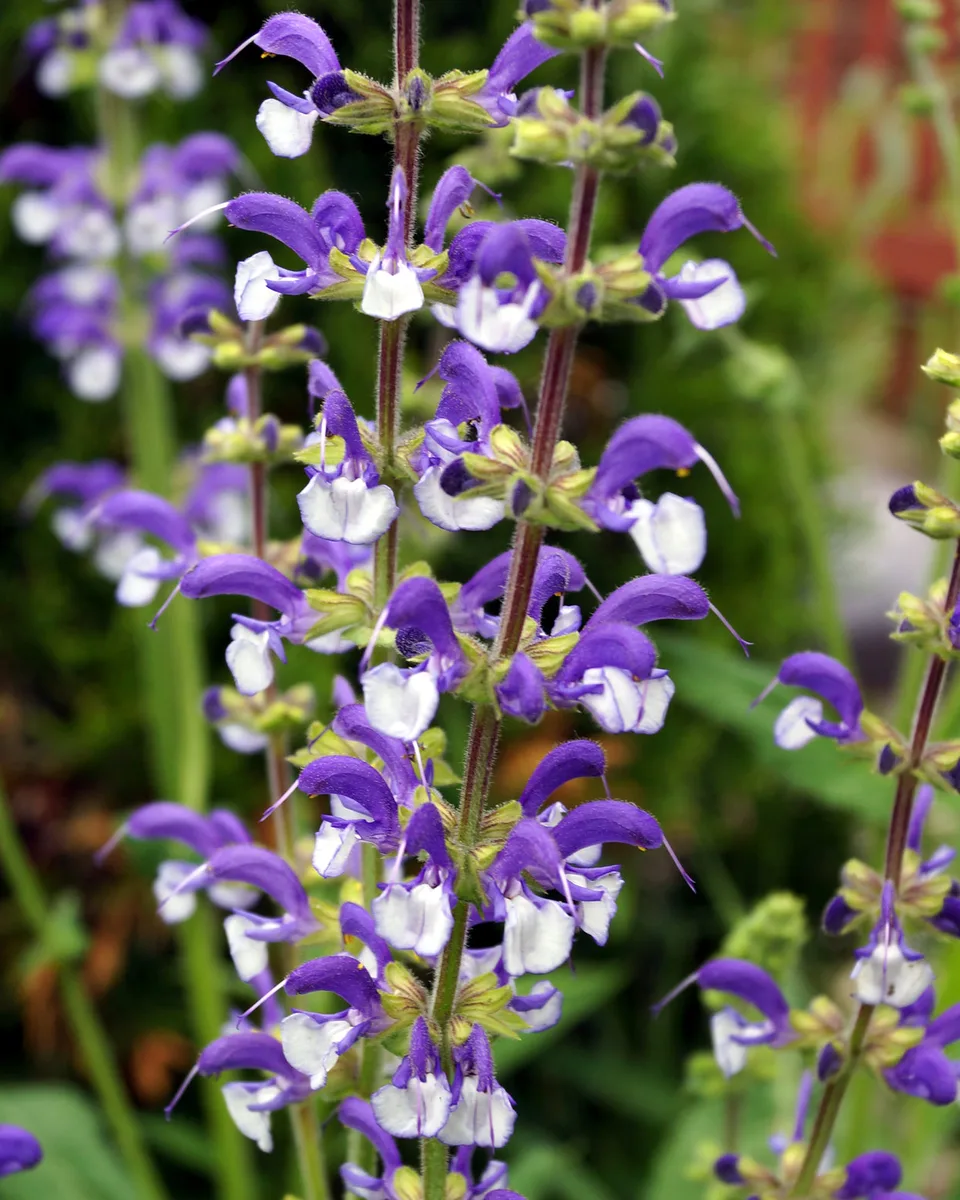
Madeline' is a clump-forming perennial growing to 80cm tall with aromatic, ovate leaves. Bi-coloured flowers comprising a rich purple-blue upper lip and white lower lip are borne in summer on upright spikes
Scientific classification
- Species
- sage 'Madeline' (Salvia 'Madeline')
- Genus
- Salvia
- Family
- Lamiaceae
- Order
- Lamiales
- Class
- Magnoliopsida
- Phylum
- Tracheophyta
- Information to be completed
- Toxicity
- Herbaceous Perennial
- Plant type
- 0.5-1 metres
- Height
- 0.1-0.5 metres
- Spread
- Semi evergreen
- Foliage
- Bushy
- Habit
- Spring · Summer · Autumn
- Season of interest
- Full sun
- Sunlight
- Information to be completed
- Ideal temperature









sage 'Madeline' pictures
sage 'Madeline' care guide
- Allow top soil to dry halfway, water deeply at each irrigation time
- Watering
- Full sun
- Sunlight

Watering
Allow top soil to dry halfway, water deeply at each irrigation time
Fertilizing
 Fertilizing
Flora boosting diluted feed every two weeks during warm growing months
Pruning
 Pruning
Deadhead to prolong flowering
Propagation
 Propagation
Propagate by basal or softwood cuttings in spring or early summer or semi-ripe cuttings in late summer or autumn with bottom heat
Growing
 Growing
Grow in light, moderately fertile, well-drained soil in a sheltered position with full sun
Common pests and diseases
Diseases
May be susceptible to honey fungus (rarely), powdery mildews, verticillium wilt and foot and root rots
Pests
May be susceptible to damage by slugs and snails which may attack young growth and by leafhoppers and rosemary beetle
Explore the plant health library →




