
Loropetalum chinense var. rubrum 'Chang Nian Hong'
Also known as: Information to be completed
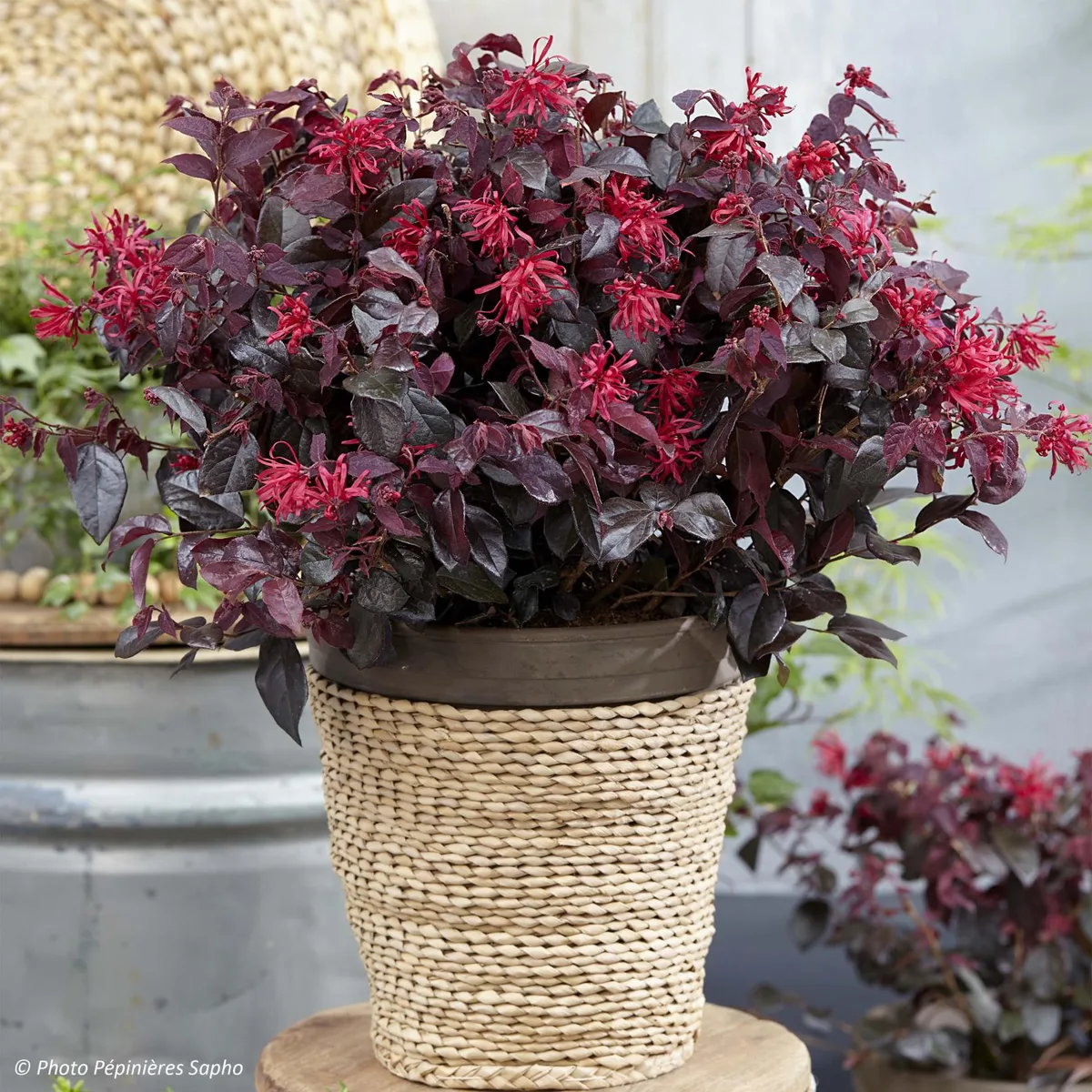
An evergreen shrub to around 1.5m high, with a spreading habit and oval-shaped, dark reddish-purple leaves. Scented, tassel-like red flowers with long narrow petals are produced in late winter and early spring
Scientific classification
- Species
- Loropetalum chinense var. rubrum 'Chang Nian Hong' (Loropetalum chinense var. rubrum 'Chang Nian Hong')
- Genus
- Loropetalum
- Family
- Hamamelidaceae
- Order
- Saxifragales
- Class
- Magnoliopsida
- Phylum
- Magnoliophyta
- Information to be completed
- Toxicity
- Shrubs
- Plant type
- 1-1.5 metres
- Height
- 1-1.5 metres
- Spread
- Evergreen
- Foliage
- Bushy
- Habit
- Spring · Summer · Autumn · Winter
- Season of interest
- Full sun
- Sunlight
- Information to be completed
- Ideal temperature









Loropetalum chinense var. rubrum 'Chang Nian Hong' pictures
Distribution of Loropetalum chinense var. rubrum 'Chang Nian Hong'
Distribution map
- Native
- Introduced
- Cultivated
Source:WCVP v16 · Royal Botanic Gardens, Kew · CC BY 3.0 · Boundaries:WGSRPD / TDWG
Loropetalum chinense var. rubrum 'Chang Nian Hong' care guide
- Moderate regular watering, avoid prolonged drought and stagnant waterlogging
- Watering
- Full sun
- Sunlight

Watering
Moderate regular watering, avoid prolonged drought and stagnant waterlogging
Fertilizing
 Fertilizing
Balanced perennial feed every four weeks spring through summer growth
Pruning
 Pruning
Usually little pruning is needed. Lightly shape if necessary, removing dead, damaged or diseased shoots. Prune after flowering.
Propagation
 Propagation
Propagate by rooting semi-ripe cuttings with bottom heat in summer. As this plant is protected by Plant Breeders' Rights, any propagation should be for personal rather than commercial use
Growing
 Growing
Grow in fertile, humus-rich, moist but well-drained soil, in a sunny spot with shelter from cold winds. May need watering in dry spells in summer. Not suitable for waterlogged or shallow chalk soils
Common pests and diseases
Diseases
Generally disease-free
Pests
Generally pest-free
Explore the plant health library →




