
cucumber 'Passandra'
Also known as: Information to be completed
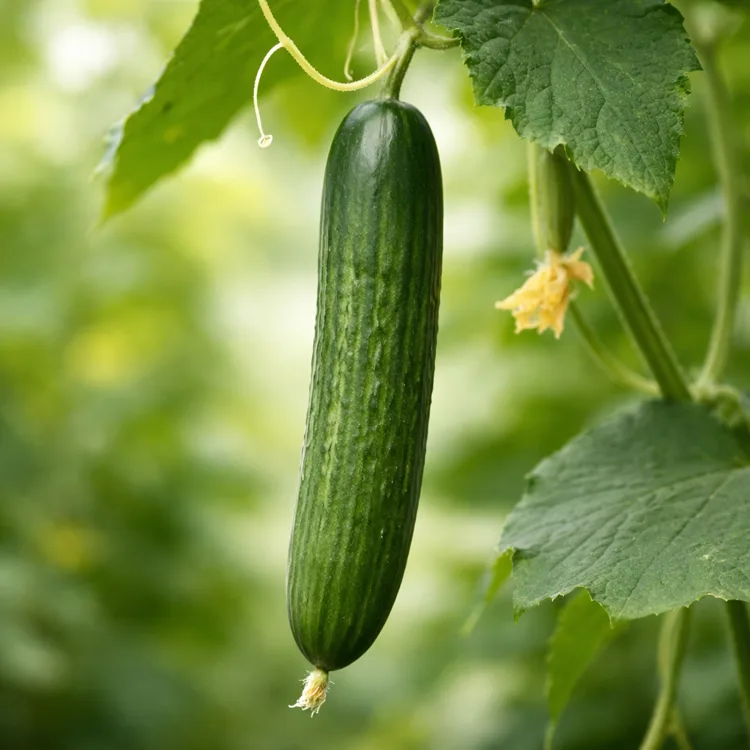
Passandra' is a perennial cucumber widely cultivated as an annual. Bright yellow flowers form medium thick and medium long green fruit which can become thin in the middle during the summer months. This variety is tolerant against mildews and mosaic virus
Scientific classification
- Species
- cucumber 'Passandra' (Cucumis sativus 'Passandra')
- Genus
- Cucumis
- Family
- Cucurbitaceae
- Order
- Cucurbitales
- Class
- Magnoliopsida
- Phylum
- Magnoliophyta
- Information to be completed
- Toxicity
- Annual Biennial
- Plant type
- 0.1-0.5 metres
- Height
- 0.1-0.5 metres
- Spread
- Deciduous
- Foliage
- Trailing · Climbing
- Habit
- Spring · Summer · Autumn
- Season of interest
- Full sun
- Sunlight
- Information to be completed
- Ideal temperature









cucumber 'Passandra' pictures
Distribution of cucumber 'Passandra'
Distribution map
- Native
- Introduced
- Cultivated
Source:WCVP v16 · Royal Botanic Gardens, Kew · CC BY 3.0 · Boundaries:WGSRPD / TDWG
cucumber 'Passandra' care guide
- Evenly moist soil all growing time, reduce water fruit ripening stage
- Watering
- Full sun
- Sunlight

Watering
Evenly moist soil all growing time, reduce water fruit ripening stage
Fertilizing
 Fertilizing
High potassium vegetable feed every two weeks spring to summer
Pruning
 Pruning
Under glass, remove the tip of the plant once it reaches the top of the support. Shorten sideshoots to two leaves beyond any developing fruit, or to 60cm if they have no fruit. If left to trail outdoors shorten the main shoot, and sideshoots with no fruit, after seven leaves
Propagation
 Propagation
Propagate by seed. See sowing vegetable seeds
Growing
 Growing
Start from seed or buy as small plants and grow in a heated greenhouse, or on a windowsill. Can be moved to an unheated greenhouse, or outdoors, once all risk of frost has passed. Water regularly, feed plants in containers every 10-14 days, and provide support.
Common pests and diseases
Diseases
May be susceptible to cucumber mosaic virus and powdery mildews
Pests
May be susceptible to glasshouse whitefly and glasshouse red spider mite. Outdoors may be troubled by slugs and snails
Explore the plant health library →




