
chard 'Canary Yellow'
Also known as: Information to be completed
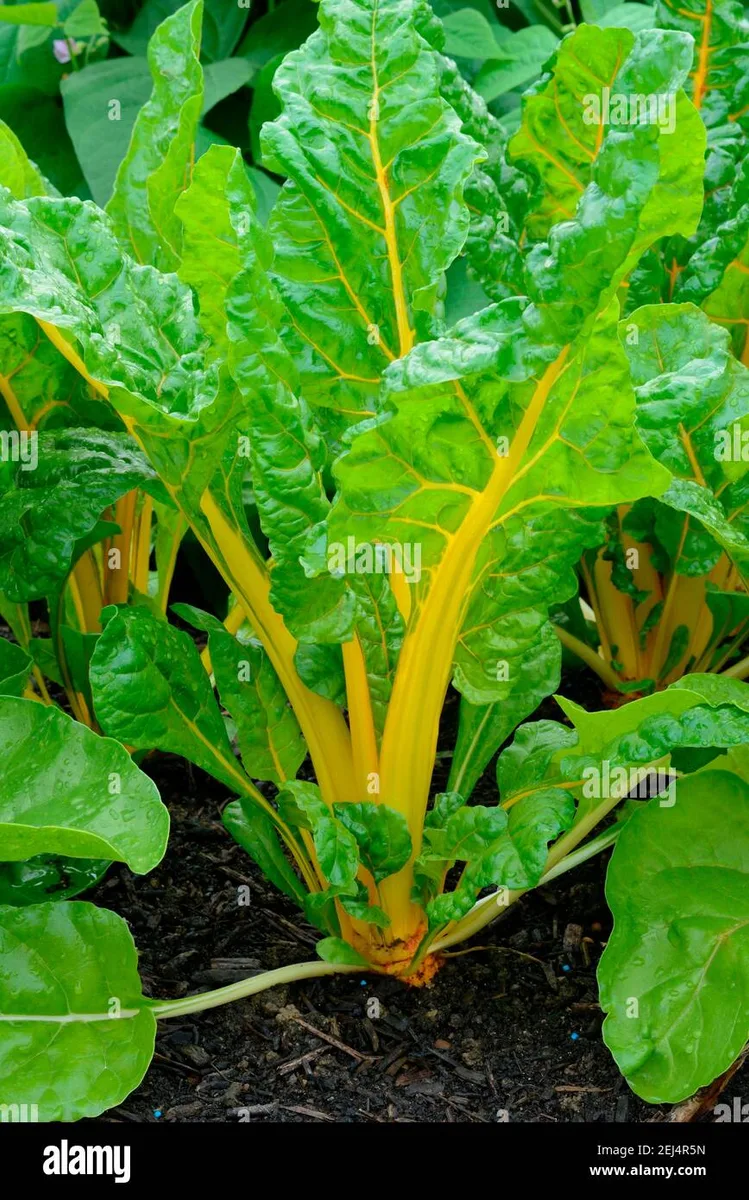
Ornamental biennial grown as a vegetable for its attractive, peppery glossy, mid-green leaves with bright-yellow stems and mid-ribs. Shows resistance to bolting and can be used as an alternative to spinach
Scientific classification
- Species
- chard 'Canary Yellow' (Beta vulgaris var. flavescens 'Canary Yellow' [subsp. cicla])
- Genus
- Beta
- Family
- Amaranthaceae
- Order
- Caryophyllales
- Class
- Magnoliopsida
- Phylum
- Tracheophyta
- Information to be completed
- Toxicity
- Annual Biennial
- Plant type
- 0.1-0.5 metres
- Height
- 0.1-0.5 metres
- Spread
- Semi evergreen
- Foliage
- Bushy
- Habit
- Spring · Summer · Autumn
- Season of interest
- Full sun · Partial shade
- Sunlight
- Information to be completed
- Ideal temperature









chard 'Canary Yellow' pictures
chard 'Canary Yellow' care guide
- Keep soil consistently moist for steady leafy growth without drought stress
- Watering
- Full sun · Partial shade
- Sunlight

Watering
Keep soil consistently moist for steady leafy growth without drought stress
Fertilizing
 Fertilizing
Nitrogen-rich vegetable feed every two to three weeks in active growth
Pruning
 Pruning
No pruning required
Propagation
 Propagation
Propagate by seed. See sowing vegetable seeds
Growing
 Growing
Best grown in a fertile, free-draining soil in full sun. Sow at fortnightly intervals from March to July for a successional harvest. See Chard section in Vegetable cultivation for detailed growing advice
Common pests and diseases
Diseases
May be susceptible to downy mildew and grey mould (Botrytis)
Pests
May be susceptible to aphids, flea beetles and leaf miners, birds may damage crops if not netted
Explore the plant health library →




