
Chinese evergreen 'Maria'
Also known as: Information to be completed
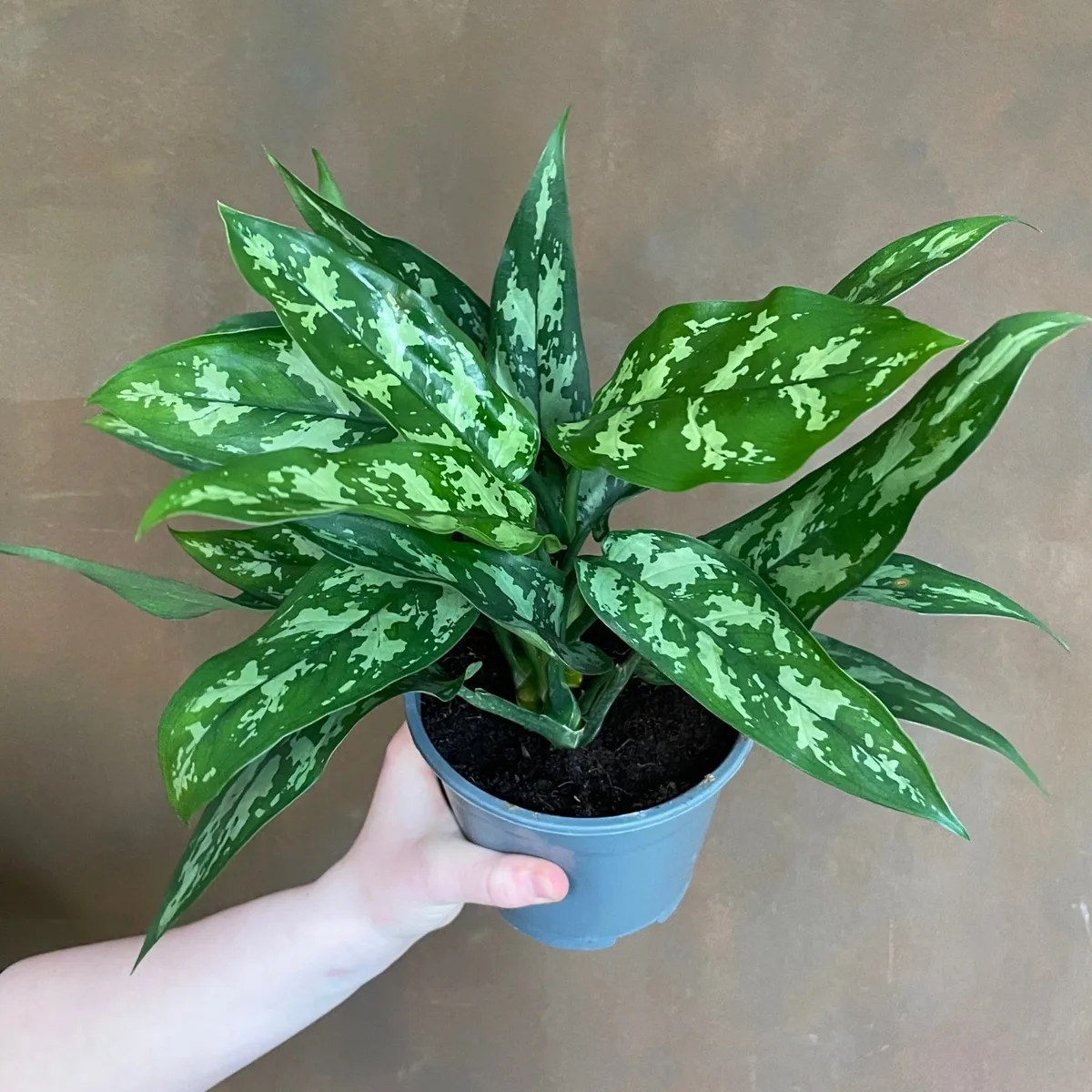
Maria' is a slow-growing herbaceous perennial, grown in temperate areas as a greenhouse, conservatory or house plant, ultimately reaching about 50cm high, with evergreen, narrowly elliptical, rich green leaves with pale silver-green speckled chevron markings around the veins
Scientific classification
- Species
- Chinese evergreen 'Maria' (Aglaonema 'Maria')
- Genus
- Aglaonema
- Family
- Araceae
- Order
- Alismatales
- Class
- Liliopsida
- Phylum
- Magnoliophyta
- Harmful if eaten, and may irritate skin and eyes. Wear gloves and other protective equipment when handling
- Toxicity
- Herbaceous Perennial · Houseplants · Conservatory Greenhouse
- Plant type
- 0.1-0.5 metres
- Height
- 0.1-0.5 metres
- Spread
- Evergreen
- Foliage
- Clump forming
- Habit
- Spring · Summer · Autumn · Winter
- Season of interest
- Partial shade
- Sunlight
- Information to be completed
- Ideal temperature









Chinese evergreen 'Maria' pictures
Toxicity
Harmful if eaten, and may irritate skin and eyes. Wear gloves and other protective equipment when handling
Chinese evergreen 'Maria' care guide
- Allow top substrate to dry partially, never saturate entire pot mix
- Watering
- Partial shade
- Sunlight

Watering
Allow top substrate to dry partially, never saturate entire pot mix
Fertilizing
 Fertilizing
Diluted all-purpose foliage feed monthly spring through autumn
Pruning
 Pruning
No pruning required
Propagation
 Propagation
Propagate by division, removing basal shoots with three or four leaves, with roots attached, in spring
Growing
 Growing
In frost-prone areas, grow in a temperate or warm greenhouse or conservatory, or as a houseplant, in well-drained, loamless or loam-based potting compost (such as John Innes No. 2 or 3) in filtered light, with high humidity; water moderately in the growing season, with a monthly balanced liquid fertilizer, and in winter allow some drying out between waterings, and pot on every 2-3 years; in frost-free areas, grow outdoors, in well-drained, moderately fertile, humus-rich soil in partial shade
Common pests and diseases
Diseases
Generally disease-free, but excess watering may lead to stem or root rot
Pests
May be susceptible to mealybugs
Explore the plant health library →




