
Syringa × hyacinthiflora 'Sister Justina'
Also known as: Information to be completed
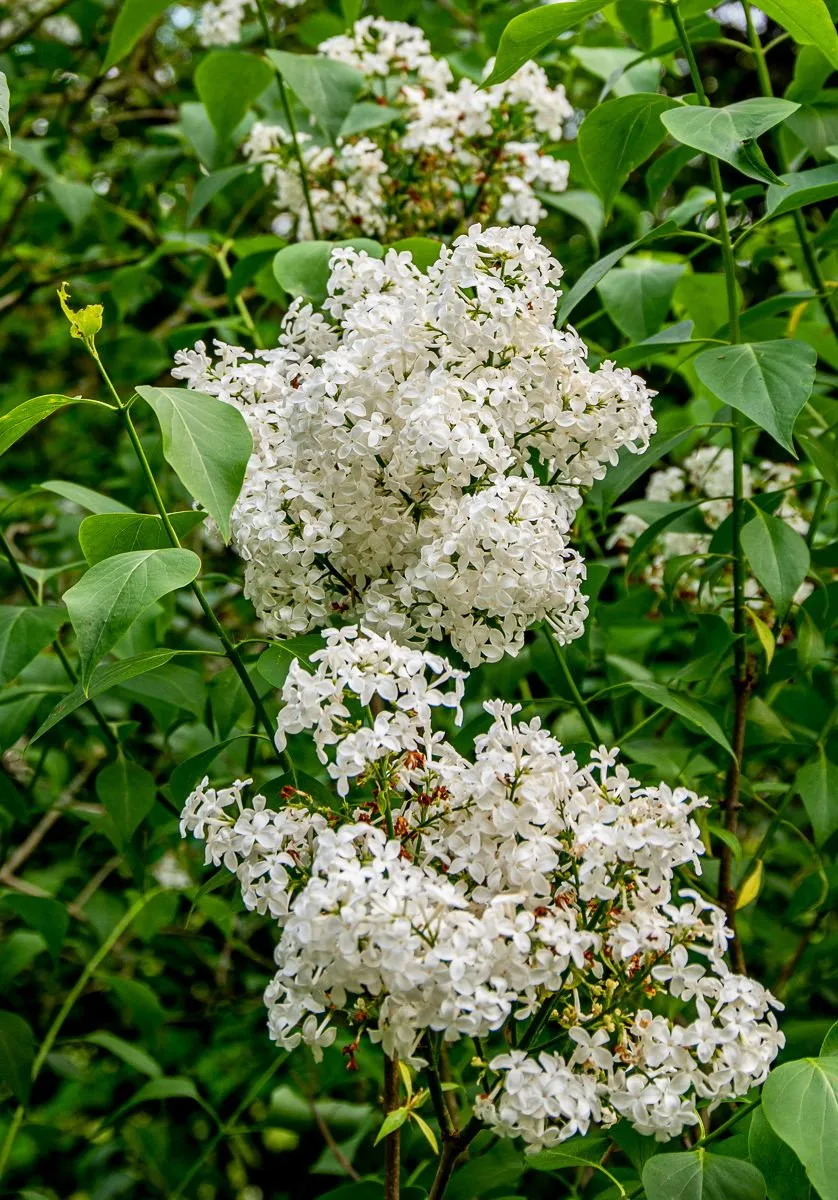
A bushy, upright to spreading shrub to around 4m high, with oval to heart-shaped green leaves that are flushed bronze when young, and tinted purple before dropping in autumn. Large, loose, upright clusters of fragrant white flowers are produced from light yellow buds in mid-spring
Scientific classification
- Species
- Syringa × hyacinthiflora 'Sister Justina' (Syringa × hyacinthiflora 'Sister Justina')
- Genus
- Syringa
- Family
- Oleaceae
- Order
- Lamiales
- Class
- Magnoliopsida
- Phylum
- Magnoliophyta
- Information to be completed
- Toxicity
- Shrubs · Trees
- Plant type
- 2.5-4 metres
- Height
- 2.5-4 metres
- Spread
- Deciduous
- Foliage
- Bushy
- Habit
- Autumn · Spring · Summer
- Season of interest
- Full sun · Partial shade
- Sunlight
- Information to be completed
- Ideal temperature









Syringa × hyacinthiflora 'Sister Justina' pictures
Syringa × hyacinthiflora 'Sister Justina' care guide
- Deep watering during dry spells, allowing slight surface drying between soakings
- Watering
- Full sun · Partial shade
- Sunlight

Watering
Deep watering during dry spells, allowing slight surface drying between soakings
Fertilizing
 Fertilizing
Balanced shrub or tree feed once each early spring
Pruning
 Pruning
Little pruning is needed. Remove diseased, damaged, crowded or crossing shoots and unwanted growth. If needed, prune lightly after flowering.
Propagation
 Propagation
Propagate by softwood cuttings or by layering in early summer, by grafting in winter or by chip budding in midsummer
Growing
 Growing
Thrives in well-drained, fertile, humus-rich alkaline to neutral soils. Mulch regularly. Will tolerate some light shade, but position in full sun for best fragrance and autumn colour
Common pests and diseases
Diseases
May be susceptible to lilac blight, honey fungus, phytophthora, powdery mildews and bacterial canker
Pests
May be susceptible to lilac leaf-mining moth, thrips and willow scale insects
Explore the plant health library →




