
cabbage palm Purpurea Group
Also known as: Information to be completed
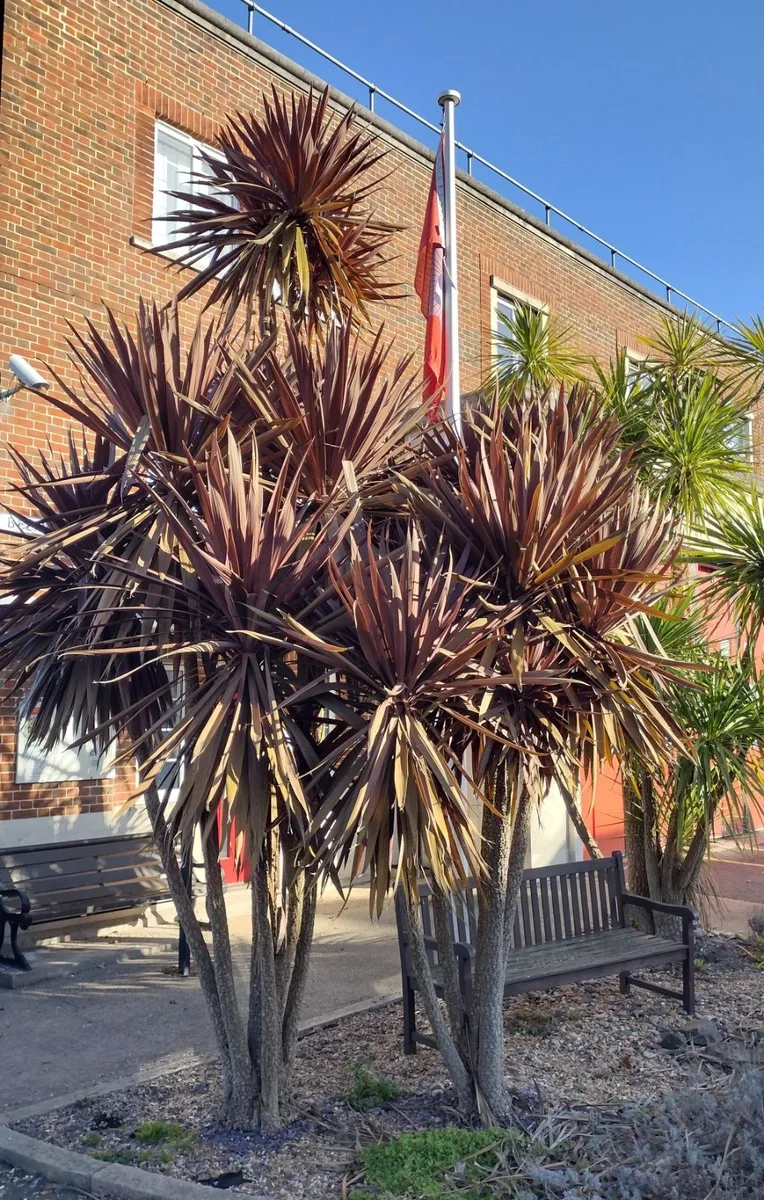
An erect, sparsely branched evergreen tree to 6m, bearing purple-bronze, sword-shaped leaves at the branch tips. In summer, mature trees produce a mass of tiny, creamy-white flowers in dense clusters to 1m long. A good container plant when young, and makes an architectural tree when mature
Scientific classification
- Species
- cabbage palm Purpurea Group (Cordyline australis (Purpurea Group))
- Genus
- Cordyline
- Family
- Asparagaceae
- Order
- Asparagales
- Class
- Liliopsida
- Phylum
- Tracheophyta
- Information to be completed
- Toxicity
- Trees · Shrubs
- Plant type
- 4-8 metres
- Height
- 1.5-2.5 metres
- Spread
- Evergreen
- Foliage
- Tufted
- Habit
- Spring · Summer · Autumn · Winter
- Season of interest
- Full sun · Partial shade
- Sunlight
- Information to be completed
- Ideal temperature









cabbage palm Purpurea Group pictures
Distribution of cabbage palm Purpurea Group
Distribution map
- Native
- Introduced
- Cultivated
Source:WCVP v16 · Royal Botanic Gardens, Kew · CC BY 3.0 · Boundaries:WGSRPD / TDWG
cabbage palm Purpurea Group care guide
- Moderate regular watering, allowing brief slight drying between soakings
- Watering
- Full sun · Partial shade
- Sunlight

Watering
Moderate regular watering, allowing brief slight drying between soakings
Fertilizing
 Fertilizing
Balanced perennial feed every four weeks from spring through summer
Pruning
 Pruning
No pruning required
Propagation
 Propagation
Propagate by seed, stem cuttings or removing suckers in spring
Growing
 Growing
Grow in fertile, well-drained soil in full sun to partial shade. Young plants may require winter protection in very cold areas. See cordyline cultivation for further information
Common pests and diseases
Diseases
May be susceptible to cordyline slime flux and honey fungus (rarely)
Pests
Generally pest-free
Explore the plant health library →




