
Australian fuchsia 'Mannii'
Also known as: Information to be completed
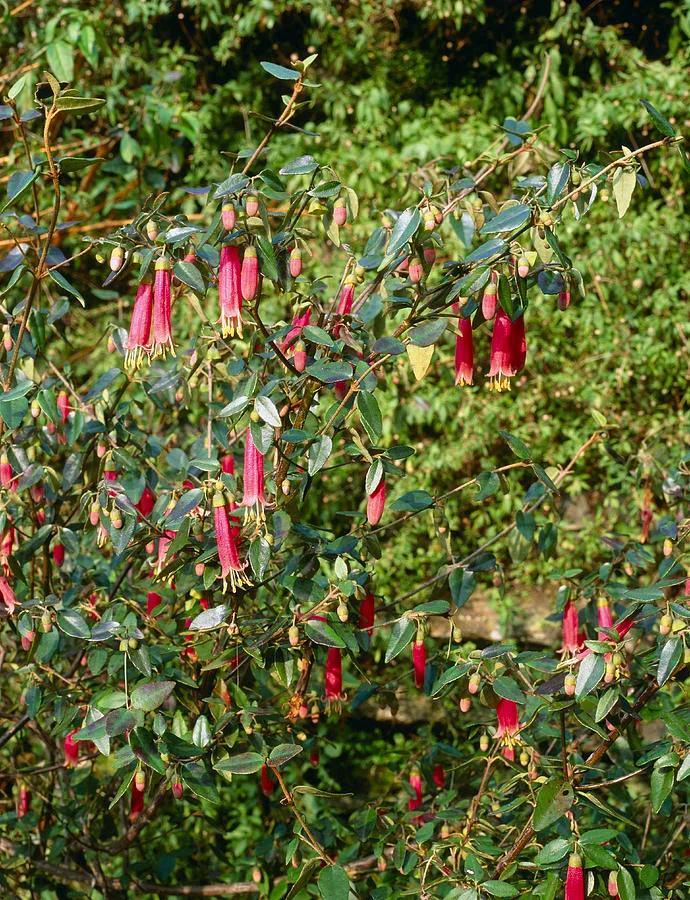
Mannii' is a tender evergreen shrub, up to 2.5m high. Dark green oval leaves have white undersides and hanging, long, bell-shaped flowers, 2.5cm long, scarlet outside and rose-pink inside, appear from autumn to spring
Scientific classification
- Species
- Australian fuchsia 'Mannii' (Correa 'Mannii')
- Genus
- Correa
- Family
- Rutaceae
- Information to be completed
- Toxicity
- Conservatory Greenhouse · Shrubs
- Plant type
- 1.5-2.5 metres
- Height
- 2.5-4 metres
- Spread
- Evergreen
- Foliage
- Bushy
- Habit
- Spring · Summer · Autumn · Winter
- Season of interest
- Full sun · Partial shade
- Sunlight
- Information to be completed
- Ideal temperature









Australian fuchsia 'Mannii' pictures
Distribution of Australian fuchsia 'Mannii'
Distribution map
Information to be completed
Information to be completed
Culture
Information to be completed
Toxicity
Information to be completed
Quick identification of Australian fuchsia 'Mannii'
Information to be completed
Australian fuchsia 'Mannii' care guide
- Moderate regular watering, deep soak only during prolonged hot spells
- Watering
- Full sun · Partial shade
- Sunlight
- Information to be completed
- Ideal temperature

Watering
Moderate regular watering, deep soak only during prolonged hot spells
Fertilizing
 Fertilizing
Balanced evergreen shrub feed applied once per early spring yearly
Pruning
 Pruning
Usually little pruning is needed. Lightly shape if necessary, removing dead, damaged or diseased shoots. Prune after flowering.
Propagation
 Propagation
Propagate by softwood cuttings, or semi-ripe cuttings in summer
Growing
 Growing
Grow in a free-draining, lime-free medium that is rich in organic matter, in full light or partial shade, outside only in frost-free areas, or in a cool greenhouse with winter night temperatures of 3-5°C (higher winter temperatures may damage it) and keep only just moist in winter
People also ask
Information to be completed
Common pests and diseases
Diseases
Generally disease free
Pests
May be affected by scale insects under glass
Explore the plant health library →




