
Eucomis comosa 'Sparkling Rosy'
Also known as: Information to be completed
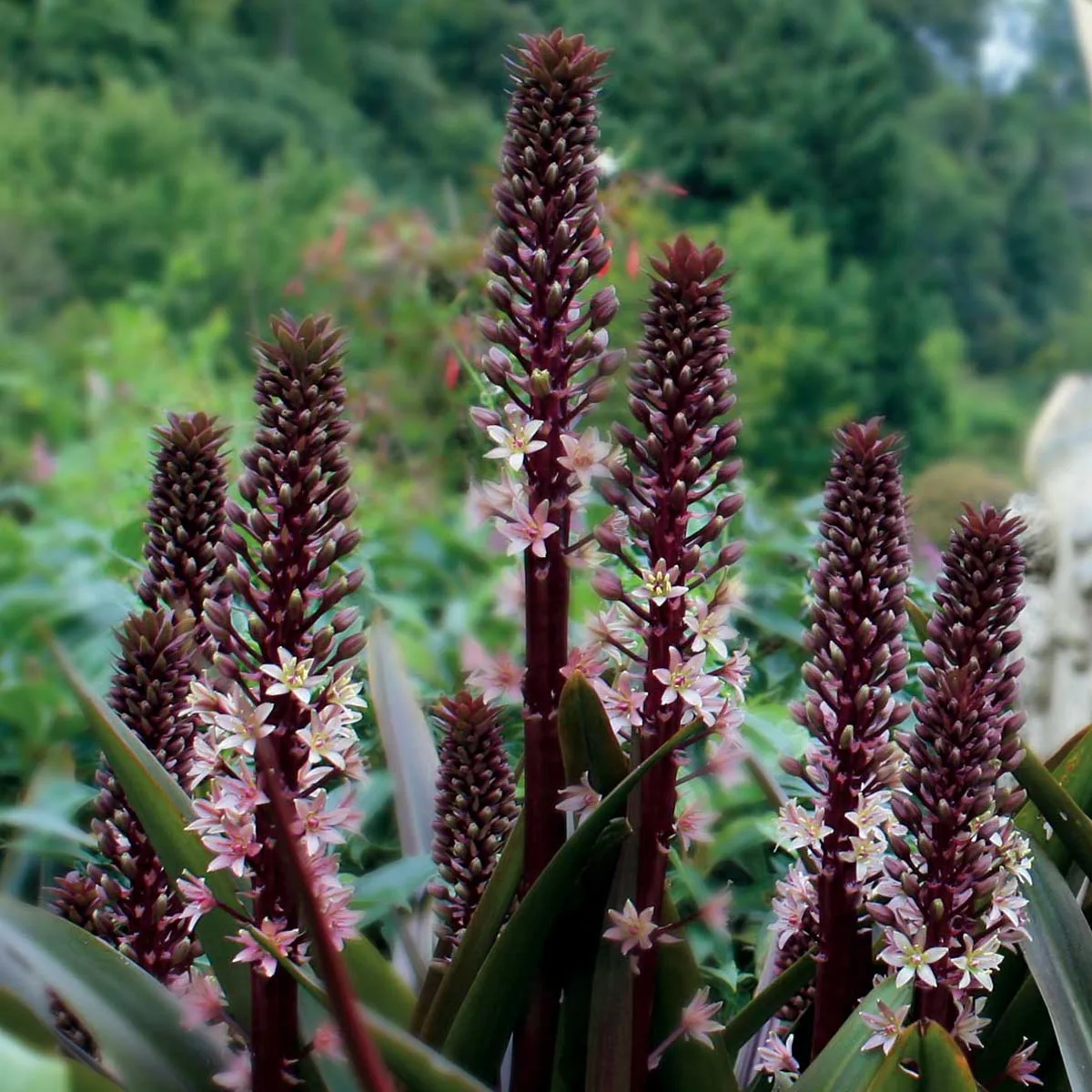
A bulbous perennial to 60cm, producing a rosette of strap-shaped, dark green leaves flushed with purple. In late summer and autumn, dark red, upright stems carry dense spikes of scented, rose-pink, star-shaped flowers, opening from dark red buds, topped with a cluster of purple-flushed, dark green, leaf-like bracts. Purple seed pods follow
Scientific classification
- Species
- Eucomis comosa 'Sparkling Rosy' (Eucomis comosa 'Sparkling Rosy')
- Genus
- Eucomis
- Family
- Asparagaceae
- Information to be completed
- Toxicity
- Bulbs
- Plant type
- 0.5-1 metres
- Height
- 0.1-0.5 metres
- Spread
- Deciduous
- Foliage
- Clump forming
- Habit
- Spring · Summer · Autumn
- Season of interest
- Full sun
- Sunlight
- Information to be completed
- Ideal temperature









Eucomis comosa 'Sparkling Rosy' pictures
Distribution of Eucomis comosa 'Sparkling Rosy'
Distribution map
Information to be completed
Information to be completed
Culture
Information to be completed
Toxicity
Information to be completed
Quick identification of Eucomis comosa 'Sparkling Rosy'
Information to be completed
Eucomis comosa 'Sparkling Rosy' care guide
- Regular watering spring growth, reduce irrigation autumn leaf dieback
- Watering
- Full sun
- Sunlight
- Information to be completed
- Ideal temperature

Watering
Regular watering spring growth, reduce irrigation autumn leaf dieback
Fertilizing
 Fertilizing
Weak bulb liquid feed applied once before spring leaf emergence phase
Pruning
 Pruning
Remove flower spikes once the display is over and allow foliage to die down naturally
Propagation
 Propagation
Propagate by removing offsets in spring
Growing
 Growing
Plant 15cm deep in fertile, humus-rich, moist but well-drained soil in a sheltered position in full sun. Mulch well to retain soil moisture and protect from winter cold. Alternatively, grow in free-draining compost, well-watered, and take under cover for winter. See Eucomis cultivation
People also ask
Information to be completed
Common pests and diseases
Diseases
Generally disease-free
Pests
Generally pest-free
Explore the plant health library →




