
Salvia 'Nuchi'
Also known as: Information to be completed
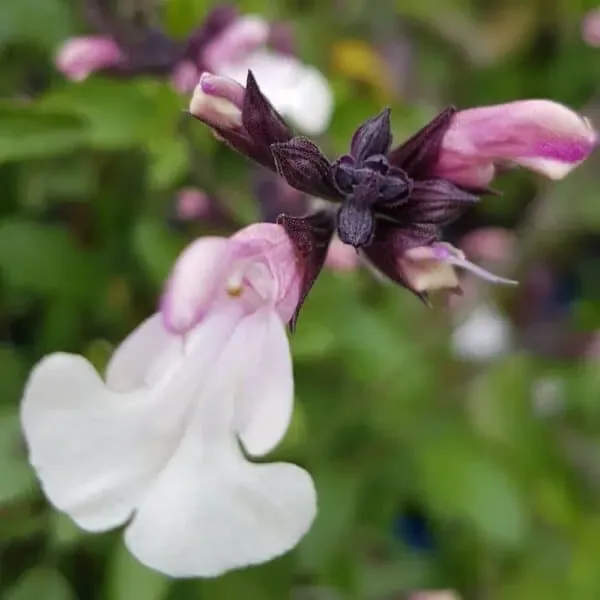
An upright, bushy, evergreen sub-shrub or woody-based perennial with aromatic, small, rounded, mid-green leaves. From early summer to late autumn it produces an abundance of upward-facing, two-lipped flowers held by a dark-green calyx. The smaller upper petals are pink-purple and the large lower petals are cream-white.
Scientific classification
- Species
- Salvia 'Nuchi' (Salvia 'Nuchi')
- Genus
- Salvia
- Family
- Lamiaceae
- Information to be completed
- Toxicity
- Herbaceous Perennial · Shrubs
- Plant type
- 0.5-1 metres
- Height
- 0.5-1 metres
- Spread
- Deciduous · Semi evergreen
- Foliage
- Bushy · Columnar upright
- Habit
- Spring · Summer · Autumn
- Season of interest
- Full sun
- Sunlight
- Information to be completed
- Ideal temperature









Salvia 'Nuchi' pictures
Distribution of Salvia 'Nuchi'
Distribution map
Information to be completed
Information to be completed
Culture
Information to be completed
Toxicity
Information to be completed
Quick identification of Salvia 'Nuchi'
Information to be completed
Salvia 'Nuchi' care guide
- Moderate regular watering, avoid prolonged drought and stagnant waterlogging
- Watering
- Full sun
- Sunlight
- Information to be completed
- Ideal temperature

Watering
Moderate regular watering, avoid prolonged drought and stagnant waterlogging
Fertilizing
 Fertilizing
Balanced perennial feed every four weeks spring through summer growth
Pruning
 Pruning
If flowering diminishes during the growing season, cut back by half to encourage fresh growth. In late winter/early spring cut stems back to ground level.
Propagation
 Propagation
Take softwood cuttings and softwood basal cuttings from spring to midsummer. Take semi-ripe cuttings from late summer to autumn.
Growing
 Growing
Grow in moist but well-drained or well-drained soil, preferably in full-sun. Tolerant of poor drier soils once established.
People also ask
Information to be completed
Common pests and diseases
Diseases
May be susceptible to honey fungus (rarely), powdery mildews, verticillium wilt and foot and root rots
Pests
May be susceptible to leafhoppers, slugs and snails
Explore the plant health library →




