
bean (broad) 'Robin Hood'
Also known as: Information to be completed
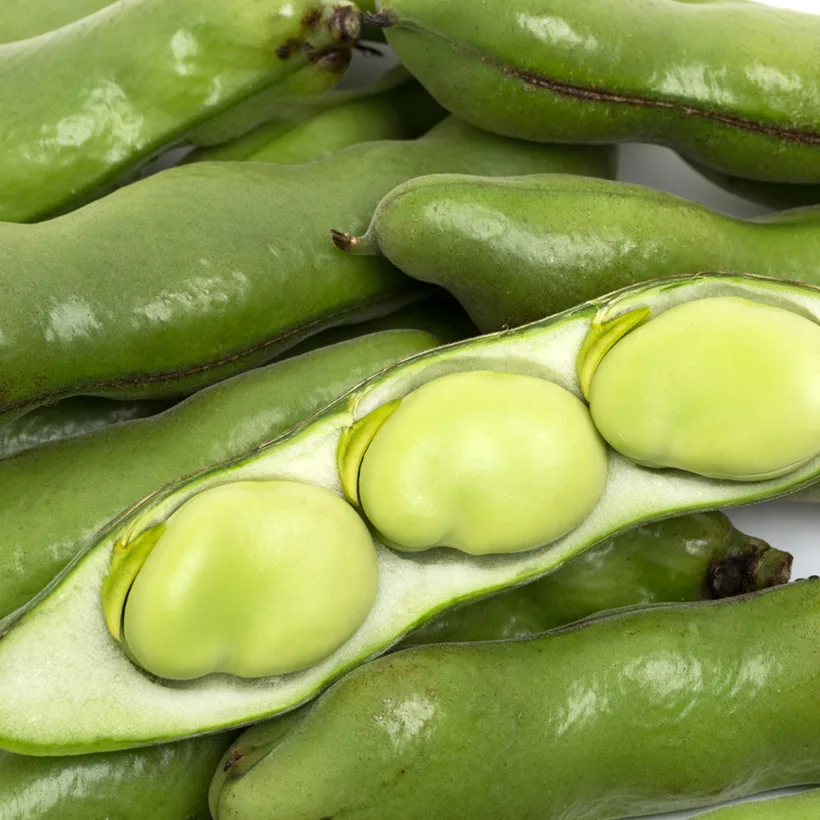
An upright, bushy half-hardy annual grown for its edible seeds. This dwarf broad bean has compact stems to 45cm high, and glaucous green leaves. Clusters of black and white flowers are followed by mid-sized bright green pods, each with 3-5 green beans
Scientific classification
- Species
- bean (broad) 'Robin Hood' (Vicia faba 'Robin Hood')
- Genus
- Vicia
- Family
- Fabaceae
- Order
- Fabales
- Class
- Magnoliopsida
- Phylum
- Magnoliophyta
- Information to be completed
- Toxicity
- Annual Biennial
- Plant type
- 0.1-0.5 metres
- Height
- 0.1-0.5 metres
- Spread
- Evergreen
- Foliage
- Bushy
- Habit
- Spring · Summer
- Season of interest
- Full sun
- Sunlight
- Information to be completed
- Ideal temperature









bean (broad) 'Robin Hood' pictures
Distribution of bean (broad) 'Robin Hood'
Distribution map
- Native
- Introduced
- Cultivated
Source:WCVP v16 · Royal Botanic Gardens, Kew · CC BY 3.0 · Boundaries:WGSRPD / TDWG
bean (broad) 'Robin Hood' care guide
- Moderate regular watering, avoid prolonged drought or waterlogging
- Watering
- Full sun
- Sunlight

Watering
Moderate regular watering, avoid prolonged drought or waterlogging
Fertilizing
 Fertilizing
Balanced feed in spring and light repeat in growth season
Pruning
 Pruning
Picking off the tender tips of the shoots can delay and reduce infestation by black bean aphid, and also improve the yield
Propagation
 Propagation
Propagate by seed. See sowing vegetable seeds
Growing
 Growing
Does best in a sunny, sheltered position with fertile, moist but well-drained soil, though most soils will produce an adequate crop. Sow in February in pots in a cold greenhouse or in March/Apr outdoors. This dwarf cultivar is ideal for container growing or for smaller gardens. See the RHS A-Z guide to vegetable cultivation for more detailed advice
Common pests and diseases
Diseases
May be susceptible to broad bean rust and broad bean chocolate spot
Pests
May be susceptible to pea and bean weevil and black bean aphid. Stored seed may be susceptible to broad bean seed beetle
Explore the plant health library →




