
Ribes rubrum 'Lisette'
Also known as: Information to be completed
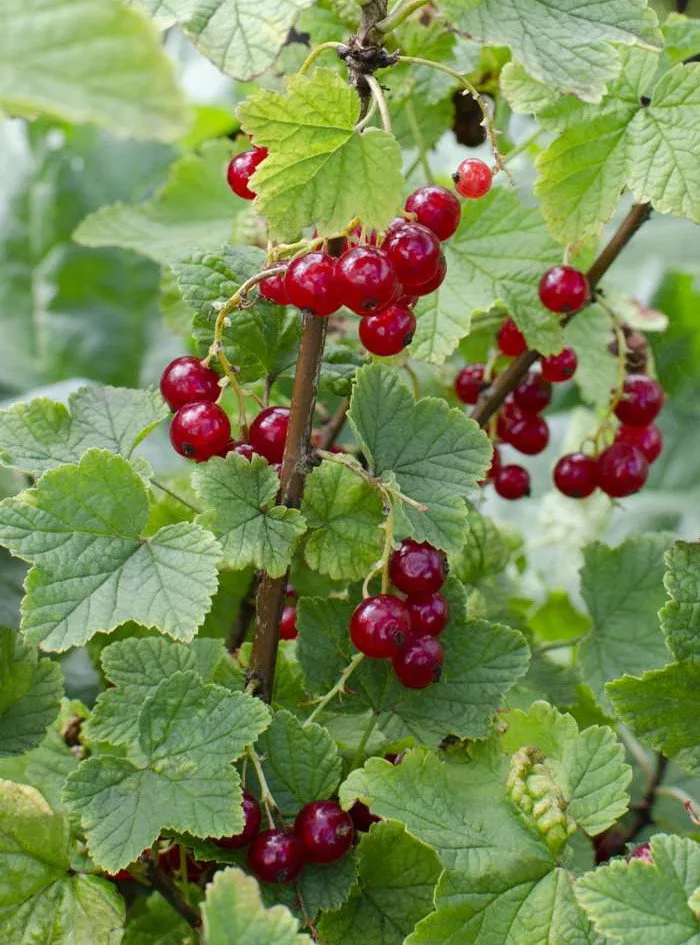
A healthy, vigorous deciduous bush. Strings of greenish flowers in spring are followed by high yields of very large red berries. The tangy sharp fruit can be used in desserts and made into jellies.
Scientific classification
- Species
- Ribes rubrum 'Lisette' (Ribes rubrum 'Lisette')
- Genus
- Ribes
- Family
- Grossulariaceae
- Information to be completed
- Toxicity
- Fruit Edible
- Plant type
- 1-1.5 metres
- Height
- 1-1.5 metres
- Spread
- Deciduous
- Foliage
- Bushy
- Habit
- Spring · Summer · Autumn
- Season of interest
- Full sun · Partial shade
- Sunlight
- Information to be completed
- Ideal temperature









Ribes rubrum 'Lisette' pictures
Distribution of Ribes rubrum 'Lisette'
Distribution map
Information to be completed
Information to be completed
Culture
Information to be completed
Toxicity
Information to be completed
Quick identification of Ribes rubrum 'Lisette'
Information to be completed
Ribes rubrum 'Lisette' care guide
- Uniform mild soil dampness, never let root ball fully dry out completely
- Watering
- Full sun · Partial shade
- Sunlight
- Information to be completed
- Ideal temperature

Watering
Uniform mild soil dampness, never let root ball fully dry out completely
Fertilizing
 Fertilizing
Acid berry shrub feed monthly spring through fruiting maturation
Pruning
 Pruning
May be pruned to create a permanent framework as a bush, standard, cordon or fan. Main pruning in dormant season; also summer pruning of vigorous side shoots
Propagation
 Propagation
Propagate by hardwood cuttings in autumn
Growing
 Growing
Grow in a well-drained, fertile soil with a neutral to slightly acid pH. Full sun is preferred, but partial shade is tolerated and plants can be trained against a north wall. Grow with a permanent framework as a bush, standard, cordon or fan. Keep the area around the bushes free of other plants. Mulch with well-rotted compost, manure or bark particularly on dry soils. Further redcurrant cultivation advice
People also ask
Information to be completed
Common pests and diseases
Diseases
May be susceptible to a leaf spot, powdery mildews, coral spot and sometimes honey fungus
Pests
May be susceptible to gall mites, gall midge and aphids
Explore the plant health library →




