
Eryngium bromeliifolium
Also known as: Information to be completed
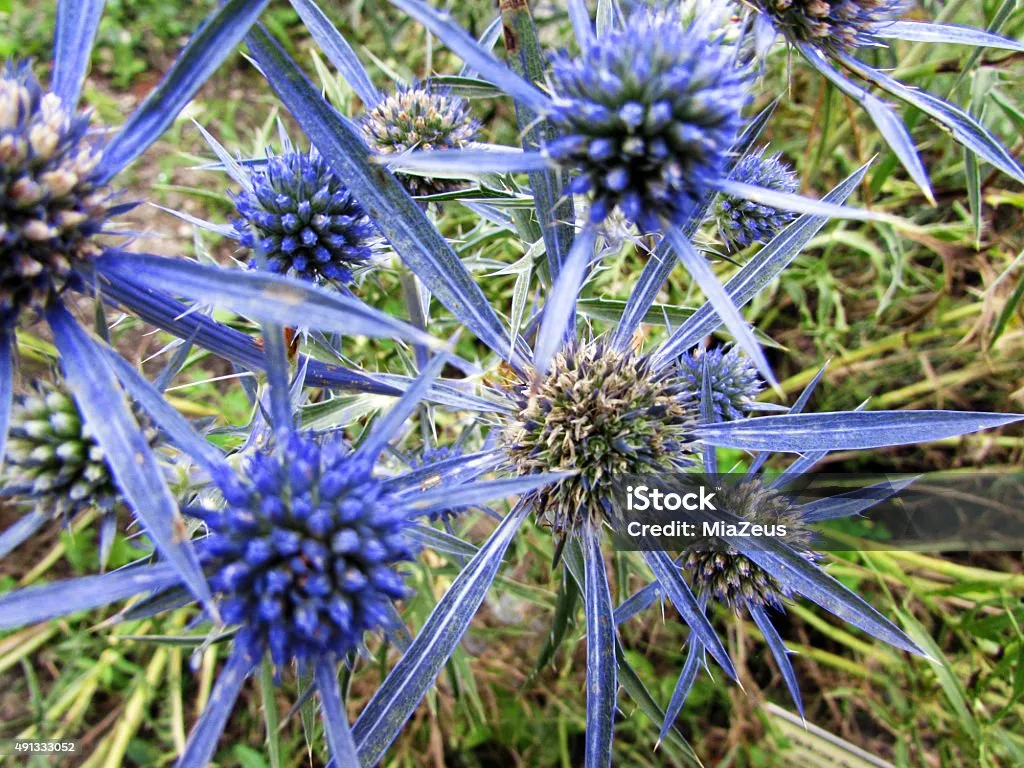
A rosette-forming, herbaceous perennial with broad, mid-green elongated and serrated leaves reaching 16 inches in length. It has branched stems with white thimble shaped flower-heads which have spiky silvery white bracts which can also be very attractive if left on the plant after the flowering period
Scientific classification
- Species
- Eryngium bromeliifolium (Eryngium bromeliifolium)
- Genus
- Eryngium
- Family
- Apiaceae
- Order
- Apiales
- Class
- Magnoliopsida
- Phylum
- Magnoliophyta
- Information to be completed
- Toxicity
- Herbaceous Perennial
- Plant type
- 0.5-1 metres
- Height
- 0.1-0.5 metres
- Spread
- Deciduous
- Foliage
- Columnar upright
- Habit
- Spring · Summer · Autumn
- Season of interest
- Full sun
- Sunlight
- Information to be completed
- Ideal temperature









Eryngium bromeliifolium pictures
Distribution of Eryngium bromeliifolium
Distribution map
- Native
- Introduced
- Cultivated
Source:WCVP v16 · Royal Botanic Gardens, Kew · CC BY 3.0 · Boundaries:WGSRPD / TDWG
Eryngium bromeliifolium care guide
- Moderate regular watering, avoid prolonged drought or waterlogging
- Watering
- Full sun
- Sunlight

Watering
Moderate regular watering, avoid prolonged drought or waterlogging
Fertilizing
 Fertilizing
Balanced feed in spring and light repeat in growth season
Pruning
 Pruning
Cut back any dead foliage throughout the season and but leave spent flowers for winter interest. Cut flowers before they open for floristry purposes
Propagation
 Propagation
Propagate by seed, by root cuttings in late winter and by division in spring
Growing
 Growing
Will grow well in poor, moderately fertile, well-drained soil in full sun avoiding wet winter conditions
Common pests and diseases
Diseases
May be susceptible to root rot and powdery mildews
Pests
May be susceptible to leaf and bud eelworms, and slugs and snails
Explore the plant health library →




