
Drosanthemum hispidum
Also known as: Information to be completed
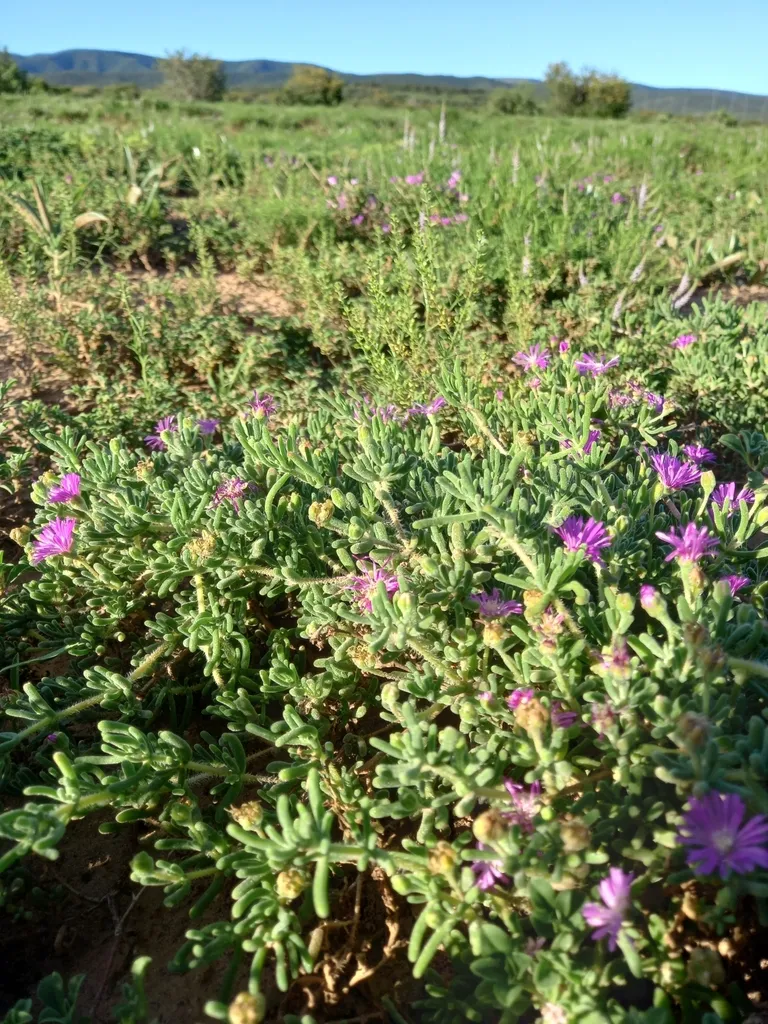
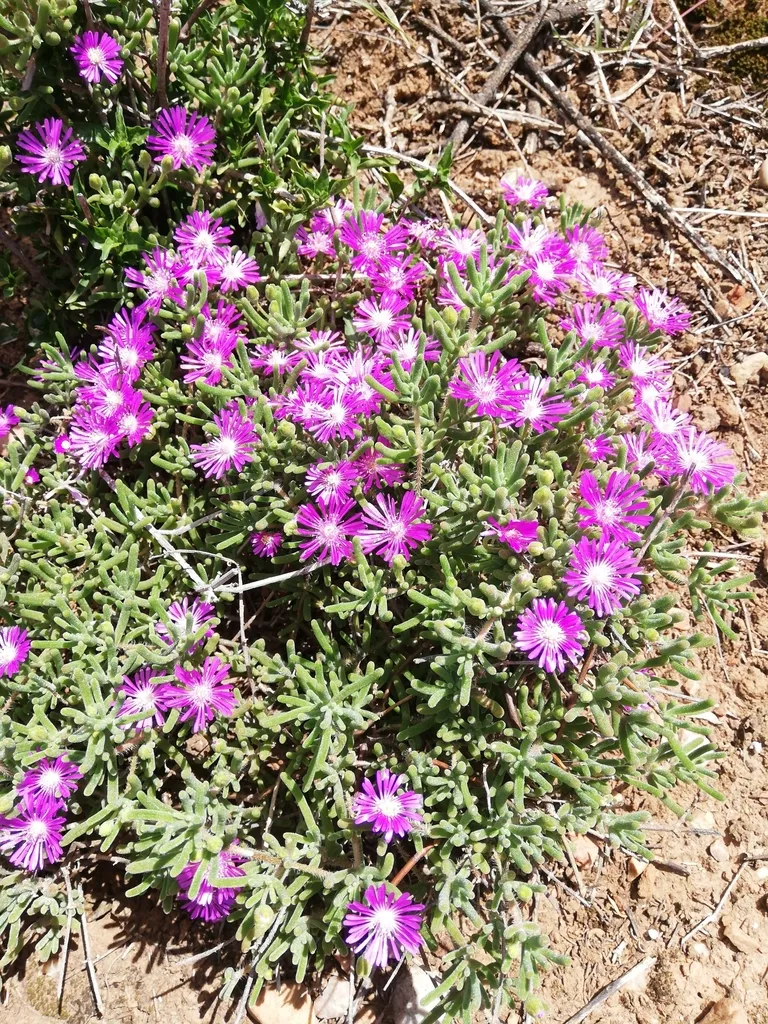
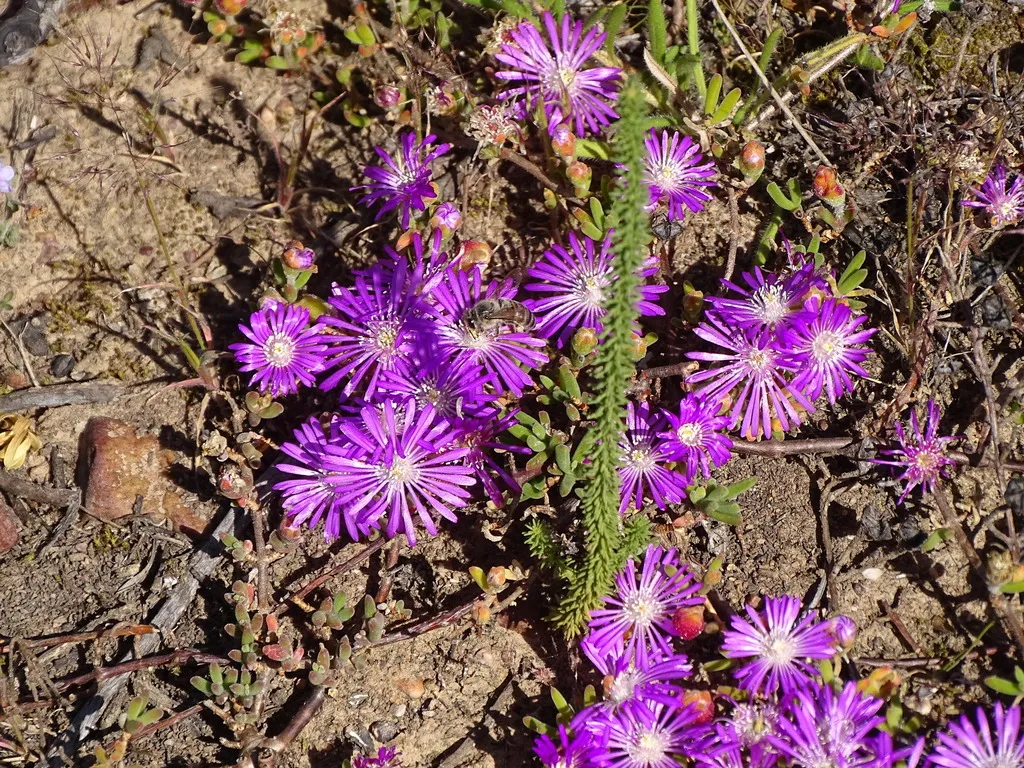
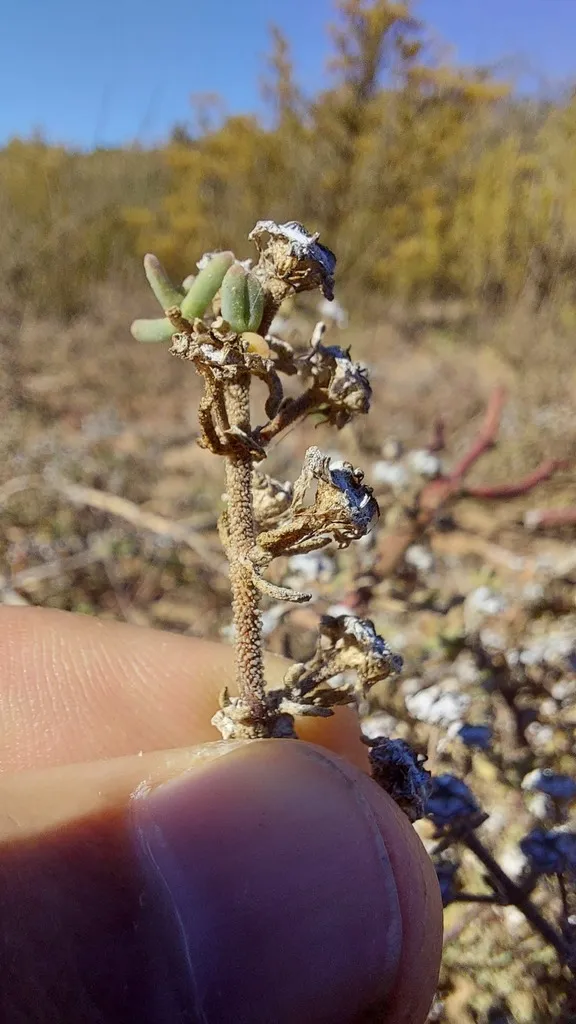
A bushy, succulent shrub with upright then spreading branches, rooting as they go. Leaves are small, fleshy, pale or reddish green with a silvery sheen, and flowers daisy-like, deep purplish-pink, produced in summer
Scientific classification
- Species
- Drosanthemum hispidum (Drosanthemum hispidum)
- Genus
- Drosanthemum
- Family
- Aizoaceae
- Information to be completed
- Toxicity
- Shrubs
- Plant type
- 0.1-0.5 metres
- Height
- 0.5-1 metres
- Spread
- Evergreen
- Foliage
- Matforming
- Habit
- Spring · Summer · Autumn · Winter
- Season of interest
- Full sun
- Sunlight
- Information to be completed
- Ideal temperature









Drosanthemum hispidum pictures
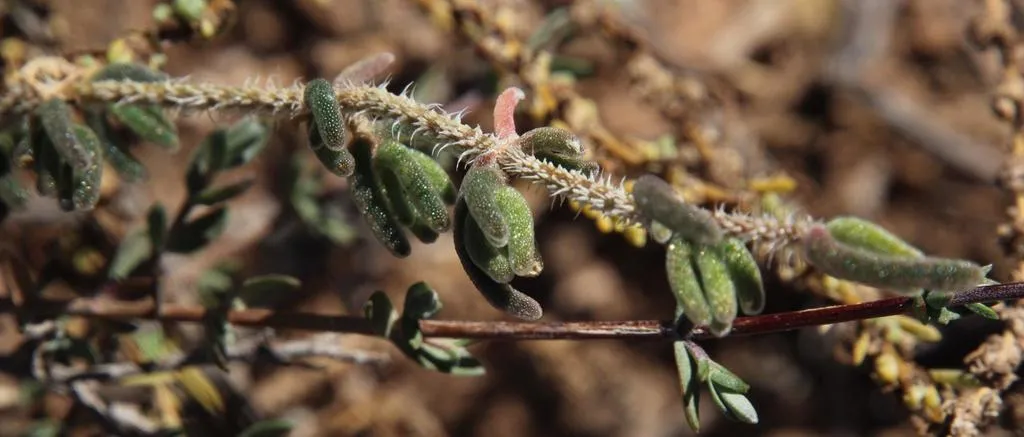
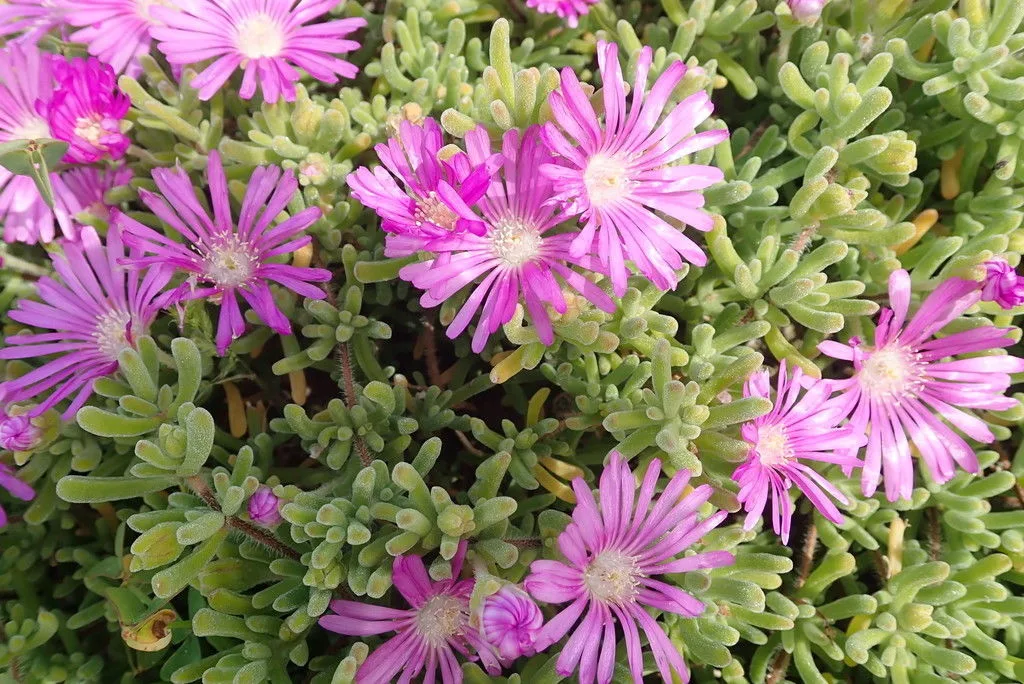
Distribution of Drosanthemum hispidum
Distribution map
- Native
- Introduced
- Cultivated
Source:WCVP v16 · Royal Botanic Gardens, Kew · CC BY 3.0 · Boundaries:WGSRPD / TDWG
Culture
Information to be completed
Toxicity
Information to be completed
Quick identification of Drosanthemum hispidum
Information to be completed
Drosanthemum hispidum care guide
- Moderate regular watering, allowing brief slight drying between soakings
- Watering
- Full sun
- Sunlight
- Information to be completed
- Ideal temperature

Watering
Moderate regular watering, allowing brief slight drying between soakings
Fertilizing
 Fertilizing
Balanced perennial feed every four weeks from spring through summer
Pruning
 Pruning
No pruning required
Propagation
 Propagation
Propagate from seed, or take stem cuttings in spring or summer
Growing
 Growing
In frost-free areas grow in very well-drained soil in full sun; otherwise grow in containers of very free-draining compost and keep in a frost-free greenhouse or conservatory over winter
People also ask
Information to be completed
Common pests and diseases
Diseases
Generally disease-free
Pests
Flowers may be affected by aphids
Explore the plant health library →




