
Phylica arborea
Also known as: Information to be completed
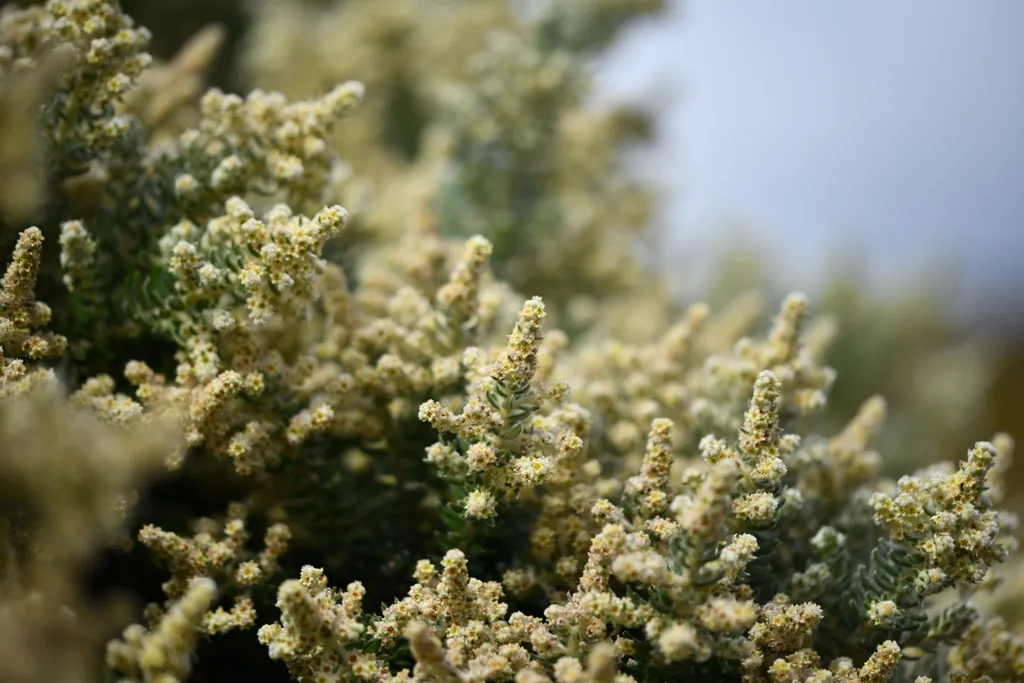
An evergreen shrub or small tree, up to 5m high or more in a sheltered position but usually much shorter in cultivation. Leaves are small, narrow and dark green, and covered with fine silvery hairs, especially on the undersides. Clusters of tiny, fragrant, greenish-white flowers are produced in spring
Scientific classification
- Species
- Phylica arborea (Phylica arborea)
- Genus
- Phylica
- Family
- Rhamnaceae
- Information to be completed
- Toxicity
- Shrubs · Trees
- Plant type
- 1.5-2.5 metres
- Height
- 1.5-2.5 metres
- Spread
- Evergreen
- Foliage
- Bushy
- Habit
- Spring · Summer · Autumn · Winter
- Season of interest
- Full sun
- Sunlight
- Information to be completed
- Ideal temperature









Phylica arborea pictures

Distribution of Phylica arborea
Distribution map
Tristan da Cunha
Information to be completed
Culture
Information to be completed
Toxicity
Information to be completed
Quick identification of Phylica arborea
Information to be completed
Phylica arborea care guide
- Moderate regular watering, avoid prolonged drought and stagnant waterlogging
- Watering
- Full sun
- Sunlight
- Information to be completed
- Ideal temperature

Watering
Moderate regular watering, avoid prolonged drought and stagnant waterlogging
Fertilizing
 Fertilizing
Balanced perennial feed every four weeks spring through summer growth
Pruning
 Pruning
No pruning required
Propagation
 Propagation
Propagate by seed sown in spring, or by softwood cuttings in early summer
Growing
 Growing
Grow in a warm, sunny spot in well-drained soil; will tolerate exposed and coastal sites, but shelter from cold winds. In areas prone to frost, grow in a cool greenhouse or conservatory, or in containers that can be moved indoors over winter.
People also ask
Information to be completed
Common pests and diseases
Diseases
Generally disease-free
Pests
May be susceptible to soft scale insect
Explore the plant health library →




