
lupin 'Rachel de Thame'
Also known as: Information to be completed
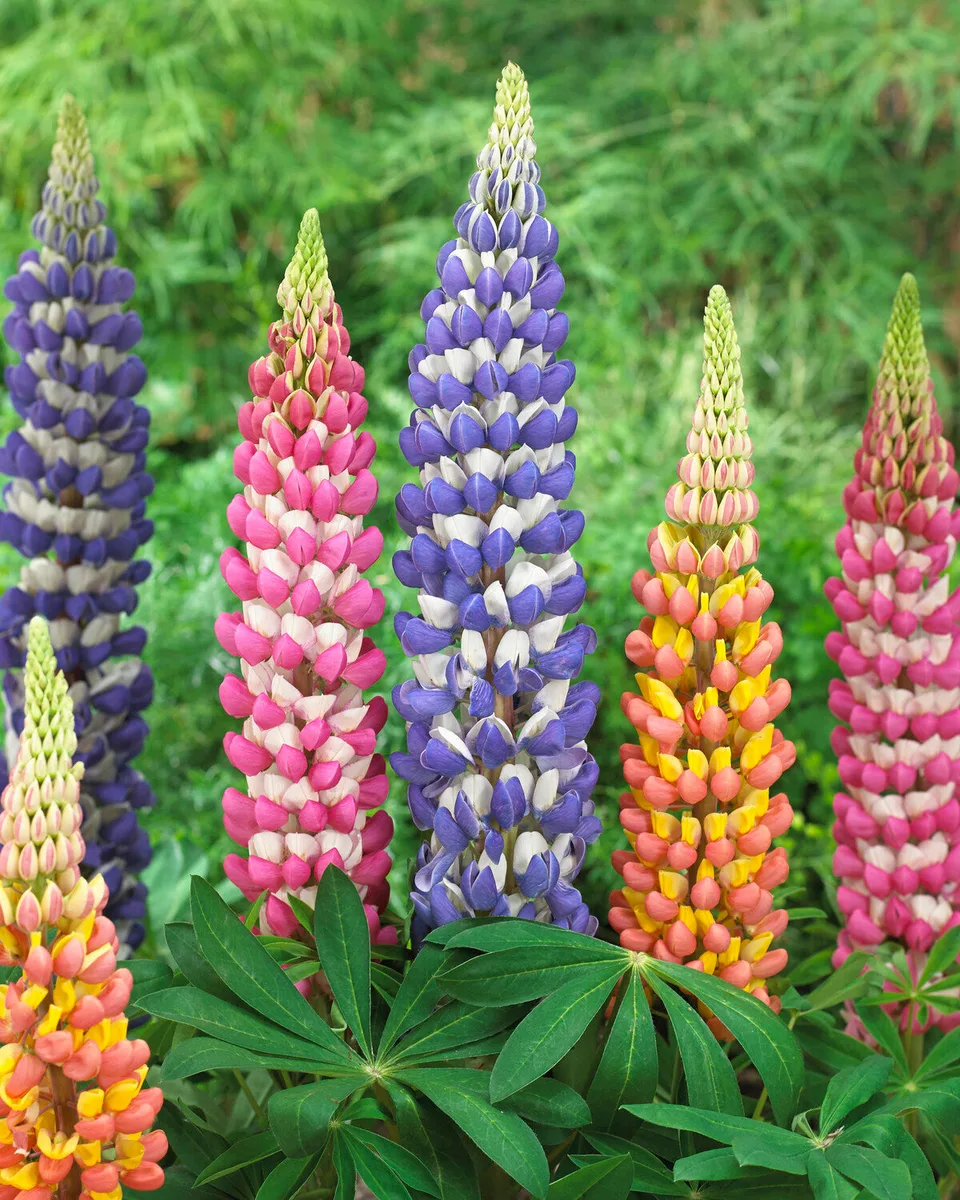
A clump-forming perennial to 85 cm with palmately divided leaves. In early to mid-summer produces upright spires of closely packed, bicolour flowers producing alternating stripes of pink and white
Scientific classification
- Species
- lupin 'Rachel de Thame' (Lupinus Rachel de Thame ('Wclradeth'))
- Genus
- Lupinus
- Family
- Fabaceae
- Order
- Fabales
- Class
- Magnoliopsida
- Phylum
- Magnoliophyta
- Harmful if eaten. Wear gloves and other protective equipment when handling
- Toxicity
- Herbaceous Perennial
- Plant type
- 0.5-1 metres
- Height
- 0.1-0.5 metres
- Spread
- Deciduous
- Foliage
- Bushy
- Habit
- Spring · Summer · Autumn
- Season of interest
- Full sun · Partial shade
- Sunlight
- Information to be completed
- Ideal temperature









lupin 'Rachel de Thame' pictures
Toxicity
Harmful if eaten. Wear gloves and other protective equipment when handling
lupin 'Rachel de Thame' care guide
- Keep soil moderately moist, especially while establishing
- Watering
- Full sun · Partial shade
- Sunlight

Watering
Keep soil moderately moist, especially while establishing
Fertilizing
 Fertilizing
Light low nitrogen feed in spring only
Pruning
 Pruning
Deadhead to encourage a second flush of flowers
Propagation
 Propagation
Propagate from basal stem cuttings
Growing
 Growing
Grow in moderately fertile, humus-rich, light, moist but well-drained soil in full sun or light, dappled shade. May require support (see staking perennials)
Common pests and diseases
Diseases
May be susceptible to powdery mildews, rots, a leaf spot and a virus
Pests
May be susceptible to slugs and lupin aphid
Explore the plant health library →




