
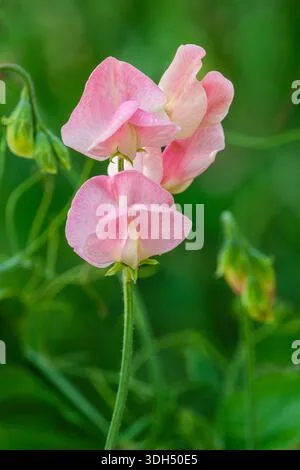
spring pea 'Dama Emily'
Also known as: Information to be completed
A small, clump-forming perennial producing round, pinnate leaves and small, pale-pink flowers in the spring, fading to white.
Scientific classification
- Species
- spring pea 'Dama Emily' (Lathyrus vernus 'Dama Emily')
- Genus
- Lathyrus
- Family
- Fabaceae
- Order
- Fabales
- Class
- Magnoliopsida
- Phylum
- Magnoliophyta
- Pods and seeds are not edible. Wear gloves and other protective equipment when handling
- Toxicity
- Annual Biennial
- Plant type
- 0.1-0.5 metres
- Height
- 0.1-0.5 metres
- Spread
- Deciduous
- Foliage
- Clump forming
- Habit
- Spring · Summer · Autumn
- Season of interest
- Full sun · Partial shade
- Sunlight
- Information to be completed
- Ideal temperature









spring pea 'Dama Emily' pictures
Distribution of spring pea 'Dama Emily'
Distribution map
- Native
- Introduced
- Cultivated
Source:WCVP v16 · Royal Botanic Gardens, Kew · CC BY 3.0 · Boundaries:WGSRPD / TDWG
Toxicity
Pods and seeds are not edible. Wear gloves and other protective equipment when handling
spring pea 'Dama Emily' care guide
- Water regularly in growth, never let roots bake dry
- Watering
- Full sun · Partial shade
- Sunlight

Watering
Water regularly in growth, never let roots bake dry
Fertilizing
 Fertilizing
Regular potash-rich feed through flowering season
Pruning
 Pruning
Remove after flowering
Propagation
 Propagation
Propagate by seed sown in-situ in mid-spring. Germination may be improved by pre-soaking or chipping before sowing
Growing
 Growing
Grow in a fertile, humus-rich, well-drained soil in full sun or partial shade. Incorporate organic matter into the soil before planting and feed with a balanced, liquid fertiliser once a month when in growth. Deadhead regularly to prolong flowering. See sweetpea cultivation for further information
Common pests and diseases
Diseases
May be susceptible to powdery mildews, Fusarium wilt and sweet pea viruses
Pests
May be susceptible to aphids, slugs and snails
Explore the plant health library →




