
Microlepia strigosa 'MacFaddeniae'
Also known as: Information to be completed
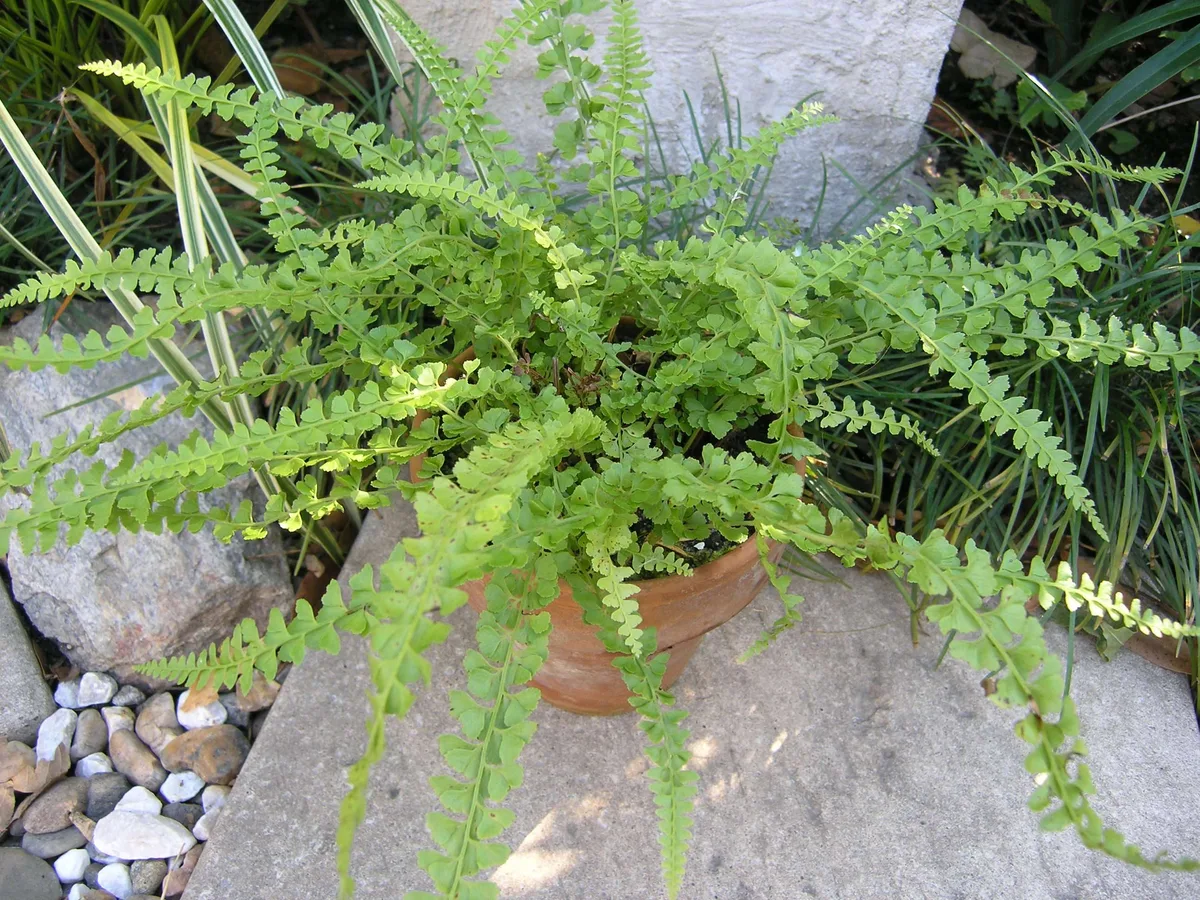
A semi-evergreen fern with a low-growing habit. Narrow, arching dark green fronds are bipinnate, made up of rounded, lobed pinnae with feathered margins. May be evergreen in warm, sheltered areas
Scientific classification
- Species
- Microlepia strigosa 'MacFaddeniae' (Microlepia strigosa 'MacFaddeniae')
- Genus
- Microlepia
- Family
- Dennstaedtiaceae
- Order
- Polypodiales
- Class
- Polypodiopsida
- Phylum
- Tracheophyta
- Information to be completed
- Toxicity
- Ferns
- Plant type
- 0.5-1 metres
- Height
- 0.5-1 metres
- Spread
- Semi evergreen
- Foliage
- Clump forming
- Habit
- Spring · Summer · Autumn · Winter
- Season of interest
- Partial shade
- Sunlight
- Information to be completed
- Ideal temperature









Microlepia strigosa 'MacFaddeniae' pictures
Distribution of Microlepia strigosa 'MacFaddeniae'
Distribution map
- Native
- Introduced
- Cultivated
Source:WCVP v16 · Royal Botanic Gardens, Kew · CC BY 3.0 · Boundaries:WGSRPD / TDWG
Microlepia strigosa 'MacFaddeniae' care guide
- Moderate regular watering, avoid prolonged drought or waterlogging
- Watering
- Partial shade
- Sunlight

Watering
Moderate regular watering, avoid prolonged drought or waterlogging
Fertilizing
 Fertilizing
Balanced feed in spring and light repeat in growth season
Pruning
 Pruning
Remove faded fronds as necessary
Propagation
 Propagation
Propagate by division in spring, before new growth commences, or by collecting and sowing spores, in containers at 20°C (68°F) as soon as ripe
Growing
 Growing
In milder areas, may be grown outdoors in humus-rich, moist but well drained soil in partial or dappled shade. Add fleece or mulch over winter. In cooler areas, grow indoors or in containers that can be moved indoors over winter. Under glass, grow in a mixture of two parts loam based compost, and one part coarse leaf mould and charcoal, in bright indirect light with high humidity
Common pests and diseases
Diseases
Generally disease-free
Pests
Generally pest-free
Explore the plant health library →




