
heavenly bamboo 'Sunset'
Also known as: Information to be completed
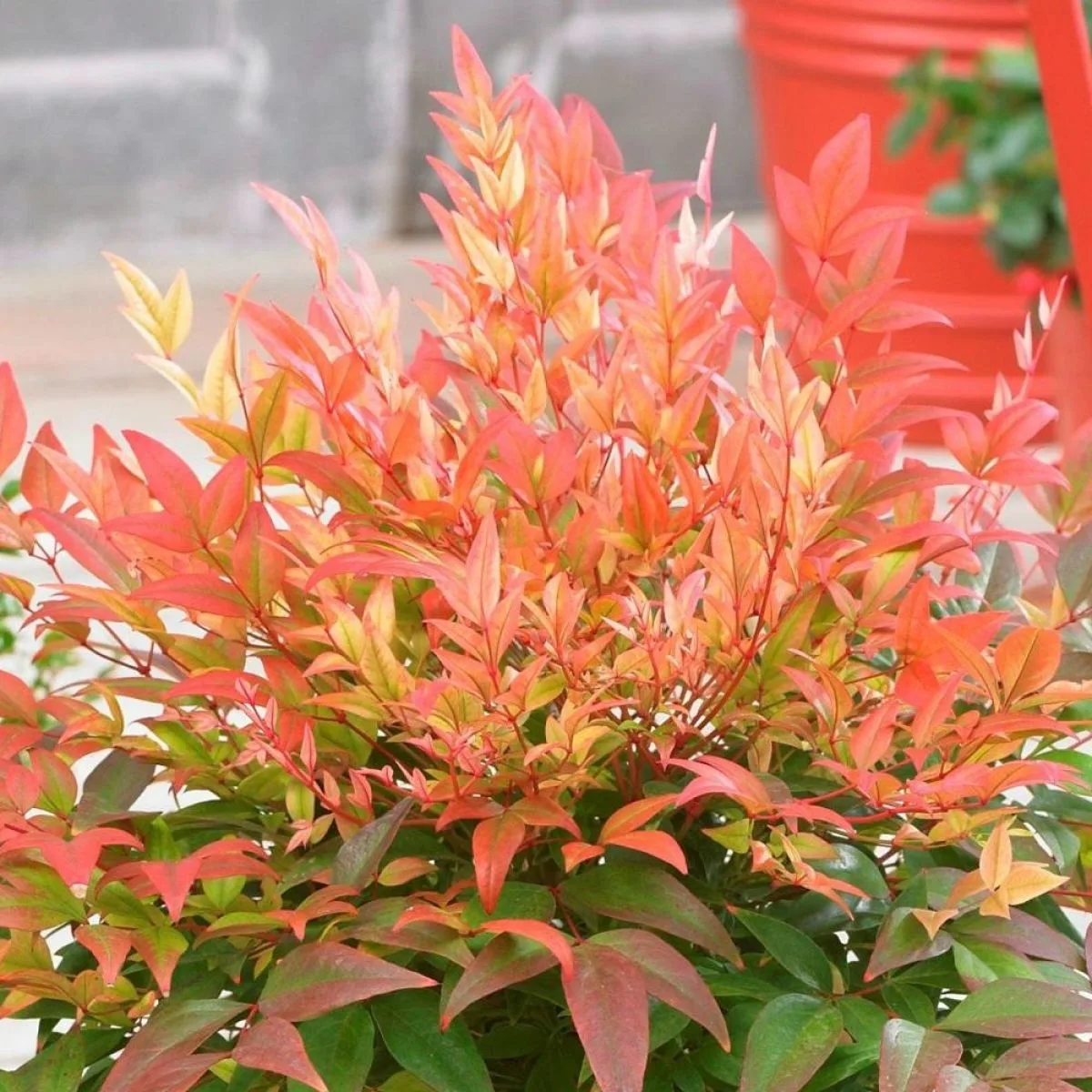
A leafy shrub to around 1.2m high, with an open habit and small, compound leaves divided into three narrow leaflets. Leaves are dark reddish purple when young, and mature to deep green, with tints of red in autumn and winter. Produces small white flowers from pink buds in spring; when pollinated these are followed by persistent round red berries
Scientific classification
- Species
- heavenly bamboo 'Sunset' (Nandina domestica 'Sunset')
- Genus
- Nandina
- Family
- Berberidaceae
- Order
- Ranunculales
- Class
- Magnoliopsida
- Phylum
- Magnoliophyta
- Harmful if eaten. Wear gloves and other protective equipment when handling
- Toxicity
- Shrubs
- Plant type
- 1-1.5 metres
- Height
- 1-1.5 metres
- Spread
- Evergreen · Semi evergreen
- Foliage
- Bushy
- Habit
- Autumn · Winter · Spring · Summer
- Season of interest
- Full sun · Partial shade
- Sunlight
- Information to be completed
- Ideal temperature









heavenly bamboo 'Sunset' pictures
Distribution of heavenly bamboo 'Sunset'
Distribution map
- Native
- Introduced
- Cultivated
Source:WCVP v16 · Royal Botanic Gardens, Kew · CC BY 3.0 · Boundaries:WGSRPD / TDWG
Toxicity
Harmful if eaten. Wear gloves and other protective equipment when handling
heavenly bamboo 'Sunset' care guide
- Moderate regular watering, allowing brief slight drying between soakings
- Watering
- Full sun · Partial shade
- Sunlight

Watering
Moderate regular watering, allowing brief slight drying between soakings
Fertilizing
 Fertilizing
Balanced perennial feed every four weeks from spring through summer
Pruning
 Pruning
If needed, Prune lightly as needed to remove unwanted shoots and keep the shrub in shape. Prune in mid- to late spring.
Propagation
 Propagation
Propagate by semi-ripe cuttings in summer. As this plant is protected by Plant Breeders' Rights, any propagation should be for personal rather than commercial use
Growing
 Growing
Grow in a moist but well-drained, humus-rich soil, in a sheltered position in full sun. May benefit from some light afternoon shade in hot summers. Mulch in autumn; may be deciduous in cold winters. . Plant with other cultivars to help ensure berries
Common pests and diseases
Diseases
May be susceptible to honey fungus (rarely) and a virus
Pests
Generally pest-free
Explore the plant health library →




