
camellia 'Volunteer'
Also known as: Information to be completed
an upright, evergreen shrub with ovate, glossy, leathery, dark green leaves and, from midwinter to early spring, double, reddish-pink flowers with white petal margins.
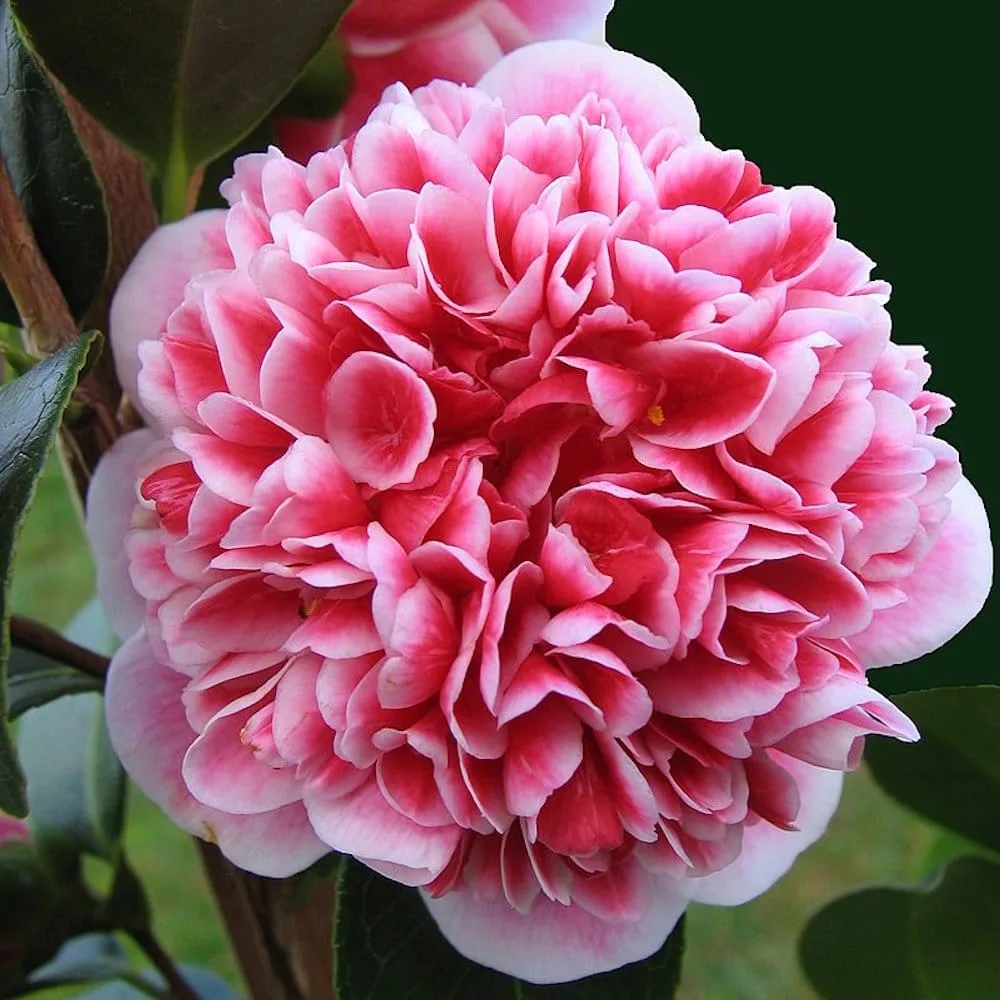
Scientific classification
- Species
- camellia 'Volunteer' (Camellia japonica 'Volunteer')
- Genus
- Camellia
- Family
- Theaceae
- Order
- Ericales
- Class
- Magnoliopsida
- Phylum
- Magnoliophyta
- Information to be completed
- Toxicity
- Shrubs
- Plant type
- 1.5-2.5 metres
- Height
- 1.5-2.5 metres
- Spread
- Evergreen
- Foliage
- Information to be completed
- Habit
- Spring · Summer · Autumn · Winter
- Season of interest
- Full shade · Partial shade
- Sunlight
- Information to be completed
- Ideal temperature









camellia 'Volunteer' pictures
Distribution of camellia 'Volunteer'
Distribution map
- Native
- Introduced
- Cultivated
Source:WCVP v16 · Royal Botanic Gardens, Kew · CC BY 3.0 · Boundaries:WGSRPD / TDWG
camellia 'Volunteer' care guide
- Keep acidic soil consistently moist, with good drainage year round
- Watering
- Full shade · Partial shade
- Sunlight

Watering
Keep acidic soil consistently moist, with good drainage year round
Fertilizing
 Fertilizing
Camellia fertilizer after flowering and again in early summer
Pruning
 Pruning
Usually little pruning is needed. Lightly shape if necessary, removing dead, damaged or diseased shoots. Prune after flowering.
Propagation
 Propagation
Propagate from semi-hardwood cuttings
Growing
 Growing
Grow in fertile, moist but well-drained, acid soil in sheltered shade. Protect buds & flowers from cold, dry winds and early morning sun. Feed in mid-spring and early summer with a sequestered iron fertiliser. If container grown, use ericaceous compost. Suitable for wall training.
Common pests and diseases
Diseases
May be susceptible to camellia gall and camellia petal blight
Pests
May be susceptible to scale insects, aphids and vine weevil
Explore the plant health library →




