
spindle tree 'Longwood'
Also known as: Information to be completed
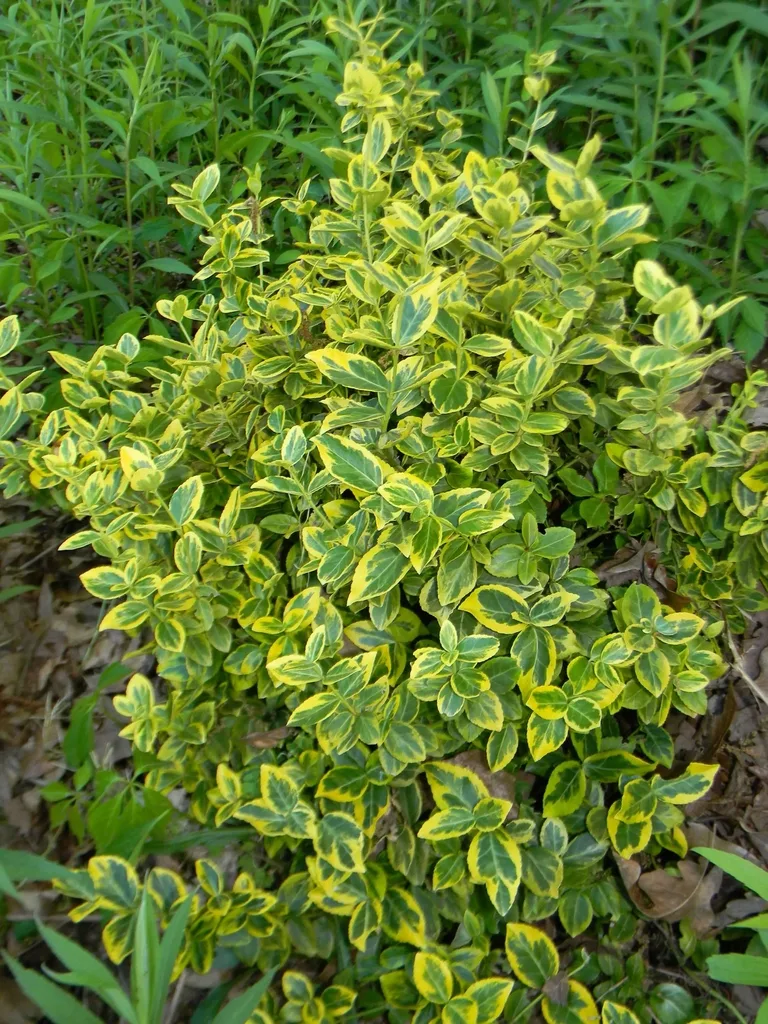
A bushy evergreen shrub, with small elliptic leaves and gently serrated edges, the dark green leaves have a slivery white veining. Flowers are rarely seen. This little shrub can be used as a small hedge and would make a good alternative to Box
Scientific classification
- Species
- spindle tree 'Longwood' (Euonymus fortunei 'Longwood')
- Genus
- Euonymus
- Family
- Celastraceae
- Order
- Celastrales
- Class
- Magnoliopsida
- Phylum
- Magnoliophyta
- Harmful if eaten. Wear gloves and other protective equipment when handling
- Toxicity
- Shrubs
- Plant type
- 0.1-0.5 metres
- Height
- 0.5-1 metres
- Spread
- Evergreen
- Foliage
- Bushy
- Habit
- Spring · Summer · Autumn · Winter
- Season of interest
- Full sun · Partial shade
- Sunlight
- Information to be completed
- Ideal temperature









spindle tree 'Longwood' pictures
Distribution of spindle tree 'Longwood'
Distribution map
- Native
- Introduced
- Cultivated
Source:WCVP v16 · Royal Botanic Gardens, Kew · CC BY 3.0 · Boundaries:WGSRPD / TDWG
Toxicity
Harmful if eaten. Wear gloves and other protective equipment when handling
spindle tree 'Longwood' care guide
- Deep watering during dry spells, allowing slight surface drying between soakings
- Watering
- Full sun · Partial shade
- Sunlight

Watering
Deep watering during dry spells, allowing slight surface drying between soakings
Fertilizing
 Fertilizing
Balanced shrub or tree feed once each early spring
Pruning
 Pruning
Usually little pruning is needed. Lightly shape if necessary, removing dead, damaged or diseased shoots. Prune after flowering.
Propagation
 Propagation
Propagate by semi-ripe cuttings
Growing
 Growing
Grow in well-drained soil in sun or partial shade
Common pests and diseases
Diseases
May be susceptible to powdery mildews, a leaf spot and sometimes honey fungus
Pests
May be susceptible to vine weevil, horse chestnut scale, euonymus scale and caterpillars
Explore the plant health library →




