
horned spurge
Also known as: Information to be completed
A spreading perennial to 75cm in height, with reddish stems bearing narrowly oblong, dark green leaves with paler midrib, and clusters of bright yellow flowerheads in summer
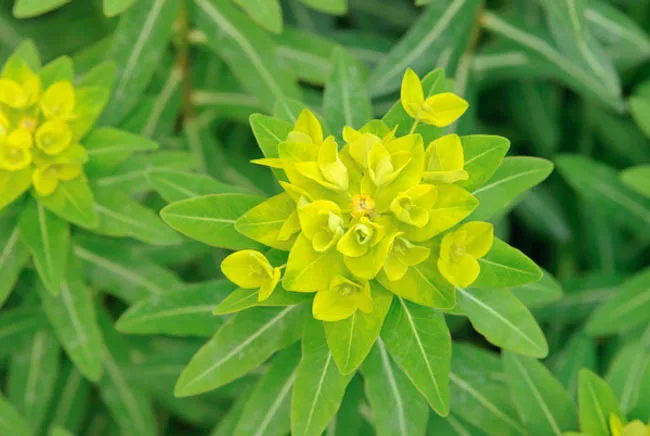
Scientific classification
- Species
- horned spurge (Euphorbia cornigera)
- Genus
- Euphorbia
- Family
- Euphorbiaceae
- IRRITANT to skin/eye, harmful if eaten. Wear gloves and other protective equipment when handling]
- Toxicity
- Herbaceous Perennial
- Plant type
- 0.5-1 metres
- Height
- 0.5-1 metres
- Spread
- Deciduous
- Foliage
- Clump forming
- Habit
- Spring · Summer · Autumn
- Season of interest
- Full sun · Partial shade
- Sunlight
- Information to be completed
- Ideal temperature









horned spurge pictures
Distribution of horned spurge
Distribution map
- Native
- Introduced
- Cultivated
Source:WCVP v16 · Royal Botanic Gardens, Kew · CC BY 3.0 · Boundaries:WGSRPD / TDWG
Culture
Information to be completed
Toxicity
IRRITANT to skin/eye, harmful if eaten. Wear gloves and other protective equipment when handling]
Quick identification of horned spurge
Information to be completed
horned spurge care guide
- Moderate regular watering, allowing brief slight drying between soakings
- Watering
- Full sun · Partial shade
- Sunlight
- Information to be completed
- Ideal temperature

Watering
Moderate regular watering, allowing brief slight drying between soakings
Fertilizing
 Fertilizing
Balanced perennial feed every four weeks from spring through summer
Pruning
 Pruning
Cut back flowering shoots to ground level in late summer or autumn
Propagation
 Propagation
Propagate by seed sown in pots in a cold frame either when ripe or in spring. Propagate by division in early spring
Growing
 Growing
Grow in any normal garden soil that is moist but well-drained either in sun or in partial shade. See Euphorbia for further advice
People also ask
Information to be completed
Common pests and diseases
Diseases
May be susceptible to grey moulds
Pests
May be susceptible to aphids
Explore the plant health library →




