
cherry 'Beni-tamanishiki'
Also known as: Information to be completed
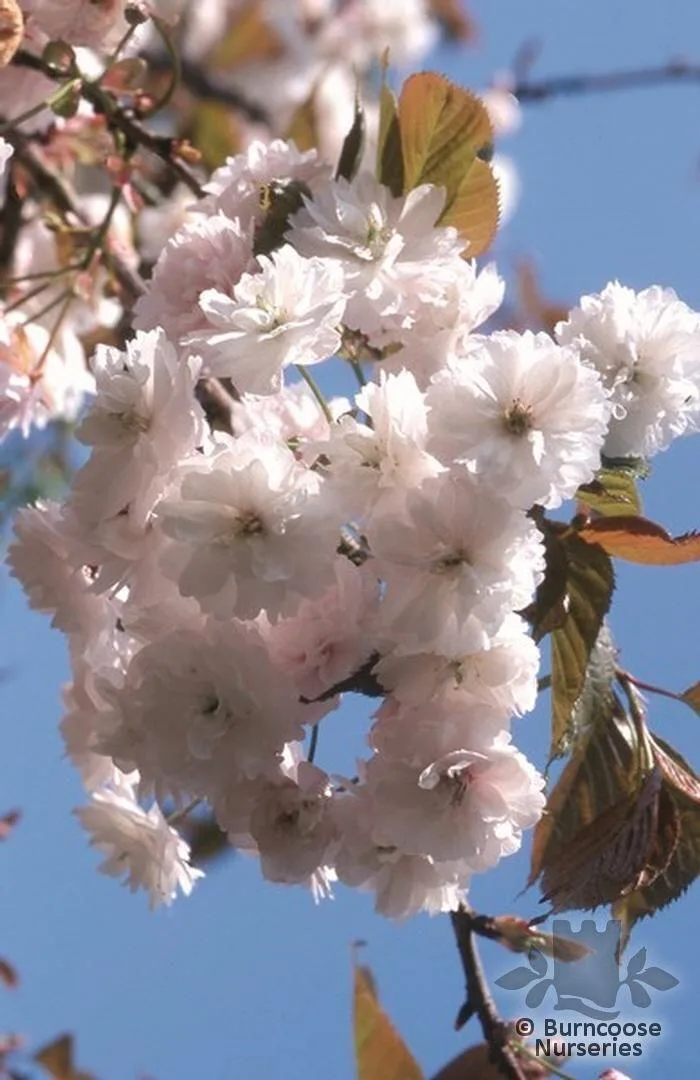
A compact, deciduous tree, vase-shaped when young before maturing to a spreading tree eventually reaching a height of around 3.5m. Ovate to elliptic leaves up to 15cm long open a bronze-tinted green and turn shades of orange and red in autumn. Double white flowers with a faint pink flush open from red, ball-like buds in spring
Scientific classification
- Species
- cherry 'Beni-tamanishiki' (Prunus 'Beni-tamanishiki')
- Genus
- Prunus
- Family
- Rosaceae
- Order
- Rosales
- Class
- Magnoliopsida
- Phylum
- Magnoliophyta
- Information to be completed
- Toxicity
- Trees
- Plant type
- 2.5-4 metres
- Height
- 2.5-4 metres
- Spread
- Deciduous
- Foliage
- Bushy
- Habit
- Autumn · Spring · Summer
- Season of interest
- Full sun
- Sunlight
- Information to be completed
- Ideal temperature









cherry 'Beni-tamanishiki' pictures
cherry 'Beni-tamanishiki' care guide
- Moderate watering, cut irrigation volume significantly during cold winters
- Watering
- Full sun
- Sunlight

Watering
Moderate watering, cut irrigation volume significantly during cold winters
Fertilizing
 Fertilizing
Flowering stone fruit feed once yearly at early spring bud break time
Pruning
 Pruning
Little pruning is needed. Remove diseased, damaged, crowded or crossing shoots and unwanted growth. If silver leaf disease is a concern, prune in midsummer.
Propagation
 Propagation
Propagate by chip budding or grafting, although softwood cuttings in early summer with bottom heat can be successful
Growing
 Growing
Grow in moderately fertile soil in full sun
Common pests and diseases
Diseases
May be susceptible to peach leaf curl, silver leaf, bacterial canker, blossom wilt and honey fungus
Pests
May be susceptible to caterpillars, leaf-mining moths and bullfinches
Explore the plant health library →




