
chilli pepper 'Treasures Red'
Also known as: Information to be completed
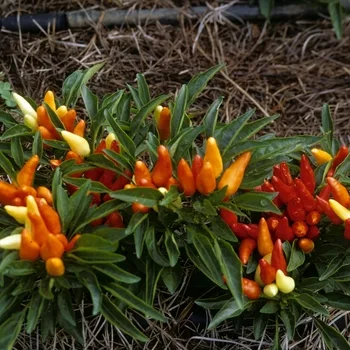
An ornamental annual pepper variety suitable for container growing, as well as beds and borders. It isn't recommended for eating but grows quickly and vigorously, producing white to bright red fruits that sit erect atop dark green foliage
Scientific classification
- Species
- chilli pepper 'Treasures Red' (Capsicum annuum 'Treasure's Red')
- Genus
- Capsicum
- Family
- Solanaceae
- Order
- Solanales
- Class
- Magnoliopsida
- Phylum
- Magnoliophyta
- Irritant if eaten, skin/eye irritant. Wear gloves and other protective equipment when handling]
- Toxicity
- Annual Biennial
- Plant type
- 0.1-0.5 metres
- Height
- 0.1-0.5 metres
- Spread
- Deciduous
- Foliage
- Bushy
- Habit
- Spring · Summer · Autumn
- Season of interest
- Full sun · Partial shade
- Sunlight
- Information to be completed
- Ideal temperature









chilli pepper 'Treasures Red' pictures
Distribution of chilli pepper 'Treasures Red'
Distribution map
- Native
- Introduced
- Cultivated
Source:WCVP v16 · Royal Botanic Gardens, Kew · CC BY 3.0 · Boundaries:WGSRPD / TDWG
Toxicity
Irritant if eaten, skin/eye irritant. Wear gloves and other protective equipment when handling]
chilli pepper 'Treasures Red' care guide
- Keep moisture even through flowering and fruiting, avoiding hard dry swings
- Watering
- Full sun · Partial shade
- Sunlight

Watering
Keep moisture even through flowering and fruiting, avoiding hard dry swings
Fertilizing
 Fertilizing
Tomato or pepper feed every one to two weeks in fruiting season
Pruning
 Pruning
Pinch out growing tips to encourage bushiness
Propagation
 Propagation
Propagate by seed. See sowing vegetable seeds or sowing seeds indoors for further advice
Growing
 Growing
Sow indoors from late Winter to mid-Spring in a small pot filled with good quality seed compost and cover with a fine layer of vermiculite. When seedlings are 2.5cm tall transplant to individual pots, water and keep in a sunny spot. See how to grow: chilli peppers for further advice
Common pests and diseases
Diseases
May be susceptible to leaf spot
Pests
May be susceptible to aphids, glasshouse whitefly, glasshouse red spider mite
Explore the plant health library →




