
chilli pepper 'Basket of Fire'
Also known as: Information to be completed
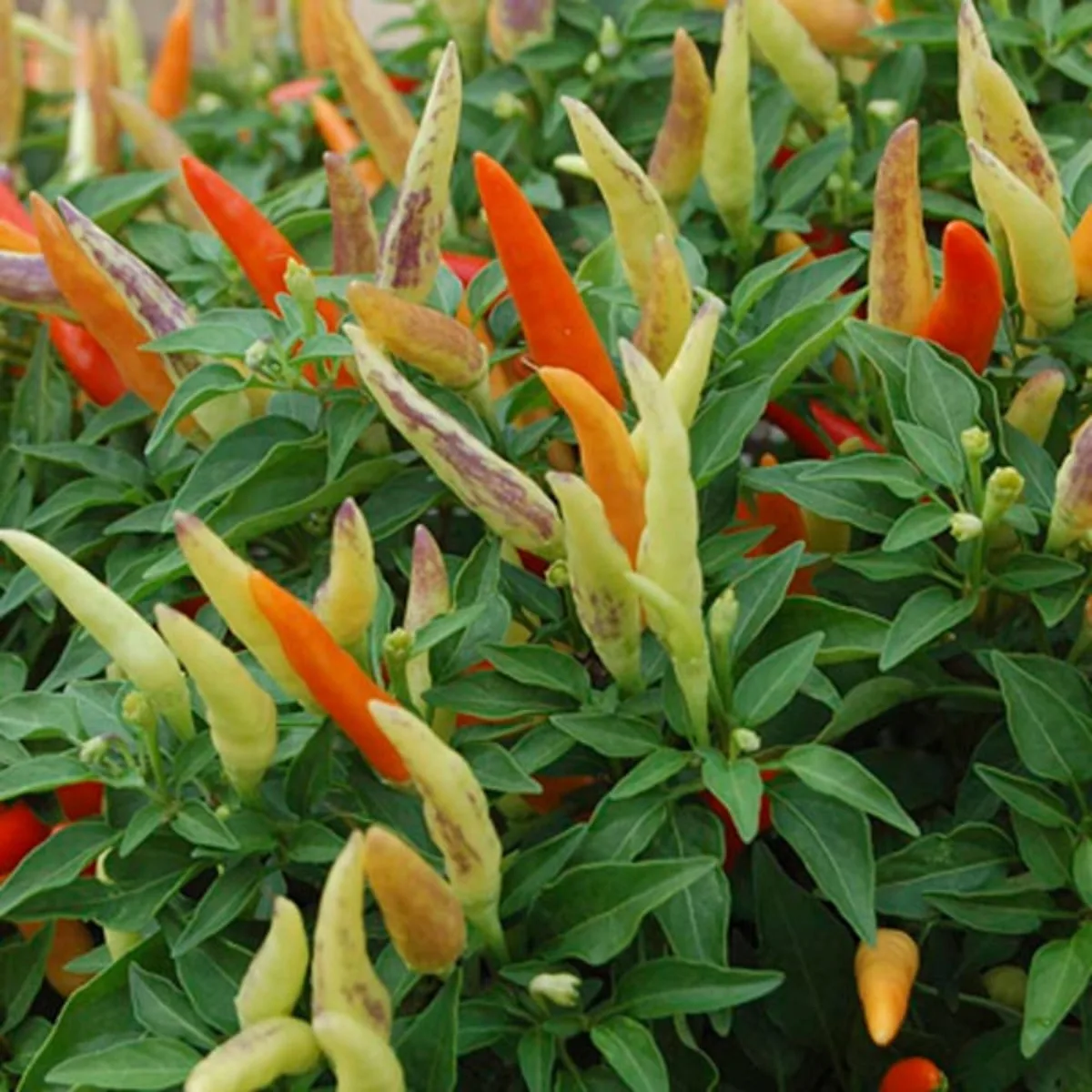
An attractive, decorative chilli pepper with a bushy habit that is perfect for containers and hanging baskets. Small hot chillies mature from deep purple through yellow and orange to bright, scarlet red to create a wonderful display. Harvest from July to October
Scientific classification
- Species
- chilli pepper 'Basket of Fire' (Capsicum annuum 'Basket of Fire')
- Genus
- Capsicum
- Family
- Solanaceae
- Order
- Solanales
- Class
- Magnoliopsida
- Phylum
- Magnoliophyta
- Irritant if eaten, skin/eye irritant. Wear gloves and other protective equipment when handling]
- Toxicity
- Annual Biennial
- Plant type
- 0.1-0.5 metres
- Height
- 0.1-0.5 metres
- Spread
- Deciduous
- Foliage
- Bushy
- Habit
- Spring · Summer · Autumn
- Season of interest
- Full sun
- Sunlight
- Information to be completed
- Ideal temperature









chilli pepper 'Basket of Fire' pictures
Distribution of chilli pepper 'Basket of Fire'
Distribution map
- Native
- Introduced
- Cultivated
Source:WCVP v16 · Royal Botanic Gardens, Kew · CC BY 3.0 · Boundaries:WGSRPD / TDWG
Toxicity
Irritant if eaten, skin/eye irritant. Wear gloves and other protective equipment when handling]
chilli pepper 'Basket of Fire' care guide
- Water regularly, keeping the soil consistently moist but not waterlogged.
- Watering
- Full sun
- Sunlight

Watering
Water regularly, keeping the soil consistently moist but not waterlogged.
Fertilizing
 Fertilizing
Apply a balanced fertilizer every 2-3 weeks during the growing season.
Pruning
 Pruning
Pinch out the growing tips to encourage bushiness. Don't remove the male flowers as fertilisation is essential
Propagation
 Propagation
Propagate by seed. See sowing vegetable seeds or sowing seeds indoors for further advice
Growing
 Growing
Sow indoors from late Winter to mid-Spring in a small pot filled with good quality seed compost and cover with a fine layer of vermiculite. When seedlings are 2.5cm tall transplant to individual pots, water and keep in a sunny spot. See how to grow: chilli peppers for further advice
Common pests and diseases
Diseases
May be susceptible to grey moulds and blossom end rot
Pests
May be susceptible to aphids, glasshouse whitefly and glasshouse red spider mite
Explore the plant health library →




