
beautyberry 'Imperial Pearl'
Also known as: Information to be completed
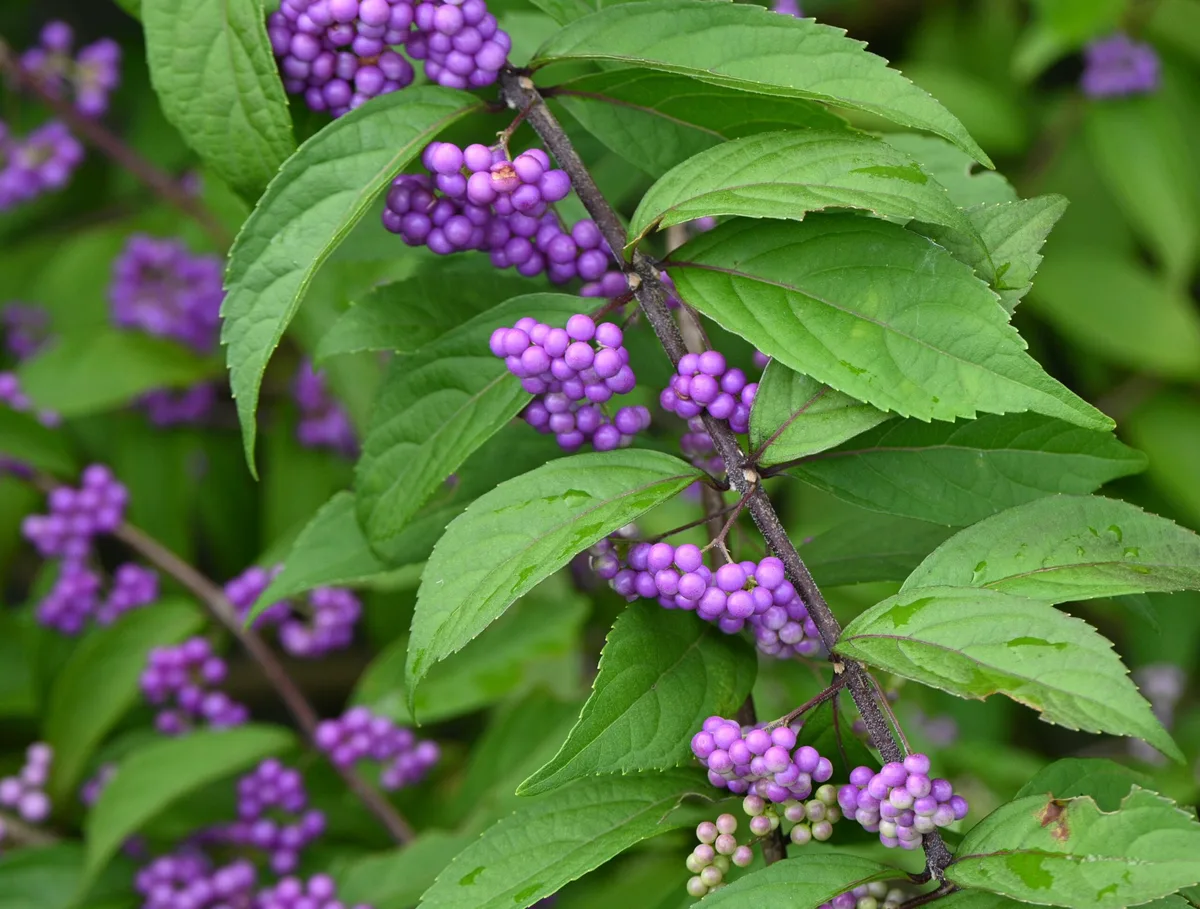
imperial Pearl' is a large, bushy shrub producing clusters of small, pale purple flowers along the stems, followed by brilliant purple berries. In a sunny position the foliage may produce yellow or purple tints in autumn
Scientific classification
- Species
- beautyberry 'Imperial Pearl' (Callicarpa bodinieri 'Imperial Pearl')
- Genus
- Callicarpa
- Family
- Lamiaceae
- Order
- Lamiales
- Class
- Magnoliopsida
- Phylum
- Magnoliophyta
- Fruit are ornamental - not to be eaten. Wear gloves and other protective equipment when handling
- Toxicity
- Shrubs
- Plant type
- 2.5-4 metres
- Height
- 1.5-2.5 metres
- Spread
- Deciduous
- Foliage
- Bushy
- Habit
- Autumn · Summer
- Season of interest
- Full sun · Partial shade
- Sunlight
- Information to be completed
- Ideal temperature









beautyberry 'Imperial Pearl' pictures
Distribution of beautyberry 'Imperial Pearl'
Distribution map
- Native
- Introduced
- Cultivated
Source:WCVP v16 · Royal Botanic Gardens, Kew · CC BY 3.0 · Boundaries:WGSRPD / TDWG
Toxicity
Fruit are ornamental - not to be eaten. Wear gloves and other protective equipment when handling
beautyberry 'Imperial Pearl' care guide
- Moderate regular watering, allowing brief slight drying between soakings
- Watering
- Full sun · Partial shade
- Sunlight

Watering
Moderate regular watering, allowing brief slight drying between soakings
Fertilizing
 Fertilizing
Balanced perennial feed every four weeks from spring through summer
Pruning
 Pruning
Cut flowered growth back to strong young shoots below, removing up to a fifth of old stems near the base each year. Prune immediately after flowering.
Propagation
 Propagation
Propagate by softwood cuttings or semi-hardwood cuttings
Growing
 Growing
Grow in fertile, well-drained soil in sun or partial shade. At least two plants are needed to produce berries
Common pests and diseases
Diseases
May be susceptible to honey fungus (rarely)
Pests
Generally pest-free
Explore the plant health library →




