
peach 'Amber'
Also known as: Information to be completed
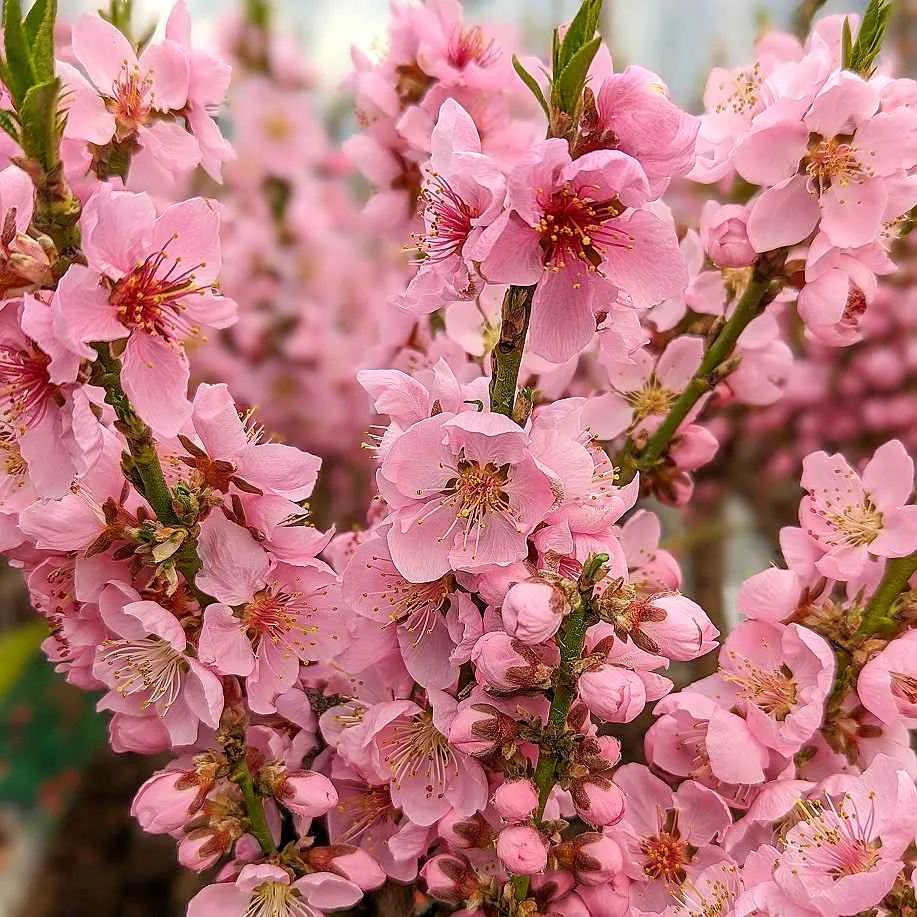
A naturally dwarf, self-fertile peach cultivar with attractive long slender green leaves to 15cm long, and pink spring blossom followed by large, golden-orange fruit flushed red, with sweet yellow flesh. Ideal for container cultivation. Cropping season: late July
Scientific classification
- Species
- peach 'Amber' (Prunus persica 'Amber')
- Genus
- Prunus
- Family
- Rosaceae
- Order
- Rosales
- Class
- Magnoliopsida
- Phylum
- Magnoliophyta
- Information to be completed
- Toxicity
- Fruit Edible
- Plant type
- 1-1.5 metres
- Height
- 1-1.5 metres
- Spread
- Deciduous
- Foliage
- Bushy
- Habit
- Autumn · Spring · Summer
- Season of interest
- Full sun
- Sunlight
- Information to be completed
- Ideal temperature









peach 'Amber' pictures
Distribution of peach 'Amber'
Distribution map
- Native
- Introduced
- Cultivated
Source:WCVP v16 · Royal Botanic Gardens, Kew · CC BY 3.0 · Boundaries:WGSRPD / TDWG
peach 'Amber' care guide
- Deep watering during dry spells, allowing slight surface drying between soakings
- Watering
- Full sun
- Sunlight

Watering
Deep watering during dry spells, allowing slight surface drying between soakings
Fertilizing
 Fertilizing
Balanced shrub or tree feed once each early spring
Pruning
 Pruning
Little pruning is needed. Remove diseased, damaged, crowded or crossing shoots and unwanted growth. Timing depends on the plant: generally late winter or early spring; plants prone to bleeding and deciduous magnolias need different timing, and deciduous azaleas and lilacs are pruned after flowering.
Propagation
 Propagation
Peach cultivars are propagated by grafting onto a rootstock for fruit. Can also be propagated by seed, although the resulting fruit is likely to be inferior to that of the parent plant
Growing
 Growing
Ideal for growing in containers. Preferably overwinter container grown plants in a protected environment such as cold greenhouse. Outdoors plant in very sheltered spot and moist, but well-drained soil in full sun. Protect flowers from frosts with horticultural fleece. See peach cultivation or how to grow: peaches for further advice
Common pests and diseases
Diseases
May be susceptible to peach leaf curl, bacterial canker, silver leaf, brown rot, blossom wilt and honey fungus. Replant diseases may cause problems. Late frosts can damage the blossom
Pests
May be susceptible to glasshouse red spider mite, aphids, and scale may be problematic, especially on wall-trained specimens or those grown in a glasshouse. Squirrels and birds may damage fruit
Explore the plant health library →




