
red-flowered ninepin heath
Also known as: Information to be completed
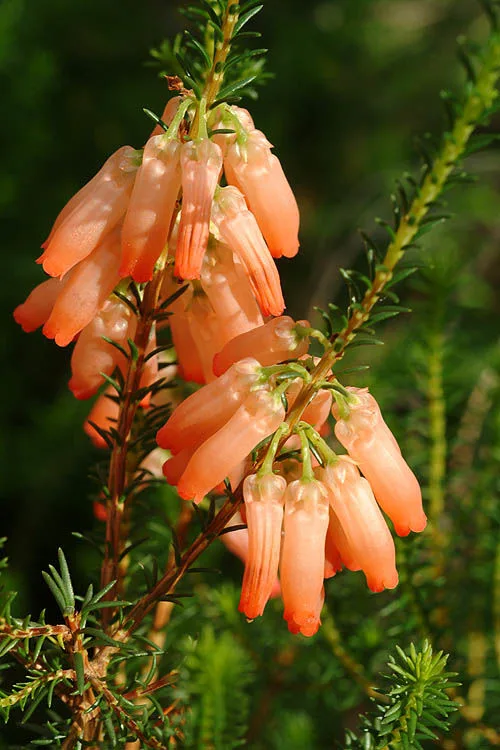
An evergreen shrub, to 1.5m tall, with upright stems clothed in very short, tough, narrow, dark green leaves with dense, terminal spikes of hanging, coral-red, tubular flowers in spring or summer
Scientific classification
- Species
- red-flowered ninepin heath (Erica mammosa [Red-flowered])
- Genus
- Erica
- Family
- Ericaceae
- Order
- Ericales
- Class
- Magnoliopsida
- Phylum
- Magnoliophyta
- Information to be completed
- Toxicity
- Conservatory Greenhouse · Shrubs
- Plant type
- 1-1.5 metres
- Height
- 1.5-2.5 metres
- Spread
- Evergreen
- Foliage
- Bushy
- Habit
- Spring · Summer · Autumn · Winter
- Season of interest
- Full sun
- Sunlight
- Information to be completed
- Ideal temperature









red-flowered ninepin heath pictures
red-flowered ninepin heath care guide
- Light regular watering, acidic soil should stay mildly moist and airy
- Watering
- Full sun
- Sunlight

Watering
Light regular watering, acidic soil should stay mildly moist and airy
Fertilizing
 Fertilizing
Acidic heather feed every four weeks spring through early autumn months
Pruning
 Pruning
Usually little pruning is needed. Lightly shape if necessary, removing dead, damaged or diseased shoots. Prune after flowering.
Propagation
 Propagation
Propagate by semi-ripe cuttings in mid- or late summer
Growing
 Growing
In very mild areas, grow in moist but well-drained, acidic soil in full sun in a very sheltered position. Elsewhere grow in a frost-free greenhouse or conservatory in lime-free potting compost with extra sharp sand, making sure the compost is kept moist
Common pests and diseases
Diseases
May be susceptible to fungal diseases, including honey fungus (rarely), and Phytophthora root rot, in wet conditions
Pests
Generally pest-free
Explore the plant health library →




